

Key Takeaways
Odometer Reading
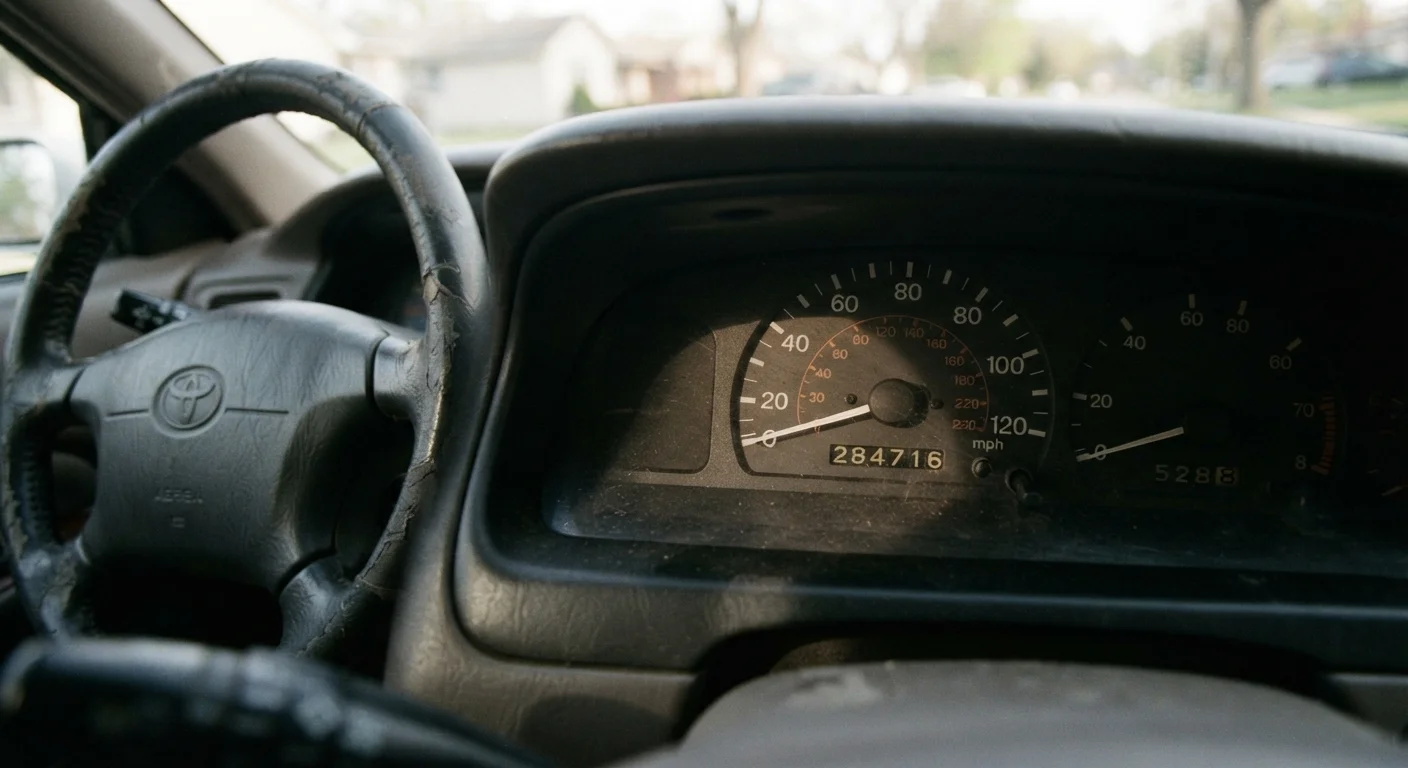
An odometer reading is the cumulative number of miles a vehicle has traveled since it left the factory. It's displayed on the dashboard and is one of the first numbers buyers check when evaluating a used car. The figure reflects total distance driven — but says nothing on its own about how well the car was maintained or what conditions it was driven in.
Federal law under the Truth in Mileage Act requires sellers to disclose accurate odometer readings at the point of vehicle transfer. Odometer tampering — rolling back the displayed mileage — is a federal crime.
Why Mileage Alone Doesn't Tell the Full Story
When shopping for a used car, the odometer reading is almost always the first number people fixate on. It makes intuitive sense — more miles means more wear, right? The reality is more nuanced. A vehicle with 120,000 miles and a complete service history can be a far sounder purchase than one with 60,000 miles and no documented maintenance whatsoever.
Think of mileage as one data point in a larger picture. To interpret it accurately, you need to consider the vehicle's age, how and where those miles were accumulated, and whether routine maintenance was performed on schedule. Without that context, the number on the odometer is nearly meaningless.
~13,500
Average miles driven per year by U.S. drivers
According to Federal Highway Administration estimates, this figure serves as a useful baseline when assessing whether a used car's mileage is high or low for its age.
1 in 10
Used cars estimated to have odometer fraud
The National Highway Traffic Safety Administration has historically estimated that odometer fraud affects a significant portion of used vehicle transactions, costing buyers billions annually.
For a fuller assessment, pairing the odometer reading with a thorough vehicle history report is essential. See how to read a vehicle history report without missing red flags to understand what else those records reveal.
Highway Miles vs. City Miles: Why the Type of Driving Matters
Not all miles are created equal. A vehicle used primarily for highway commuting — steady speeds, minimal braking, fewer cold starts — experiences less mechanical stress per mile than one navigating stop-and-go city traffic daily. Frequent short trips, in particular, can be hard on engines because they don't always allow the engine to fully warm up and burn off moisture and combustion byproducts in the oil.
This is why a vehicle with 90,000 predominantly highway miles may actually have less cumulative wear on its brakes, transmission, and engine than a comparable car with 60,000 urban miles. When evaluating a used vehicle, ask the seller or check records to understand the typical driving environment.
Ask Where the Miles Came From
When reviewing a used car listing, try to determine the primary driving environment — highway, city, or mixed. Sellers and vehicle history reports often provide clues. A car used for long daily commutes on interstates has typically experienced gentler wear per mile than one used for short urban errands, even at the same total mileage.
The Low-Mileage Trap: When Fewer Miles Isn't Better
Low mileage can be genuinely reassuring — but it can also be misleading. Vehicles that spend extended periods sitting unused are vulnerable to a distinct set of problems: rubber seals and belts dry out and crack, fuel can degrade in the tank, tires develop flat spots, and brake components can corrode. These issues have nothing to do with miles driven and everything to do with elapsed time.
A car with 20,000 miles over 10 years deserves careful scrutiny. Verify that it has received age-appropriate maintenance — oil changes, belt inspections, and fluid replacements — even if usage was light. A pre-purchase inspection by a qualified mechanic is particularly valuable in these cases.
Using Mileage as Part of a Smarter Evaluation
The most practical way to use an odometer reading is as a starting benchmark, not a verdict. U.S. drivers average roughly 12,000–15,000 miles per year according to Federal Highway Administration data. Comparing a vehicle's mileage to its age gives you a quick sense of whether it's been lightly used, heavily used, or somewhere in between.
From there, layer in additional information: Does the service history show consistent oil changes and scheduled maintenance? Does the vehicle history report show any odometer rollback flags? Is the mechanical wear — on tires, brakes, and interior — consistent with the stated mileage? A thorough evaluation covers all of these dimensions together. For guidance on what good long-term maintenance looks like across a vehicle's life, see vehicle maintenance from first service to high mileage.
“Mileage is one variable in a complex equation. A vehicle's true condition is the product of how it was driven, how it was maintained, and how it was stored — the odometer captures only one of those three factors.”
— Cars & Driving Editorial Team, Automotive Ownership and Maintenance Specialists