

Key Takeaways
Our Verdict
Neither plant nor animal protein is universally superior — both offer meaningful nutritional value. Animal proteins provide complete amino acid profiles and high digestibility, while plant proteins bring fiber, phytonutrients, and lower saturated fat. Most people benefit from understanding both so they can build flexible, balanced meals.
| Best for | Recommended |
|---|---|
| Those seeking complete proteins with minimal meal planning | Animal protein sources |
| Those prioritizing fiber, heart health, and lower saturated fat intake | Plant protein sources |
| Vegetarians, vegans, or flexitarians | Soy, quinoa, and complementary plant proteins |
| Readers seeking a practical everyday approach to balanced eating | A mixed or flexitarian approach |
What Makes a Protein 'Complete' or 'Incomplete'?
Proteins are made up of amino acids — the building blocks your body uses for muscle repair, immune function, enzyme production, and more. Of the 20 amino acids, nine are considered essential, meaning your body cannot produce them and must obtain them through food.
Animal proteins — including meat, poultry, fish, eggs, and dairy — are called complete proteins because they contain all nine essential amino acids in proportions that align well with human needs. Most plant proteins, by contrast, are considered incomplete because they are low in one or more essential amino acids. Notable exceptions include soy, quinoa, hemp seeds, and buckwheat, which provide all nine essentials.
This doesn't mean plant proteins are inadequate. Eating a variety of plant foods throughout the day — such as rice and beans, or hummus and whole wheat pita — allows the body to obtain the full spectrum of essential amino acids without combining them in a single meal, a concept supported by major nutrition organizations including the Academy of Nutrition and Dietetics.
Digestibility: How Well Does Your Body Use Each Source?
Digestibility refers to how efficiently the body breaks down and absorbs a protein. Scientists use a measure called DIAAS to rank protein quality based on both amino acid profile and digestibility.
Animal proteins — particularly eggs, dairy, and lean meat — typically score high on the DIAAS scale. Plant proteins generally score lower, partly due to antinutrients such as phytates and tannins found in legumes and grains, which can mildly reduce absorption. However, common preparation methods like soaking, sprouting, fermenting, and cooking significantly reduce antinutrient levels and improve digestibility.
Soy protein isolate, for example, has a DIAAS comparable to many animal proteins. Lentils and chickpeas, when properly cooked, also deliver highly usable protein. The practical takeaway: preparation matters, and most well-cooked plant proteins are efficiently used by the body.
| Criterion | Animal Protein | Plant Protein | |
|---|---|---|---|
| Completeness (all 9 essential amino acids) | Yes — most sources | Varies; soy, quinoa, hemp are complete | |
| Digestibility (DIAAS score) | Generally high | Moderate to high (preparation-dependent) | |
| Saturated fat content | Higher in red and processed meats | Generally low | |
| Fiber content | None | High in legumes and whole grains | |
| Vitamin B12 | Naturally present | Absent; requires fortified foods or supplements | |
| Meal planning complexity | Lower — single sources are complete | Moderate — variety or pairing recommended |
Key Plant Protein Sources Worth Knowing
Not all plant proteins are created equal. Here are some of the most nutritionally significant options:
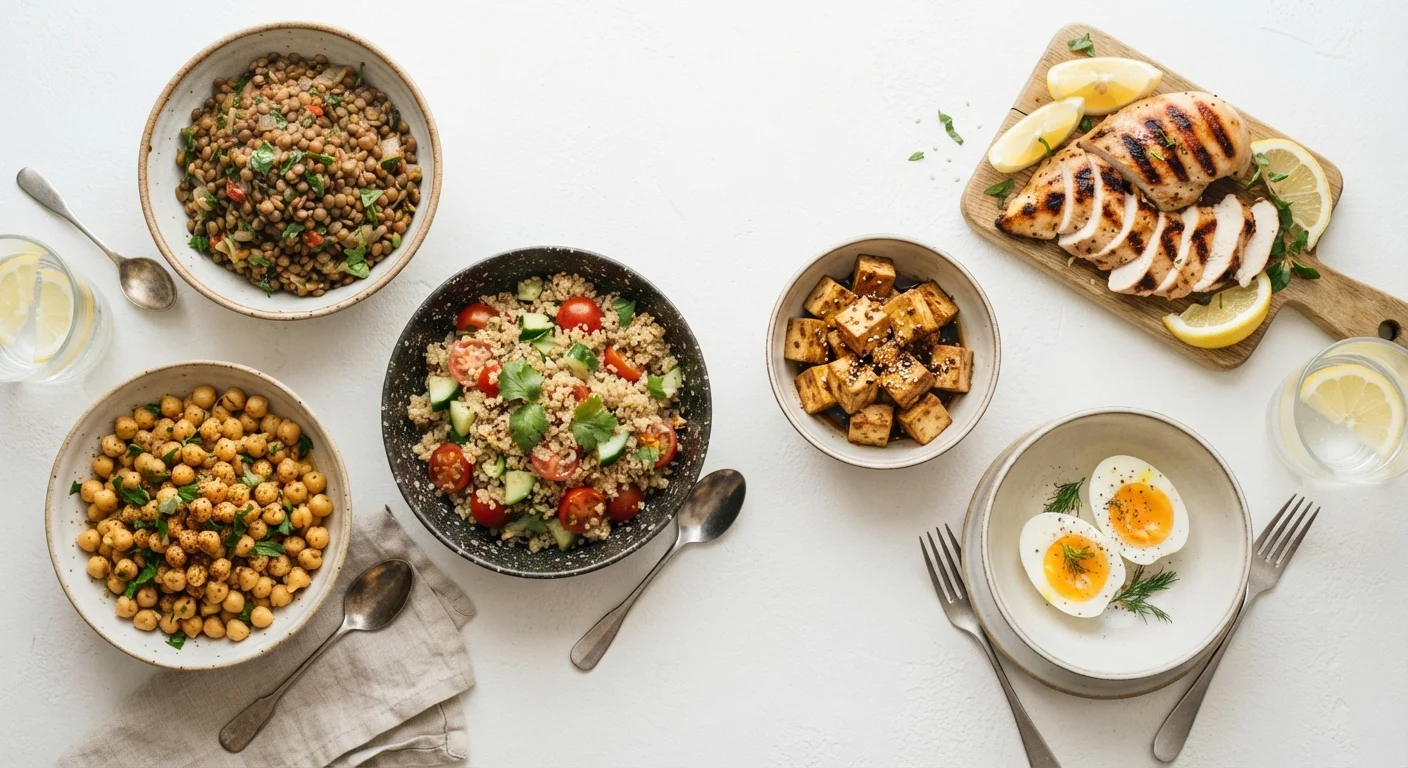
- Lentils: Around 18 grams of protein per cooked cup, plus significant iron and folate. Low in the amino acid methionine, so pair well with grains.
- Chickpeas and black beans: Versatile legumes offering 15–17 grams per cooked cup with substantial fiber.
- Tofu and edamame (soy-based): Complete proteins with a strong amino acid profile. Tofu is also a source of calcium and iron.
- Quinoa: A complete protein grain with about 8 grams per cooked cup, also providing magnesium and manganese.
- Hemp seeds: A complete protein offering roughly 10 grams per three tablespoons, along with beneficial omega-3 fatty acids.
- Seitan (wheat gluten): Very high in protein — up to 25 grams per 3.5 oz — but not suitable for those with celiac disease or gluten sensitivity.
Combining Plant Proteins Is Easier Than You Think
You don't need to engineer precise combinations at every meal. Simply eating a variety of legumes, grains, nuts, seeds, and vegetables across the day gives your body access to the full range of essential amino acids. Classic pairings like rice and beans or peanut butter on whole grain bread are nutritionally sound examples that cultures worldwide have relied on for generations.
For a practical approach to incorporating these into daily meals, see our guide to building a balanced plate.
Beyond Protein: What Else Each Source Brings to the Table
Protein quantity and quality aren't the whole picture. Animal and plant proteins come packaged with different nutritional companions that affect overall health.
Animal proteins are reliable sources of vitamin B12, heme iron (more readily absorbed than plant iron), zinc, and long-chain omega-3 fatty acids (from fatty fish). Processed and red meats, however, are associated in observational research with increased risk of certain health outcomes when consumed in large quantities — a nuance that dietary guidelines generally reflect by recommending moderation.
Plant proteins come bundled with dietary fiber, antioxidants, and phytonutrients largely absent from animal foods. They are also generally lower in saturated fat. The fiber content supports digestive health and can contribute to satiety and stable blood sugar levels.
People following entirely plant-based diets should pay particular attention to vitamin B12 (available only from animal products or fortified foods/supplements), iron, zinc, calcium, iodine, and omega-3 fatty acids. Consulting a registered dietitian is advisable for those making significant dietary shifts, especially for children, pregnant individuals, or older adults.
This article is for general informational and educational purposes only and does not constitute medical or nutritional advice. Always consult a qualified healthcare professional or registered dietitian for guidance tailored to your individual health needs.