

Key Takeaways
Low-Impact Exercise
Low-impact exercise refers to physical activity in which at least one foot (or another body part) maintains contact with the ground or a surface at all times, minimizing the jarring forces placed on joints. It is not defined by intensity — you can work quite hard during low-impact movement. Rather, it describes the mechanical stress the activity puts on your body. Walking, swimming, cycling, and yoga are common examples.
In biomechanical terms, low-impact activity reduces peak ground-reaction forces — the forces traveling through bones, joints, and connective tissue with each movement. This is distinct from aerobic intensity, which is measured separately by heart rate, oxygen consumption, or perceived exertion.
Impact vs. Intensity: Understanding the Difference
One of the most persistent misconceptions in fitness is that low-impact equals easy. The two qualities — impact and intensity — are entirely separate dimensions of exercise. Impact describes the physical force transmitted through your joints and skeleton during movement. Intensity describes how hard your cardiovascular and muscular systems are working.
Running is high-impact because both feet leave the ground simultaneously, generating substantial ground-reaction forces at landing. Swimming is low-impact because water buoyancy offsets most body weight — yet a competitive swimmer works at very high intensity. You can push your heart rate and effort significantly during a cycling class or a long power walk without ever subjecting your joints to the repetitive shock of running or jumping.
This distinction matters because it opens up a much wider conversation about who can exercise and how. It also means that choosing low-impact options is not a concession — it is often a strategic decision. For a deeper look at how high-impact training compares, see our overview of HIIT trade-offs.
Use Perceived Exertion to Gauge Intensity
Because low-impact doesn't signal effort level, use the Rate of Perceived Exertion (RPE) scale or the 'talk test' to monitor how hard you're working. If you can hold a full conversation effortlessly, you're likely at low intensity. If you can speak only in short phrases, you've reached moderate intensity — which counts toward fitness goals regardless of impact level.
Common Low-Impact Activities and What They Offer
Several well-studied activities fall under the low-impact category, each with distinct benefits:
- Walking: Accessible, free, and associated with cardiovascular health, mood benefits, and improved metabolic markers. Brisk walking can qualify as moderate-intensity aerobic activity.
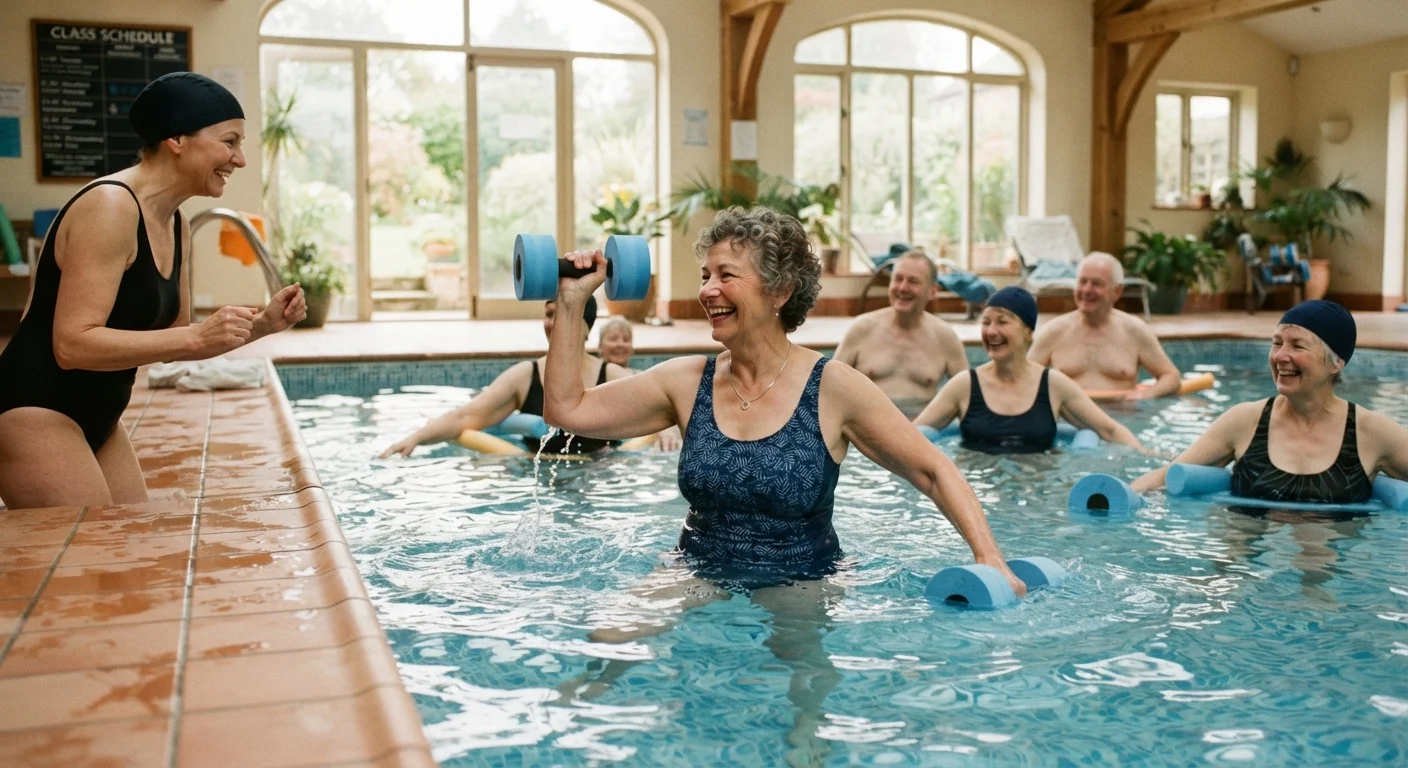
- Swimming and aqua exercise: Water reduces effective body weight by up to 90%, making it especially useful for people with arthritis, joint injuries, or significant mobility limitations.
- Cycling (stationary or outdoor): Supports cardiovascular fitness and lower-body strength with minimal knee and hip stress compared to running.
- Yoga and Pilates: Build flexibility, core stability, and body awareness. Range of difficulty is broad — beginner sessions are genuinely gentle, while advanced forms are demanding.
- Elliptical training: Mimics walking and running biomechanics without the repetitive foot-strike impact.
For a direct comparison of two foundational low-impact options, our article on walking vs. running explores the practical trade-offs.
150 min
Recommended weekly moderate aerobic activity
The U.S. Department of Health and Human Services Physical Activity Guidelines for Americans recommend at least 150 minutes of moderate-intensity aerobic activity per week for most adults — a target achievable entirely through low-impact exercise.
Up to 90%
Body weight offset by water buoyancy
Immersion in chest-deep water can reduce effective body weight by up to approximately 90%, according to aquatic therapy research, making water-based exercise uniquely accessible for people with significant joint limitations.
Who Low-Impact Exercise Suits — and Why It's a Long-Term Option
Low-impact movement is often framed as a starting point or a rehabilitation tool, but that framing undersells it. It is a sustainable, legitimate fitness approach for many people across the lifespan.
Groups who particularly benefit include:
- Older adults: Reduced bone density and joint health changes make lower-impact movement a sensible default, though individual capacity varies widely.
- People managing joint conditions: Those with osteoarthritis, rheumatoid arthritis, or recovering from orthopedic injuries often tolerate low-impact activities far better than high-impact alternatives.
- Pregnant and postpartum individuals: Many healthcare providers recommend low-impact activity during and after pregnancy, though guidance should always come from a qualified clinician familiar with the individual's situation.
- Anyone returning to exercise after a break: Rebuilding fitness gradually with lower joint stress reduces injury risk. Our guide to returning to exercise provides practical framework for this process.
- People who prefer sustainability over intensity: Consistency over years matters more than peak performance in any single session. Low-impact routines are often easier to maintain long-term without burnout or cumulative injury.
Research consistently supports the mental health benefits of regular movement, regardless of impact level. What we know about movement and mental wellbeing covers this evidence in detail.
Low-Impact Isn't Always Zero Risk
Even gentle activities carry some risk of overuse injury, especially when volume increases quickly. A repetitive motion like cycling or swimming performed with poor form or excessive frequency can still cause strain. Progressing gradually and attending to technique matters in low-impact exercise just as it does in higher-impact training. If you notice persistent pain, seek guidance from a qualified professional.
This article is for general informational purposes only and does not constitute medical advice. If you have a health condition, injury, or any concerns about starting a new exercise program, consult a qualified healthcare professional first.