

Key Takeaways
Our Verdict
Structured relaxation tends to be more effective for acute stress, physical tension, and anxiety management because it actively engages physiological calming systems. Unstructured rest excels at restoring mental energy, sparking creativity, and providing a natural cognitive reset. For most people, a balanced blend of both — chosen to fit the moment — yields the most sustainable recovery.
| Best for | Recommended |
|---|---|
| Those managing acute stress, tension, or anxiety symptoms | Structured Relaxation |
| Those seeking creative renewal or everyday mental recharge | Unstructured Relaxation |
| Those new to intentional self-care routines | Structured Relaxation |
| Those prone to rigidity or burnout from over-scheduling | Unstructured Relaxation |
What Each Approach Actually Means
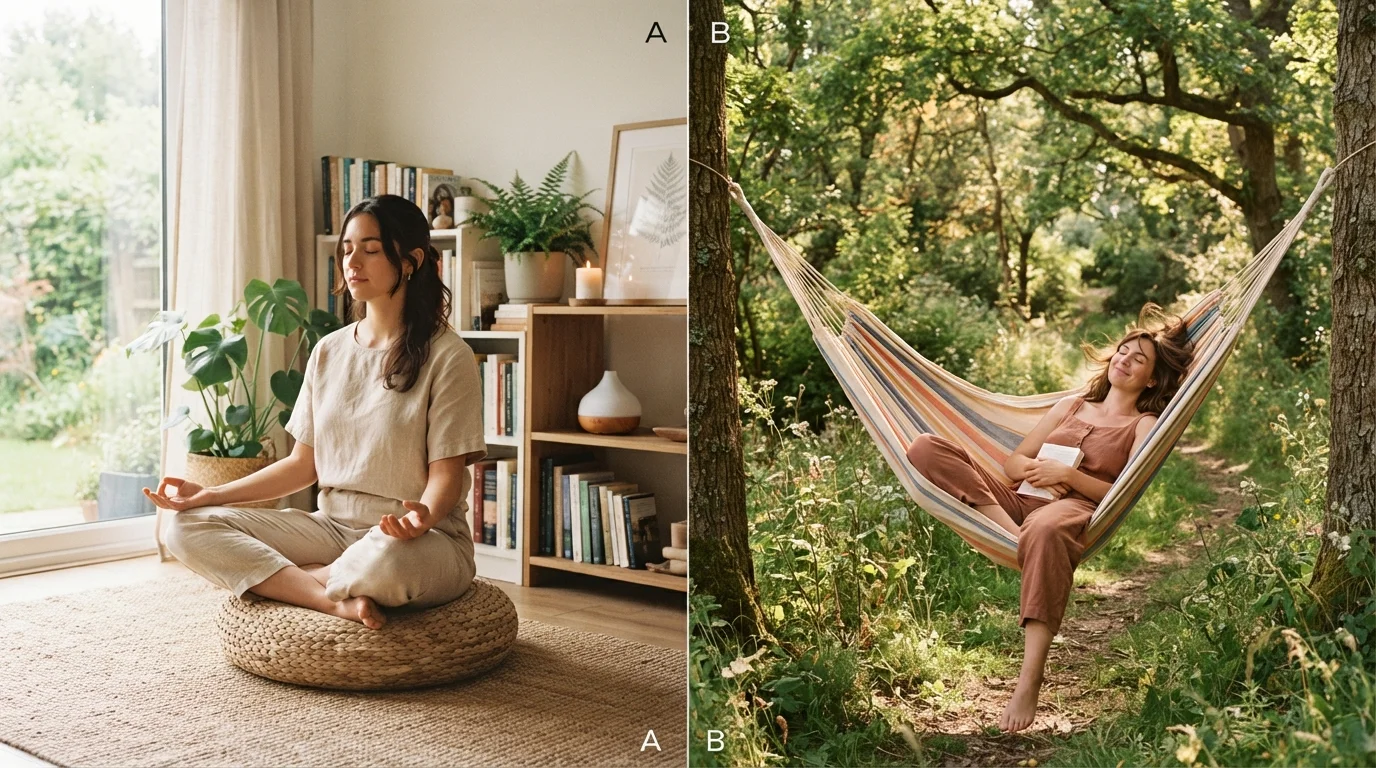
Structured relaxation refers to deliberate, technique-driven practices with a defined method and purpose. Examples include progressive muscle relaxation (PMR), guided meditation, diaphragmatic breathing exercises, and body scans. These techniques are taught — often by therapists, apps, or wellness programs — and follow a repeatable sequence designed to elicit a measurable calming response in the body.
Unstructured relaxation, by contrast, is open-ended rest with no fixed agenda. Think of reading for pleasure, taking a slow walk with no destination, daydreaming, or simply sitting quietly without a timer. There are no steps to follow and no outcome to achieve — the activity unfolds on its own terms.
Both are legitimate forms of rest, but they engage the mind and body in meaningfully different ways. Understanding those differences helps you choose the approach that fits what you actually need in a given moment.
The Science Behind Structured Relaxation
Structured techniques have a more developed research base. Progressive muscle relaxation, developed by physician Edmund Jacobson in the early 20th century, works by systematically tensing and releasing muscle groups to reduce physical tension. Studies consistently associate PMR with reductions in self-reported anxiety and physiological markers of stress, including heart rate and cortisol levels.
Diaphragmatic breathing activates the parasympathetic nervous system — the body's "rest and digest" mode — which counteracts the stress-driven fight-or-flight response. Mindfulness-based practices, including guided body scans, have been studied extensively and are incorporated into evidence-based programs such as Mindfulness-Based Stress Reduction (MBSR).
~60–90%
Adults reporting stress affects physical health
The American Psychological Association's ongoing Stress in America surveys consistently find a large majority of US adults report physical health impacts from stress.
8 weeks
Typical MBSR program length
The standard Mindfulness-Based Stress Reduction (MBSR) program, developed at UMass Medical School, runs eight weeks and is among the most studied structured relaxation formats.
The structured nature of these techniques is itself part of their value: having clear steps reduces the cognitive effort of "figuring out what to do," which can be helpful when you're already overwhelmed. For people experiencing significant anxiety, structure also provides a sense of control and predictability.
For more on how self-directed mental health practices compare to professional support, see our guide to therapy vs. self-help.
The Value of Unstructured Rest
Less studied but no less real, unstructured relaxation taps into what neuroscientists call the brain's default mode network (DMN) — a set of regions that activate during mind-wandering, daydreaming, and passive reflection. Far from being "wasted" brain time, DMN activity is associated with consolidating memories, processing emotions, and generating creative insights.
Research on mental fatigue suggests that the brain needs periods of low-demand activity to recover attentional resources — a concept formalized in Attention Restoration Theory. Unstructured leisure, particularly in natural settings, appears to support this restoration more effectively than more goal-directed activities.
Make Unstructured Time Truly Unstructured
The restorative benefit of free-form rest depends on genuinely releasing goal-orientation. If you find yourself mentally optimizing your walk or feeling guilty for "doing nothing," the cognitive load of those thoughts can blunt the recovery effect. Try setting a short window — even 15 minutes — where you give yourself explicit permission to have no agenda. Consistency matters more than duration.
Importantly, unstructured rest doesn't require elaborate setup or instruction. Its accessibility is a genuine advantage. A 20-minute stroll without earbuds, an unhurried cup of coffee while looking out a window, or casual doodling can each qualify — provided there's no performance expectation attached.
Comparing the Two Approaches
The table below summarizes how structured and unstructured relaxation differ across key practical dimensions.
| Structured Relaxation | Unstructured Relaxation | |
|---|---|---|
| Examples | PMR, guided meditation, breathing exercises | Leisurely walks, daydreaming, casual reading |
| Research base | Extensive clinical evidence | Growing, mostly observational evidence |
| Learning curve | Requires initial instruction or practice | No instruction needed |
| Best for | Acute stress, anxiety, sleep issues | Mental fatigue, creativity, everyday recharge |
| Time commitment | Defined sessions (10–30 minutes typical) | Flexible; any duration counts |
| Accessibility | Needs guidance source (app, therapist, video) | Available anywhere, anytime |
Neither approach replaces the other. The most sustainable rest strategy for most people involves both: structured techniques when stress is acute or sleep is disrupted, and unstructured time to keep everyday mental energy replenished. If you're interested in how body-focused practices fit into a broader wellness routine, our article on stretching myths and what the evidence says offers related perspective on evidence-informed self-care.
This article is for general informational purposes only and does not constitute medical or mental health advice. If you are experiencing persistent stress, anxiety, or other mental health concerns, please consult a qualified healthcare or mental health professional.