

Key Takeaways
Personal Budget
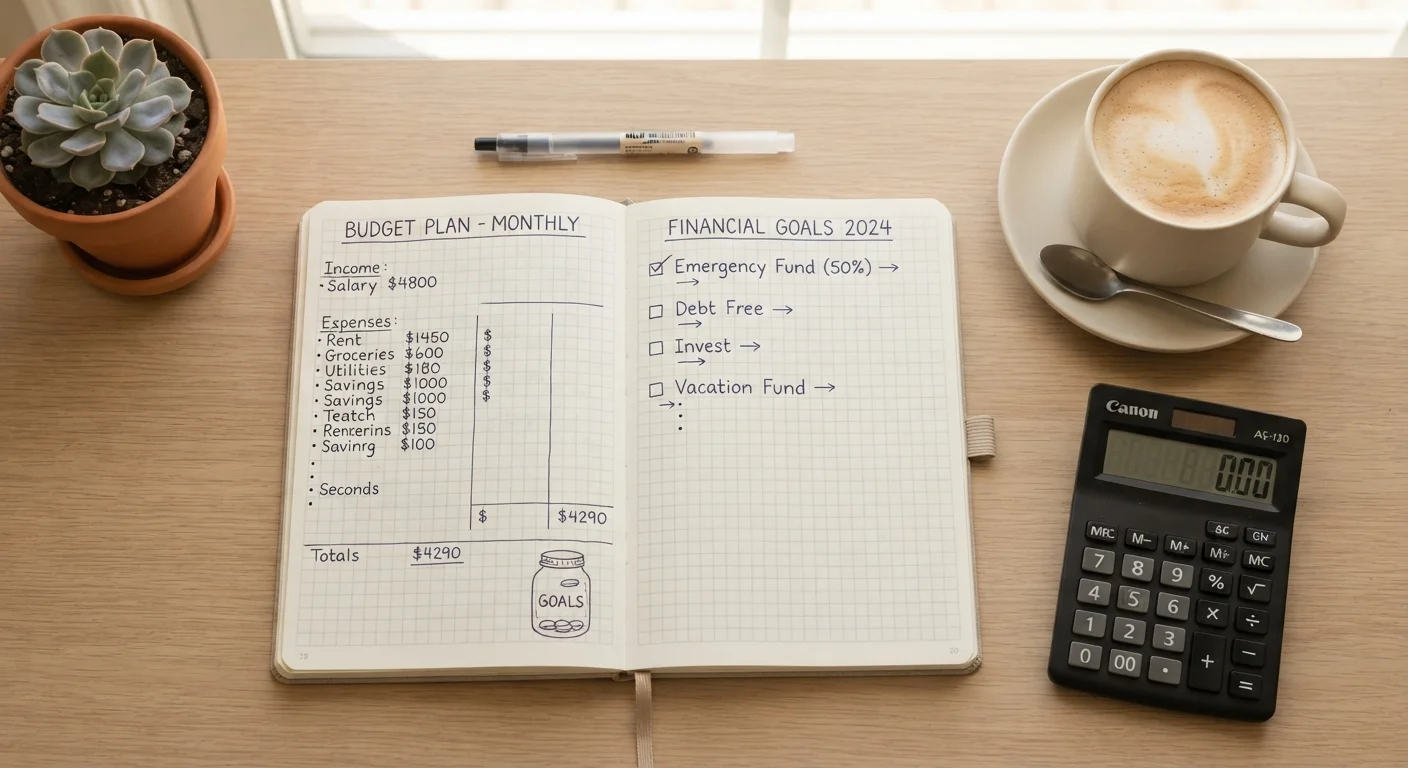
A personal budget is a plan that maps out how you expect to earn and spend money over a set period — typically one month. It assigns a purpose to every dollar before it arrives, so your spending reflects your actual priorities. Unlike a vague sense of 'being careful with money,' a budget is a written or recorded document you can refer to and adjust.
In personal finance, a budget is a forward-looking plan (income minus planned expenses), distinct from a spending tracker, which is a backward-looking record of what was actually spent.
The Misunderstanding at the Heart of Budgeting
Ask most people what a budget is, and they'll describe something punishing: a rigid list of rules about what you can't buy, designed for people who are broke or irresponsible. That framing keeps millions of people from ever building one — and it's almost entirely wrong.
A personal budget is not a financial cage. It's a financial map. It tells your money where to go before the month begins, so that when the month ends, you're not left wondering where it all went. The confusion between 'restriction' and 'intention' is one of the most costly myths in everyday personal finance. Our guide to common budget myths explores several of these misconceptions in detail.
Budgeting Is for Everyone, Not Just the Struggling
A common misconception is that budgets are only necessary when money is tight. In reality, budgeting is equally useful at any income level — it's how high earners avoid lifestyle inflation and build lasting wealth. The purpose isn't to signal financial distress; it's to make intentional choices with whatever resources you have.
What a Budget Actually Contains
A functional personal budget has two core components: income and planned expenses. Income is every dollar coming in — wages, freelance earnings, side income, or any other source. Planned expenses are every category of spending you anticipate, from rent and groceries to subscriptions and savings contributions.
The budget's job is to make sure the second number never exceeds the first — and ideally, to show you exactly where the difference goes. A well-built budget doesn't just track necessities. It carves out room for things that matter to you: a vacation fund, a dining-out allowance, a monthly hobby budget. That's not weakness — that's the plan working as intended.
~33%
U.S. adults who maintain a household budget
Surveys consistently find that fewer than one in three American adults actively tracks spending with a written or recorded budget, according to research by Gallup and others.
$1,000
Emergency savings many Americans lack
A Federal Reserve report found that a notable share of U.S. adults would struggle to cover an unexpected $1,000 expense — a gap that structured budgeting directly addresses over time.
If you want to get familiar with the specific language involved, our plain-English budgeting glossary covers terms like discretionary income, net pay, and fixed versus variable expenses.
Why Budgets Work (When People Stick With Them)
The power of a budget lies in one deceptively simple shift: making decisions about money before emotion, impulse, or circumstance makes them for you. Most overspending isn't the result of bad character — it's the result of having no plan at the moment a decision needs to be made.
“A budget is telling your money where to go instead of wondering where it went.”
— Dave Ramsey, Personal finance author and radio host
When you've already decided how much goes to groceries this month, the in-store temptation to overfill the cart has a concrete reference point. When you've already assigned $100 to entertainment, the impulse purchase at least competes with a real number rather than a vague sense of 'I should probably be careful.'
This is also why budgets don't have to be perfect to be useful. Even a rough plan that you follow imperfectly is more grounding than no plan at all. For a fuller picture of what rigorous budgeting gains — and what it costs — see our article on the honest trade-offs of strict budgeting.
Building a Budget That Reflects Real Life
The most common reason budgets fail isn't lack of willpower — it's that they were built around an idealized life rather than an actual one. A budget that assumes you'll never eat out, never have a car repair, and never spend anything on fun is a budget designed to be abandoned.
Start with your real numbers: what you actually earn after taxes (net pay), and what you genuinely spend in a typical month across every category. Don't guess — pull up your last two or three bank statements. Then assign those dollars intentionally, including a category for irregular expenses and one for savings.
Start With Two Months of Real Data
Before writing a single budget category, review your last two bank and credit card statements. Categorize every transaction and add up the totals. This gives you a realistic baseline — not an aspirational one — so your first budget is grounded in how you actually live today.
A budget is also a living document. When your rent changes, when you have a child, when you take on new debt or pay off old debt — update the budget. It should reflect your life as it is, not as it was when you first wrote it down. For a comprehensive overview of how all these concepts connect, the complete budgeting resource is a useful reference.
This article is for general informational and educational purposes only and does not constitute personalized financial advice. Please consult a qualified financial professional for guidance specific to your situation.