

Key Takeaways
Periodontal Disease in Pets
Periodontal disease is an infection and inflammation of the structures that support the teeth — including the gums, ligaments, and underlying bone. It begins with plaque buildup on tooth surfaces, which hardens into tartar and eventually leads to gum recession, tooth loosening, and pain. It is the most commonly diagnosed health condition in adult dogs and cats.
Vets stage periodontal disease on a scale of 1 to 4, ranging from mild gingivitis (Stage 1) to severe bone loss and tooth destruction (Stage 4). Stages 3 and 4 typically require professional extraction under general anesthesia.
Why Dental Disease Flies Under the Radar
Most pet owners notice when their dog or cat limps, vomits, or refuses food. Dental disease rarely sends such clear signals. Pets evolved to conceal pain — a survival instinct — so even a dog with Stage 3 periodontal disease may still eat enthusiastically and behave normally. By the time bad breath or visible tartar catches an owner's attention, the disease has often been progressing silently for months or years.
This is why dental problems are so frequently underestimated. Owners assume that if a pet is eating, its mouth must be fine. Veterinary data consistently challenges that assumption. Professional dental exams often reveal significant gum recession, bone loss, or tooth root abscesses in pets whose owners had no idea anything was wrong.
Understanding how dental disease develops — and what to look for — gives owners a meaningful advantage in protecting their pet's health. For a broader view of how health needs change across a pet's life, see our article on senior pet care and shifting health needs.
How Periodontal Disease Develops
The process begins with plaque — a soft, sticky film of bacteria that forms on tooth surfaces within hours of eating. Without removal, plaque mineralizes into tartar (also called calculus) within days. Tartar is porous and rough, creating an ideal surface for more bacteria to accumulate, particularly below the gum line.
As bacteria colonize the gingival sulcus (the narrow space between tooth and gum), the immune system mounts an inflammatory response. This is gingivitis — the earliest, and only fully reversible, stage of periodontal disease. Left unaddressed, inflammation destroys the periodontal ligament and the alveolar bone that anchor teeth in place. Teeth become loose, painful, and eventually require extraction.
80%+
Dogs with dental disease by age 3
Veterinary dental specialists estimate that more than 80% of dogs show signs of periodontal disease by their third year of life.
70%+
Cats affected by dental disease by age 3
Similar prevalence is reported in cats, with many cases going undetected until a professional exam is performed.
24–48 hrs
Time for plaque to begin mineralizing
Without mechanical removal, soft plaque can begin hardening into tartar within one to two days, underscoring why daily brushing matters.
The progression from healthy gums to advanced disease can happen faster in smaller dog breeds and brachycephalic breeds (those with flat faces, like Bulldogs and Persian cats) because their teeth are more crowded, leaving less room for proper cleaning. Diet, genetics, and the texture of food all play roles in how quickly plaque accumulates.
The Systemic Connection: Beyond the Mouth
Oral health doesn't exist in isolation. The mouth is a direct gateway to the body's circulatory system, and chronic bacterial infection in the gums can allow microorganisms to enter the bloodstream — a process called bacteremia. Research in both human and veterinary medicine has explored associations between periodontal disease and changes in kidney function, liver health, and cardiac tissue in animals, though the strength and exact mechanisms of these links are still being studied.
“Periodontal disease is the most commonly diagnosed problem in small animal practice, yet it remains one of the most undertreated. Most owners simply don't know their pet's mouth is a window into their overall health.”
— Jan Bellows, Board-certified veterinary dentist and Fellow of the American Veterinary Dental College
What veterinary professionals agree on is that untreated infection anywhere in the body carries risk, and the mouth is no exception. This is one reason routine dental care is considered part of comprehensive wellness — not a cosmetic concern or an optional add-on.
Oral bacteria can also complicate care if a pet has an underlying immune condition or requires surgery. Vets often recommend addressing dental disease before elective procedures for this reason.
What Owners Can Do: Home Care and Professional Cleaning
No single intervention eliminates dental disease, but a combination of consistent home care and regular professional assessment makes a substantial difference.
Tooth brushing is the gold standard for home care. Using a soft-bristled toothbrush and pet-safe toothpaste (human toothpaste contains ingredients toxic to pets), daily brushing physically disrupts plaque before it can harden. Most pets can be gradually acclimated to brushing with patience and positive reinforcement. Even brushing three to four times a week offers meaningful benefit over no brushing at all.
Start Tooth Brushing Early
Puppies and kittens acclimate to tooth brushing more readily than adult animals. Introducing a toothbrush gradually — starting with just letting your pet sniff and lick pet-safe toothpaste — builds positive associations before brushing becomes a routine. Even if your pet is older, it's worth asking your vet for an introduction technique tailored to their temperament.
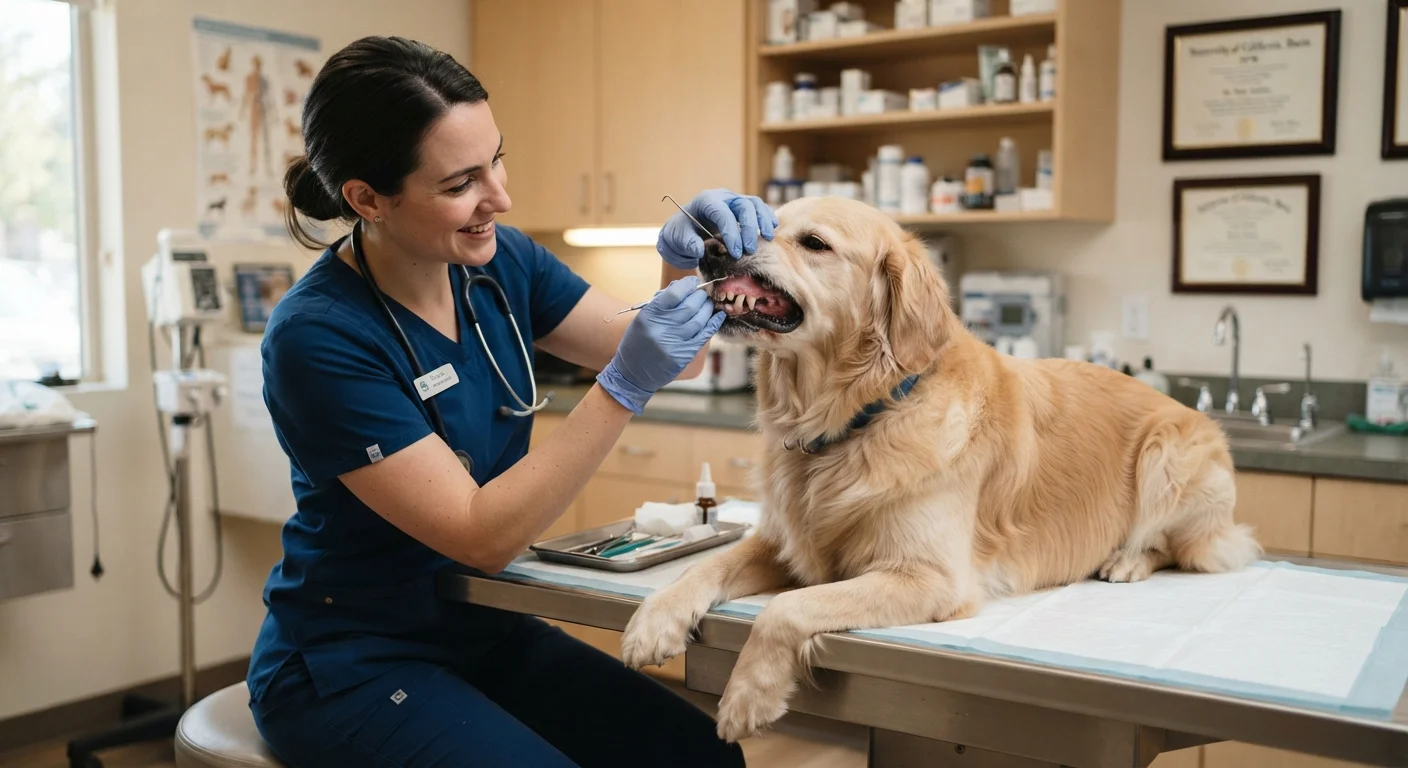
Professional dental cleanings performed by a veterinarian under general anesthesia are the only way to fully assess and treat periodontal disease. The procedure includes scaling above and below the gum line, dental radiographs (X-rays) to evaluate tooth roots and bone, and extraction of teeth that are non-viable. Without anesthesia, a thorough examination and subgingival cleaning simply cannot be performed safely or effectively.
How often a pet needs professional cleaning depends on individual factors including breed, age, diet, and the results of the previous exam. Your veterinarian is best positioned to recommend an appropriate schedule. For guidance on recognizing when a dental or other health concern warrants a prompt vet visit, see signs that your pet needs veterinary attention.
For a deeper look at everyday oral health practices, our companion piece on dental health in dogs and cats covers what a practical home routine looks like.
This article is for general informational purposes only and does not constitute veterinary advice. Always consult a licensed veterinarian for guidance specific to your pet's health.