

Key Takeaways
Option A
Play Behavior
The energetic, mutually enjoyable interaction between pets.
Best for: Households where pets are well-matched in size and temperament and take turns initiating and retreating.
Option B
Aggressive Behavior
Conflict-driven interaction that signals stress, fear, or resource competition.
Best for: Situations requiring immediate owner intervention, professional assessment, or environmental restructuring.
If interactions are brief, reciprocal, and both pets return willingly
Play Behavior
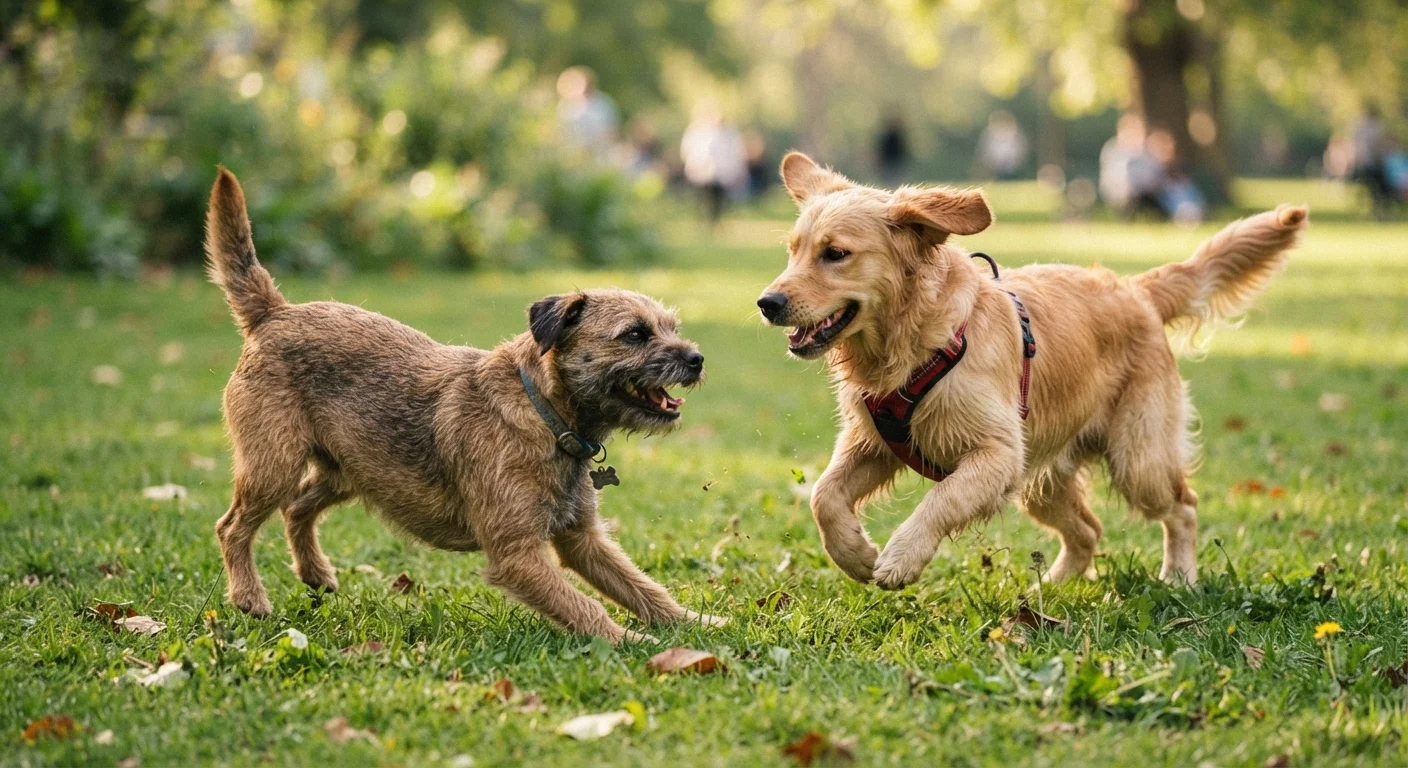
Mutual engagement and voluntary re-entry are the clearest signs that pets are having fun, not fighting.
If one pet consistently hides, freezes, or shows stress signals after interactions
Aggressive Behavior
A pet that avoids its housemate afterward is signaling distress — this pattern warrants prompt intervention.
If you're genuinely uncertain and interactions are escalating
Aggressive Behavior
When in doubt, treat it as potential aggression; separating pets and seeking professional guidance is always the safer choice.
Why the Distinction Matters
In multi-pet households, roughhousing is normal — and often healthy. But because play can involve growling, wrestling, and chasing, it's easy to misread as conflict. Intervening unnecessarily can disrupt bonding; failing to intervene when there's genuine aggression can result in injury or lasting fear. Understanding the difference is one of the most practical skills a pet owner can develop.
Reading your pet's body language is the foundation here. Physical cues — posture, muscle tension, ear position, tail carriage — reveal intent far more reliably than sounds alone.
| Criterion | Play Behavior | Aggressive Behavior |
|---|---|---|
| Body posture | Loose, bouncy, relaxed muscles | Stiff, rigid, weight shifted forward |
| Role reversal | Both pets take turns | One-sided; pursuer doesn't yield |
| Vocalizations | Short growls, playful barks or chirps | Sustained, low growling or hissing |
| Ability to disengage | Either pet can pause or walk away | Target cannot escape; pursuer persists |
| Re-engagement after pause | Both return voluntarily | Targeted pet hides or avoids |
| After-effects | Both appear relaxed, may rest together | Stress signals: hiding, appetite changes |
Key Signals of Play
Genuine play has recognizable hallmarks across dogs, cats, and many other species. Look for:
- Role reversal: The chaser becomes the chased; the one pinned takes a turn on top. Both animals alternate between dominant and submissive positions.
- Loose, bouncy body language: Relaxed muscles, open mouths, exaggerated movements. In dogs, the classic play bow — front end down, hindquarters up — is a clear invitation.
- Voluntary re-engagement: After a pause, both animals return to interact. Neither is fleeing or hiding.
- Self-handicapping: A larger or stronger animal holds back, letting the smaller one "win" periodically.
Vocalizations like growling and mock-biting can occur during play and are not automatically concerning when paired with the signals above. Context is everything.
Keeping pets mentally stimulated through everyday enrichment can also reduce the likelihood that excess energy tips into conflict.
Key Signals of Aggression
Aggression looks fundamentally different once you know what to watch for:
- Stiff, rigid posture: Muscle tension throughout the body, a fixed stare, and weight shifted forward signal offensive threat.
- One-sided pressure: One pet pursues relentlessly while the other tries to disengage or escape. There's no turn-taking.
- Sustained, low growling or hissing: Unlike the short vocalizations of play, these are held and deliberate.
- Piloerection: Raised hackles along the back (in dogs) indicate heightened arousal, which may signal fear-based or offensive aggression.
- Inability to disengage: A pet that cannot or will not stop pursuing when the other signals submission or retreat has crossed a line.
After an aggressive encounter, the targeted animal may hide, avoid eating in shared spaces, or startle easily — all signs that stress has lingered. Sudden behavior changes like these can sometimes have medical causes as well, so a vet check is worthwhile if the shift is abrupt.
Fear-Based Aggression vs. Offensive Aggression
Not all aggression looks the same. A fearful pet may cower, flatten its ears, and lash out only when cornered — this is defensive aggression. An offensively aggressive animal moves toward the target with confidence and directness. Distinguishing between the two matters because the underlying cause and appropriate response differ significantly. A professional assessment is especially valuable when the trigger isn't obvious.
Environmental Triggers and Prevention
Many aggression incidents aren't purely personality clashes — they're triggered by environmental stressors. Resource guarding (over food, toys, or resting spots), insufficient space, and inconsistent routines all raise the risk that normal play will escalate. Consistent daily structure reduces ambient anxiety and gives pets a more predictable social environment.
Practical steps for multi-pet households include feeding animals separately, providing multiple resting areas, and ensuring adequate individual attention. If introductions between pets are still ongoing, gradual, supervised exposure remains the most reliable approach.
When you're unsure whether what you're witnessing is play or conflict — or if interactions are escalating over time — consult a veterinarian or a certified applied animal behaviorist. For general wellness context, the Animal Health hub offers a useful starting point.
This article is for general informational purposes only and does not constitute professional veterinary or behavioral advice. Always consult a qualified veterinarian or certified animal behaviorist for guidance specific to your pets.