

Key Takeaways
Zoomies (FRAPs)
"Zoomies" is the popular nickname for sudden, frantic bursts of running, spinning, or bouncing that dogs and cats display for no apparent reason. Veterinarians and animal behaviorists call this behavior Frenetic Random Activity Periods, or FRAPs. These episodes typically last only a minute or two and end as abruptly as they begin. They are considered a normal expression of a pet's emotional and physical state.
FRAPs are thought to involve a rapid discharge of accumulated arousal through the motor system, mediated by neurochemical shifts — including dopamine and endorphins — triggered by excitement, relief, or sensory stimulation.
What Is Actually Happening During a Zoomie Episode
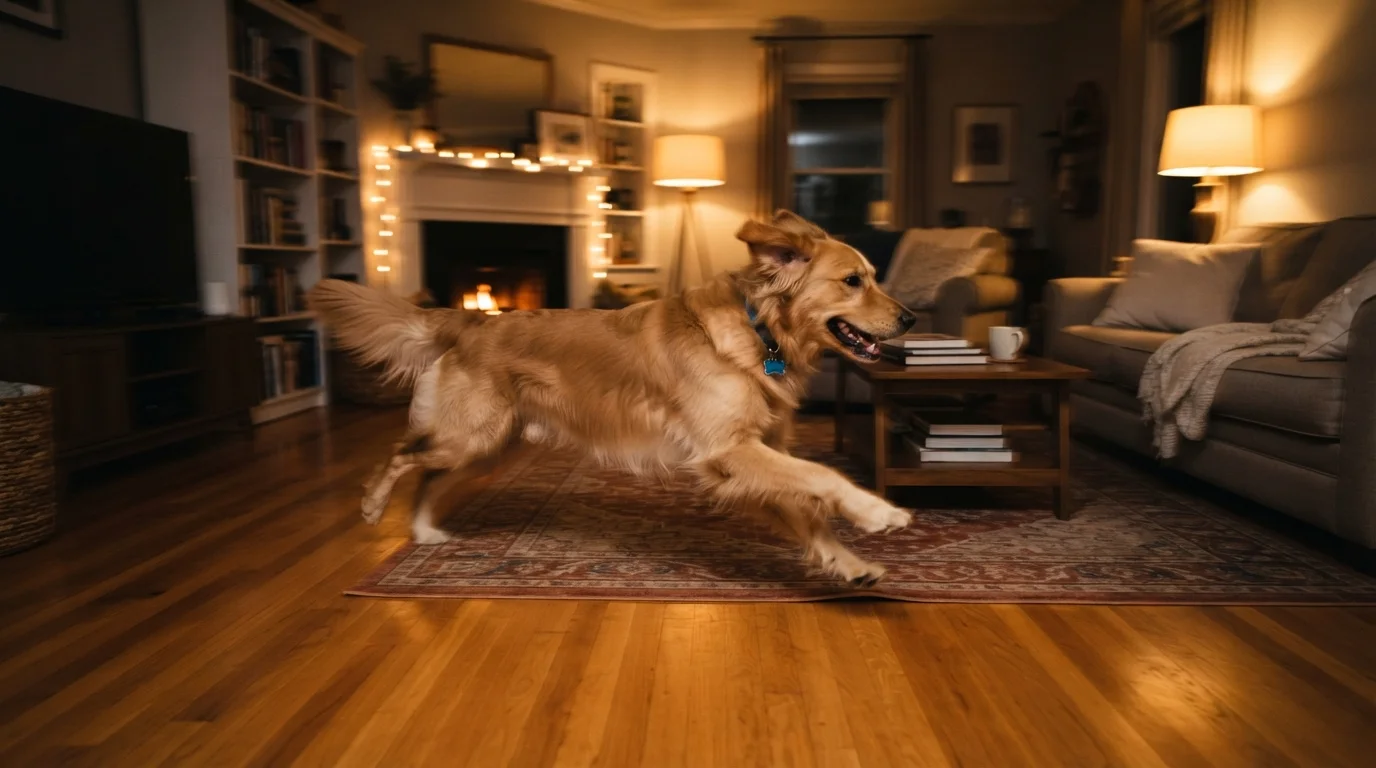
When your dog ricochets off the couch at 11 p.m. or your cat suddenly tears down the hallway at full speed, you are witnessing a Frenetic Random Activity Period — a FRAP. These episodes are characterized by wide, looping runs, dramatic spins, and sometimes a goofy, low-crouched posture in dogs known informally as the "zoomie run."
Neurologically, FRAPs appear to function as a pressure valve. Throughout the day, pets accumulate arousal — excitement, mild stress, boredom, or anticipation — that is not fully discharged through normal activity. When that arousal crosses a threshold, the nervous system triggers an explosive, short-duration motor release. Dopamine and endorphins are believed to play a role, which is why pets often look genuinely joyful during the episode rather than distressed.
The behavior is self-limiting. Most episodes resolve within 30 to 90 seconds, after which the animal often looks mildly surprised at itself before settling down.
Make the Space Safe Before It Starts
If your pet has a predictable zoomie window — right after dinner, post-bath, or at dusk — prepare the environment in advance. Clear small objects from the floor, close doors to rooms with hard floors or fragile items, and let the episode play out in a carpeted or grassy area where traction and safety are better.
Common Triggers: Why Right Now?
Zoomies rarely come from nowhere — there is almost always a recognizable trigger if you watch for it. Some of the most consistent ones include:
- Post-bath relief: The combination of tactile discomfort, restrained movement, and sudden freedom after a bath is a classic zoomie trigger in dogs. The sprint is partly sensory (trying to towel off by rolling and running) and partly emotional release.
- Crepuscular timing: Cats are biologically wired to be most active at dawn and dusk. Midnight zoomies in cats often coincide with this internal clock, not with anything in the environment.
- Accumulated boredom: A pet that has spent most of the day resting indoors — particularly a young, high-energy dog — may reach evening with a surplus of unspent energy that erupts as a FRAP.
- Social excitement: Greetings, the start of playtime, or the return of a family member can all spark an immediate zoomie response.
- After elimination: Many dogs and cats perform a brief sprint immediately after using the bathroom — a behavior sometimes linked to relief or to instinctive covering behavior in ancestral species.
Understanding your pet's individual trigger patterns can help you anticipate episodes and create safer conditions for them to play out. This connects to the broader picture of how pets process excitement and stress — see how cats and dogs experience stress for a deeper look at daily emotional cues.
~70%
Owners who have observed zoomies in their dogs
Survey data from veterinary behaviorist literature suggests the large majority of dog owners report witnessing FRAP episodes, with frequency highest in dogs under three years old.
30–90 sec
Typical duration of a single zoomie episode
Veterinary behaviorists note that most healthy FRAP episodes are brief and self-limiting, ending without any intervention from the owner.
2x more
Frequency in puppies vs. adult dogs
Younger animals have higher baseline arousal and less behavioral inhibition, making FRAPs significantly more frequent in puppies and kittens than in mature pets.
When to Watch More Closely
In the vast majority of cases, zoomies are nothing to worry about. However, a few patterns deserve attention:
- Compulsive or non-stopping repetition: A true FRAP ends on its own. If your pet cannot stop spinning, circling, or running and appears unable to break out of the behavior, that warrants a veterinary conversation — it can mimic obsessive-compulsive patterns or neurological conditions.
- Distress signals during the episode: Zoomies should look playful, not panicked. Vocalization, dilated pupils, and an inability to be redirected are signs the episode may be anxiety-driven rather than a healthy release.
- Sudden onset in a senior pet: A dramatic increase in frantic nighttime activity in an older dog or cat — particularly if accompanied by disorientation — can be associated with cognitive dysfunction syndrome (a decline in brain function similar to dementia in humans) and merits prompt evaluation.
If anything about the behavior feels off, it is always reasonable to document the episodes on video and share them with your veterinarian. For a broader guide on behavior changes that warrant professional attention, see signs that a behavior change warrants a vet visit.
Reducing Disruptive Zoomies Through Daily Enrichment
Zoomies that disrupt sleep or happen in unsafe spaces are worth addressing — not by suppressing a normal behavior, but by reducing the buildup of unspent energy that feeds them. The approach is straightforward: meet your pet's physical and cognitive needs during waking hours so the pressure valve does not reach midnight.
For dogs, consistent daily exercise matched to their breed and age is the foundation. An evening walk — even a modest 20-minute one — can meaningfully reduce late-night bursts. Puzzle feeders, sniff work, and short training sessions also discharge mental energy in a way that pure physical exercise does not fully replicate. Explore practical ideas in our guide to enrichment for everyday life.
For cats, the key is mimicking the hunt-eat-sleep cycle. An interactive wand or laser session in the 30 minutes before your own bedtime, followed immediately by a small meal, leverages cats' natural post-hunt fatigue and tends to produce calmer overnight behavior.
Emerging research also suggests that gut health and overall microbiome balance can influence mood and activity patterns in pets — a reminder that behavior rarely exists in isolation from physical health. For context, see the gut–brain connection in pets.
“Frenetic random activity periods are a completely normal behavioral phenomenon in companion animals. They reflect a healthy outlet for accumulated arousal, and owners should feel reassured rather than alarmed when they see them — as long as the pet looks happy and the episode ends on its own.”
— Dr. Karen Overall, Board-certified veterinary behaviorist and author of clinical behavioral medicine texts for small animals