

| Primary communication mode | Body language (not vocalization) |
| Number of tail positions with distinct meanings | At least 8 commonly recognized |
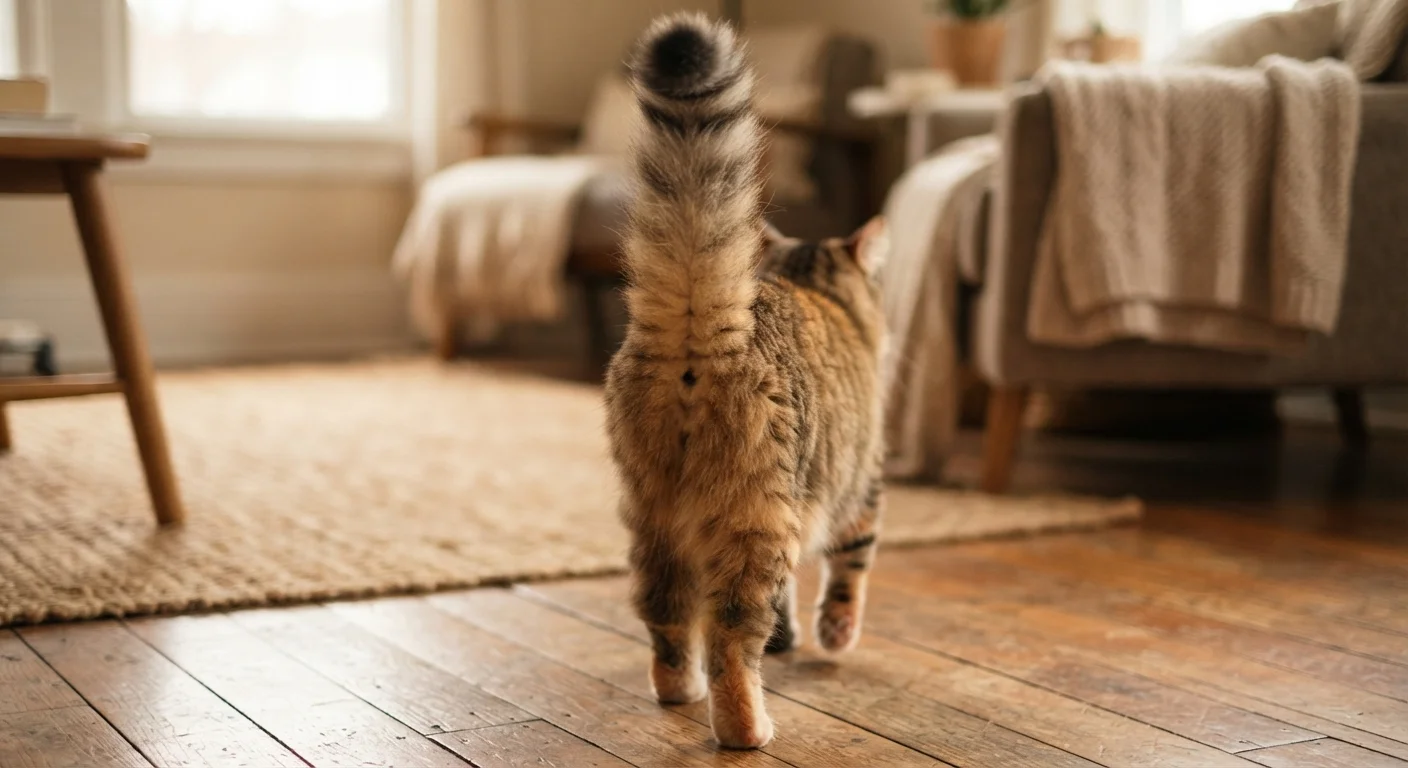
| Friendly greeting signal | Tail held high and upright |
| Warning signal during petting | Slow, wide tail lashing |
| Fear/defensive signal | Puffed or bristled tail (piloerection) |
| Bonding/affection gesture | Tail wrapped around a person or other cat |
Why the Tail Is Your Cat's Most Expressive Tool
Cats communicate primarily through body language, and the tail is one of the most readable parts of that system. Unlike vocalizations — which cats largely developed to interact with humans — tail signaling is rooted in feline-to-feline communication and instinct. Learning to read these signals helps you respond appropriately to your cat's emotional state rather than misinterpreting neutral or stressed behavior as aggression or affection.
Tail position rarely works alone. Always consider it alongside ear position, body posture, and eye shape for a complete picture. Still, the tail provides a reliable starting point. For a broader look at how cats and other pets use their whole bodies to communicate, see our full guide to pet body language.
| Primary communication mode | Body language (not vocalization) |
| Number of tail positions with distinct meanings | At least 8 commonly recognized |
| Friendly greeting signal | Tail held high and upright |
| Warning signal during petting | Slow, wide tail lashing |
| Fear/defensive signal | Puffed or bristled tail (piloerection) |
| Bonding/affection gesture | Tail wrapped around a person or other cat |
Tail Position Guide: What Each Posture Signals
Use the reference below to quickly identify what your cat's tail position is most likely communicating. Remember that context matters — the same position can carry slightly different meaning depending on the situation.
- Tail held high and upright
- A confident, content cat approaching you or another animal with friendly intent. Often seen when cats greet their owners. May be accompanied by a gentle curl at the very tip, which signals friendly curiosity.
- Tail raised with a hooked or question-mark tip
- Playful invitation. Your cat is interested and open to interaction. A good moment to initiate gentle play or engagement.
- Tail held low or tucked between the legs
- Anxiety, fear, or submission. The cat may feel threatened or unwell. Give it space and assess for environmental stressors.
- Puffed-out or bristled tail (piloerection)
- Intense fear or aggression — the cat is attempting to appear larger. This is a defensive response, not an invitation to approach. Back off and give the cat an exit route.
- Slow, wide swaying or lashing
- Growing irritation or overstimulation, especially during petting. This is a warning signal. Ceasing interaction at this point can prevent a scratch or bite.
- Rapid, low twitching at the tip
- Focused concentration — typically seen during stalking or hunting behavior. Your cat is locked onto a target (a toy, insect, or prey) and mentally absorbed.
- Tail wrapped around another cat or a person
- A social bonding gesture indicating trust and affection. When directed at a person, it's considered a feline compliment.
- Tail tucked tightly while sitting
- Mild discomfort or low-grade stress. If paired with hunched posture or avoidance, it may be worth reviewing for pain signals — see how pets show pain without making a sound.
Piloerection
The involuntary bristling of fur along the tail or spine, caused by muscle contractions triggered by fear or intense arousal. In cats, a puffed tail is a classic piloerection response.
Displacement behavior
A seemingly out-of-place action — like grooming mid-interaction — that signals internal conflict or stress. Tail-tucking often accompanies displacement behavior in anxious cats.
Overstimulation
A state in which sensory input during petting or play exceeds a cat's comfort threshold. Signs include tail lashing, skin twitching, and dilated pupils — and can escalate to biting if ignored.
Social bonding gesture
A behavior used by cats to signal trust and affiliation. Tail wrapping, head bunting, and slow blinking are all considered social bonding gestures in feline communication.
Common Misreadings and What to Do Instead
Many owners assume a moving tail always signals happiness, which is a misconception more commonly associated with dogs. In cats, tail movement is context-dependent and can indicate the opposite of contentment. A rapidly lashing tail during lap time is a cue to stop petting — not a sign that your cat is enjoying itself. Persisting past that signal is one of the more common sources of unexpected bites.
Another frequent mistake is interpreting a puffed tail as aggression directed at the owner. In most cases, the cat is frightened by something in its environment — a loud sound, an unfamiliar visitor, or another animal — and is in a defensive rather than offensive state. The correct response is to calmly create distance and remove the stressor if possible, not to attempt to comfort the cat through touch, which can escalate arousal further.
For a deeper look at how owners often misread feline signals, explore common body language mistakes that can lead to misunderstandings at home.
When Tail Changes May Signal a Health Issue
A sudden change in tail carriage — such as a cat that normally holds its tail high now carrying it low or tucked consistently — can sometimes indicate pain or a neurological issue rather than a mood shift. If a behavioral change is persistent and unexplained by environmental factors, a veterinary check-up is worth scheduling. You may also find it useful to read what your pet's coat reveals about their health as a companion reference.