

Key Takeaways
Why Cultural Respect Is a Travel Skill, Not Just a Courtesy
Every destination has its own unspoken rulebook — a layered set of social expectations, historical sensitivities, and daily rhythms that locals navigate instinctively. For an outsider arriving without awareness, even well-intentioned behaviour can land awkwardly or cause genuine offence. But this isn't a reason for anxiety. It's an invitation to prepare.
Respectful travel isn't about perfection. It's about approaching unfamiliar places with curiosity and humility rather than assumption. Travellers who do this tend to find that doors open — figuratively and literally. Locals are more willing to share, guide, and connect when they sense a visitor genuinely values their way of life. As part of your trip planning process, cultural preparation deserves the same attention as logistics.
“The traveller sees what he sees. The tourist sees what he has come to see.”
— G.K. Chesterton, Author and cultural commentator
The Core Practices: A Framework for Respectful Engagement
The following practices aren't abstract principles — they're actionable habits that shape every interaction you have on the ground. Build them into your routine before and during travel.
Research destination-specific social norms before you arrive.
Every culture has distinct expectations around greetings, eye contact, physical space, and acceptable public behaviour. Arriving without this knowledge makes avoidable offences more likely and reduces your confidence navigating unfamiliar situations.
Learn at least a basic greeting and a few courteous phrases in the local language.
Language is one of the most direct signals of goodwill. Even a mispronounced 'thank you' or 'hello' communicates that you've made an effort, which most locals respond to warmly. It humanises the interaction in a way that gestures alone cannot.
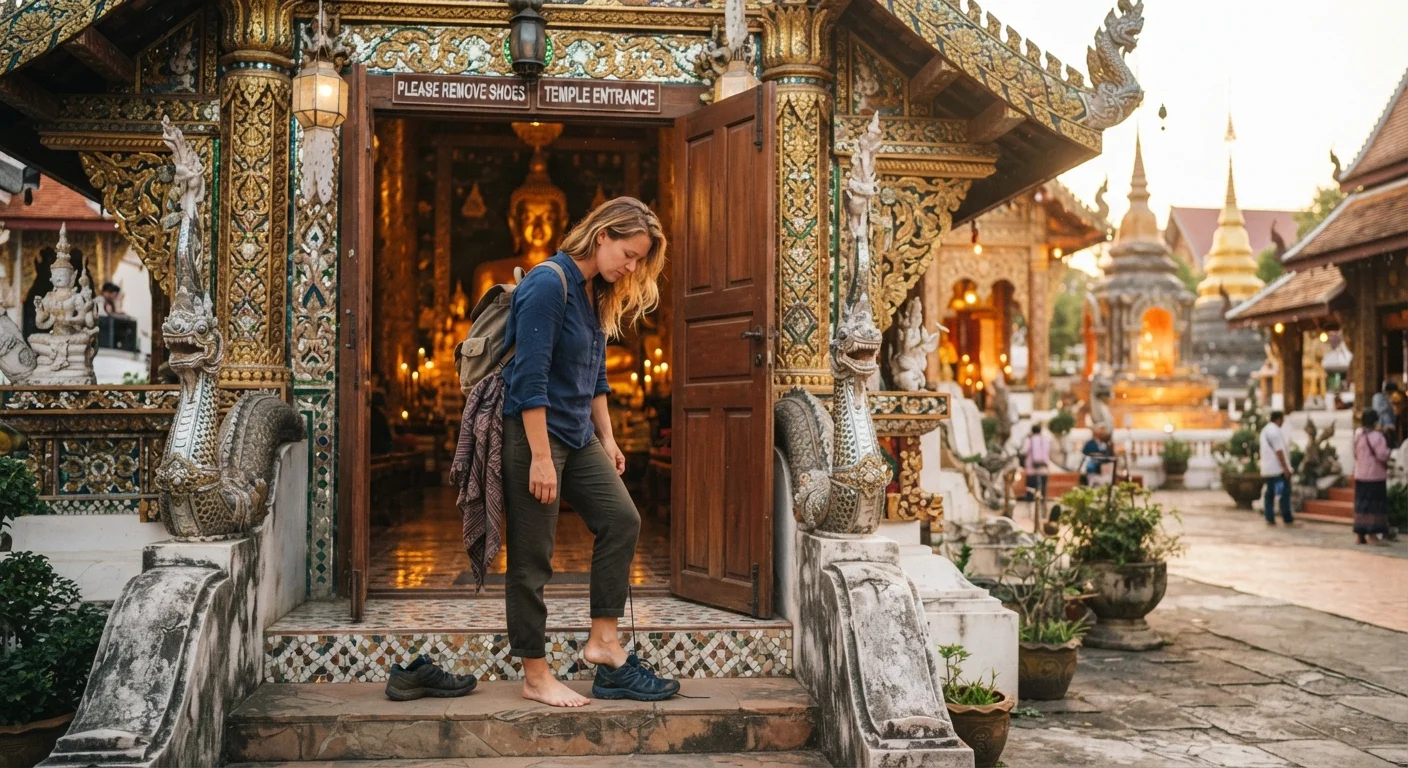
Understand and honour dress codes for religious and cultural sites.
Religious buildings, sacred landscapes, and ceremonial spaces often carry strict dress expectations that reflect deep spiritual and communal values. Ignoring these — even out of ignorance — can be genuinely hurtful to the communities who hold these spaces sacred.
Ask before photographing people, spaces, or ceremonies.
The camera is one of the most frequent sources of cultural friction in travel. What feels like capturing a memory to a tourist can feel invasive, exploitative, or spiritually violating to the subject. Permission — sought sincerely — changes that dynamic.
Direct your spending toward locally owned businesses and community-based experiences.
How you spend money is itself a form of cultural engagement. Tourism revenue that flows primarily to international chains rarely benefits the communities that make a destination distinctive. Supporting local markets, guides, and craftspeople preserves the cultural fabric you came to experience.
Observe before participating in unfamiliar cultural practices.
Jumping into a ceremony, ritual, or community gathering without context can shift the dynamic from respectful engagement to uncomfortable intrusion. Taking a moment to watch how locals participate — and whether outsiders are welcome — prevents this.
Quick Actions You Can Take Before You Board
Cultural respect starts before you leave home. A few targeted hours of preparation can shift your entire experience — from feeling like an outsider stumbling through norms to arriving as an informed, considerate guest. The pre-arrival groundwork you do matters enormously.
It's also worth recognising that seasonal timing intersects with cultural context. Festivals, religious observances, and national commemorations can shape what's appropriate to wear, where to go, and how to behave — making seasonal awareness part of respectful planning, not just logistics.
When Mistakes Happen — And They Will
Even well-prepared travellers make cultural missteps. You might gesture the wrong way, misread a social cue, or unknowingly wander somewhere you weren't meant to be. The response matters more than the error itself.
A sincere apology, offered without over-explanation, goes a long way. Locals in most destinations are accustomed to visitors making honest mistakes — what they're less forgiving of is indifference. If you've caused offence, acknowledge it simply and adjust your behaviour. That willingness to course-correct is itself a form of respect.
Grace Is Part of Cultural Literacy
When you make a cultural mistake, resist the urge to over-explain or become defensive. A brief, genuine acknowledgment — 'I apologise, I wasn't aware' — followed by adjusted behaviour is the most respectful response available. This kind of grace is itself a cultural skill worth developing before you travel.
For destinations with particular ecological or cultural fragility, the stakes of missteps can be higher. The guide to sensitive environments outlines how to approach these places with extra care. And if sustainable travel is a broader goal, responsible tourism in practice offers a grounded framework for the everyday choices that add up.
72%
Travellers who research local customs report more positive interactions
According to Expedia Group's 2023 Traveler Value Index, the majority of travellers who prepare culturally report meaningfully better on-the-ground experiences.
1 in 3
Travellers who have unintentionally caused cultural offence abroad
Various traveller surveys consistently suggest that a significant proportion of international tourists have accidentally violated local norms due to lack of preparation.