

| Number of Imperial Cities | 4 (Fez, Marrakech, Meknes, Rabat) |
| UNESCO World Heritage Medinas | Fez (1981), Marrakech (1985), Meknes (1996) (UNESCO World Heritage List) |
| Current National Capital | Rabat |
| Oldest Foundation | Fez, c. 789 CE |
| Most Visited City | Marrakech (Morocco Ministry of Tourism data, multiple years) |
| Language Used in Signage | Arabic and French (Tamazight also official) |
What Makes a City 'Imperial'?
Morocco's four imperial cities — Fez, Marrakech, Meknes, and Rabat — share a single defining trait: each served at some point as the seat of a ruling dynasty. Beyond that common thread, they diverge sharply in character, geography, and the kind of experience they offer a first-time visitor. Understanding those differences before you go can mean the difference between feeling oriented and feeling overwhelmed.
| Number of Imperial Cities | 4 (Fez, Marrakech, Meknes, Rabat) |
| UNESCO World Heritage Medinas | Fez (1981), Marrakech (1985), Meknes (1996) (UNESCO World Heritage List) |
| Current National Capital | Rabat |
| Oldest Foundation | Fez, c. 789 CE |
| Most Visited City | Marrakech (Morocco Ministry of Tourism data, multiple years) |
| Language Used in Signage | Arabic and French (Tamazight also official) |
For a deeper narrative look at how these cities contrast on the ground, see our detailed city-by-city guide covering each medina's distinctive character.
Fez: The Scholarly and Spiritual Core
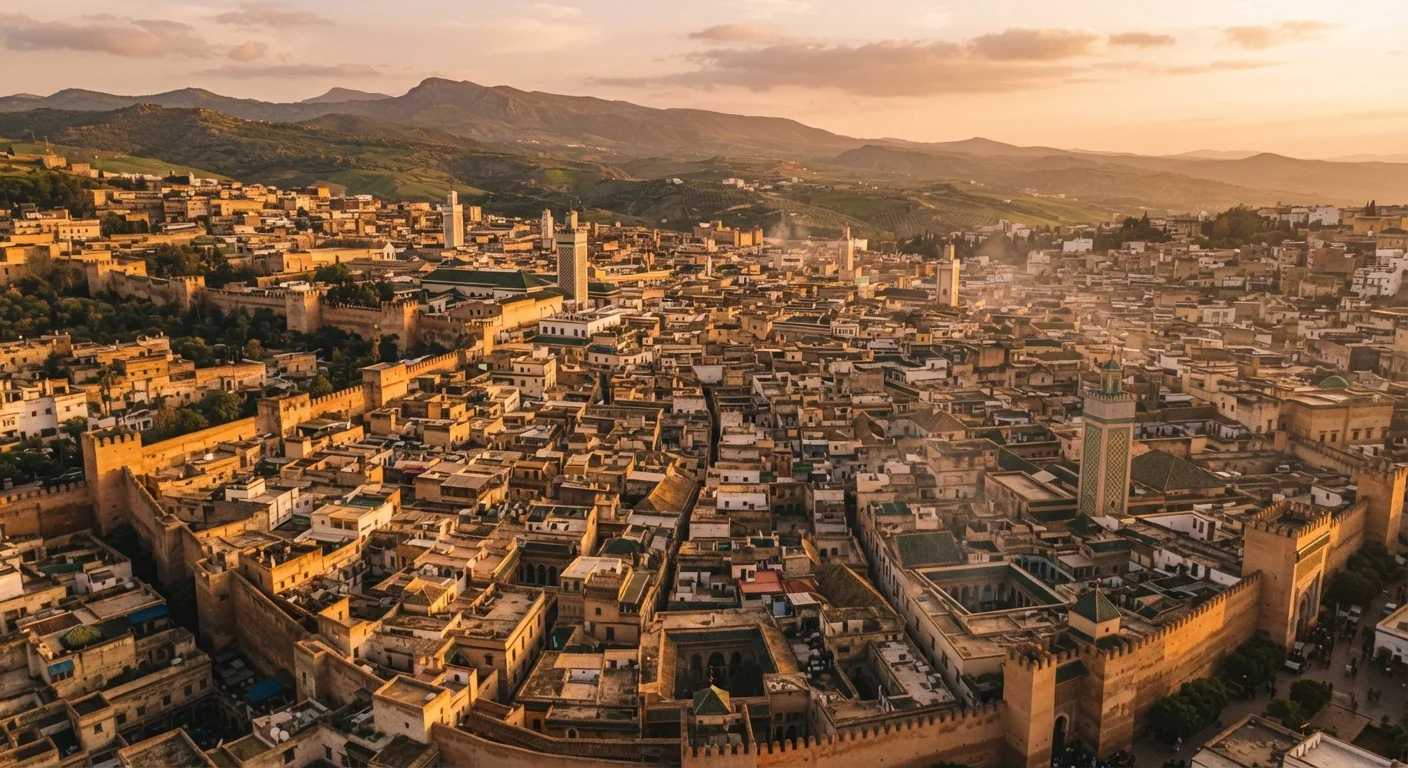
Founded in the 9th century, Fez (also spelled Fès) is considered the cultural and intellectual heart of Morocco. Its medina, Fès el-Bali, is one of the world's largest car-free urban areas and a UNESCO World Heritage Site. Navigating it without a guide is genuinely disorienting — narrow lanes branch unpredictably, and the sensory environment shifts constantly between tanneries, souks, and mosques.
The University of al-Qarawiyyin, founded in 859 CE, is widely cited as one of the oldest continuously operating universities in the world. Fez rewards slow, curious travelers who want immersion in craft traditions — leatherwork, zellige tilework, and hand-woven textiles are all produced here using methods centuries old.
Medina
The historic walled old city found in many North African urban centers. In Morocco's imperial cities, medinas contain markets, mosques, homes, and workshops that have operated for centuries.
Souk
A traditional marketplace or bazaar, typically organized by craft or trade — one area for spices, another for leather, another for textiles. Souks are central to daily life in all four imperial cities.
Kasbah
A citadel or fortified district, often elevated within or adjacent to a medina. Several imperial cities have notable kasbahs that served as royal or military headquarters.
Zellige
A traditional Moroccan mosaic tilework made from individually hand-cut pieces of glazed ceramic. It is a signature decorative element found in palaces, mosques, and riads across all four cities.
Riad
A traditional Moroccan house or guesthouse built around a central interior courtyard or garden. Many riads in the medinas have been converted into boutique accommodations.
Marrakech, Meknes, and Rabat: Three More Stories
Marrakech, in the south, is the most visited of the four — and the most internationally oriented. Its famous Djemaa el-Fna square pulses with street performers, food stalls, and musicians well into the night. The city's red-ochre palette, lush palace gardens, and thriving arts scene give it an energy unlike anywhere else in the country. Marrakech is also the easiest entry point for day trips into the Atlas Mountains.
Meknes is often called the overlooked imperial city, sitting quietly between Fez and Rabat. Built by Sultan Moulay Ismail in the 17th century as a grand Moroccan answer to Versailles, it features some of the most impressive city walls and gateways in the country — without Fez's crowds. The nearby Roman ruins of Volubilis make it an excellent base for history-focused travelers.
Rabat, the current capital, blends its imperial past with modern governance. The Kasbah of the Udayas and the Hassan Tower are its most iconic landmarks. As a working administrative city, Rabat moves at a noticeably calmer pace than Marrakech and Fez, which can be a genuine relief for visitors who want historical depth without sensory overload.
859 CE
Founding of al-Qarawiyyin University, Fez
Al-Qarawiyyin is widely cited among historians as one of the world's oldest continuously operating institutions of higher education.
~40 km
Extent of Moulay Ismail's Meknes city walls
Historical accounts describe an ambitious fortification project spanning roughly 40 kilometers, making Meknes one of Morocco's most monumental construction undertakings.
4
UNESCO World Heritage Sites among imperial cities
Three medinas (Fez, Marrakech, Meknes) and the Medina of Rabat hold UNESCO recognition, reflecting the collective historical significance of Morocco's imperial capitals.