

Key Takeaways
Why First-Timer Assumptions Often Miss the Mark
Southeast Asia carries an outsized reputation in the American travel imagination — a mosaic of temples, tropical beaches, street food at midnight, and budget adventure. Much of that reputation has earned its place. But the gap between the region travelers picture and the one they actually encounter can be jarring, particularly for first-timers who've absorbed years of travel content without the ground-level detail to contextualize it.
The misconceptions aren't arbitrary. They tend to crystallize around a handful of recurring themes: cost, safety, culture, communication, and logistics. Getting clearer on each of these before you book doesn't diminish the adventure — it makes the real experience easier to navigate and more genuinely rewarding. As a foundation, it's worth reviewing common missteps first-time international travelers make before diving into region-specific planning.
Myth
Southeast Asia is one of the cheapest places on earth, so I can travel on almost no budget.
Fact
Costs vary dramatically by country and city. Singapore is among the world's more expensive cities, and even within budget-friendly countries like Thailand or Vietnam, tourist hubs can surprise first-timers with prices closer to what they'd pay at home.
The idea that Southeast Asia is uniformly affordable has some truth at its core — certain countries, particularly in mainland Southeast Asia, do offer lower costs than Western Europe or North America for accommodation, local food, and transportation. But the gap is narrowing in popular destinations, and the budget-travel fantasy often ignores a few realities: international flights to the region are rarely cheap for US travelers, tourist-facing restaurants in Bangkok or Bali frequently charge prices comparable to mid-tier US dining, and activities like island-hopping tours or guided treks carry real costs. Travelers who expect to survive on a few dollars a day may find themselves either disappointed or confined to an experience that doesn't represent the region fairly.
Myth
Southeast Asia is essentially one big destination — the countries are all pretty similar.
Fact
The region spans wildly different cultures, religions, political systems, cuisines, and infrastructures. Traveling from Japan-influenced Vietnam to Buddhist Myanmar to Muslim-majority Malaysia is not one homogeneous experience.
This is perhaps the most consequential misconception first-time visitors carry. The ten countries that make up Southeast Asia represent remarkable diversity — from the Theravada Buddhist traditions of Laos and Cambodia to the Hindu-inflected culture of Bali, from the orderly modernity of Singapore to the rural complexity of rural Myanmar. Customs around dress, etiquette, tipping, and temple behavior differ meaningfully from country to country. For a deeper look at how the subregions differ practically, see Planning Your First Trip to Southeast Asia.
Myth
You can eat street food safely without worrying — or alternatively, you should avoid it entirely.
Fact
Street food carries some risk, but it's manageable with practical judgment — and avoiding it entirely means missing some of the region's most authentic culinary experiences.
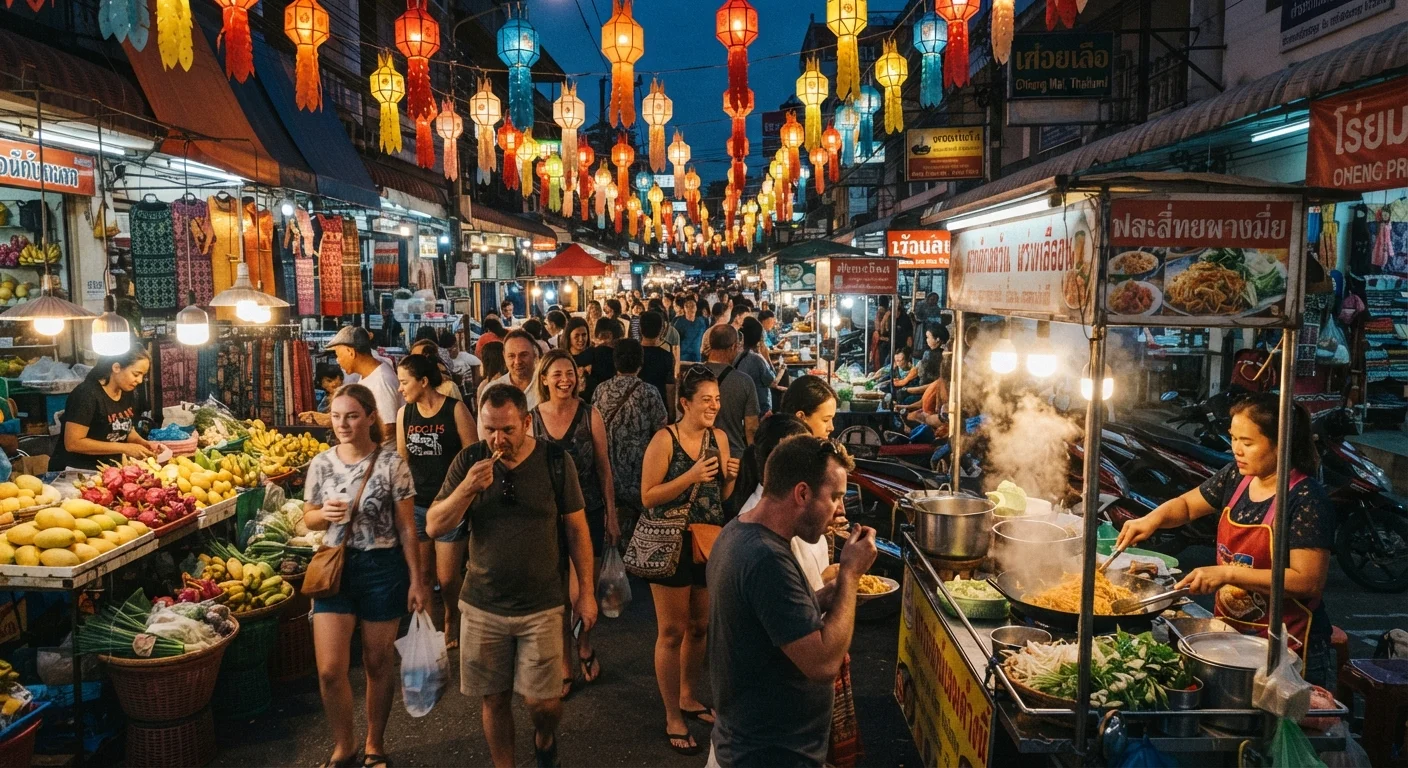
Both extremes of this myth lead travelers astray. Eating without any discernment can result in stomach illness; avoiding street food altogether means dining primarily in air-conditioned tourist restaurants that often serve less flavorful, more expensive interpretations of local dishes. Experienced travelers generally look for stalls with high customer turnover (food doesn't sit), freshly cooked items rather than pre-prepared dishes left out, and basic cleanliness cues like clean cooking surfaces and fresh ingredients. Hydration and hand hygiene matter more than blanket avoidance. If you have specific health conditions or concerns, consult a travel medicine professional before your trip.
Myth
English is barely spoken across the region, so communication will be a constant struggle.
Fact
In most tourist areas, major cities, hotels, and transport hubs, English is widely understood. The challenge increases significantly when you venture into rural areas or smaller towns.
US travelers often either over-prepare for a language barrier that barely materializes in tourist zones, or under-prepare for the genuine communication gaps that appear once they leave those corridors. In Chiang Mai, Ho Chi Minh City, Kuala Lumpur, or Bali's visitor centers, English is common enough that daily logistics are manageable. But one village off the main route, and the dynamic shifts entirely. Having a translation app downloaded for offline use, learning a few polite phrases in local languages, and carrying your accommodation's address written in the local script are practical habits that make a real difference.
Myth
Southeast Asia is inherently unsafe for solo travelers, especially women.
Fact
Many parts of Southeast Asia are regularly ranked among the more welcoming destinations for solo travelers, including solo women — though like any region, it requires situational awareness and preparation.
Solo travel in Southeast Asia is a well-established, long-running phenomenon. Destinations like northern Thailand, Vietnam's coastal cities, and Bali attract enormous numbers of solo travelers each year, including solo women, with broadly positive experiences. This doesn't mean risks don't exist — petty theft, scams targeting tourists, and varying local attitudes toward solo women are real considerations that vary by country and context. Preparation matters enormously. For a grounded starting point, Solo Travel Planning: A Starting Point for First-Timers covers logistics and safety awareness in practical terms.
What This Means for Your Planning
Correcting these myths isn't about lowering expectations — it's about replacing vague ones with accurate ones. The traveler who arrives knowing that Vietnam and Indonesia are culturally worlds apart, that street food requires judgment rather than fear or recklessness, and that costs scale with choices rather than geography alone, is genuinely better positioned to enjoy what Southeast Asia actually offers.
Don't Skip Travel Health Prep
Some travelers assume Southeast Asia requires no special health preparation beyond a basic first-aid kit. In reality, certain destinations may recommend or require vaccinations for diseases like hepatitis A, typhoid, or — in some areas — Japanese encephalitis. Consult a travel medicine professional or your doctor at least four to six weeks before departure to understand what's appropriate for your specific itinerary.
Visa preparation deserves its own dedicated attention. Rules for US passport holders vary considerably across the region — some countries offer visa-on-arrival, others require advance applications, and some have recently altered their policies.
Visa Rules Change — Always Verify
Visa policies across Southeast Asia shift regularly. What applied to a traveler six months ago may not apply to you today. Always check entry requirements directly with official government sources — both your own country's foreign affairs website and the destination country's immigration authority — well before your trip.
10
Countries in Southeast Asia
The ASEAN bloc includes ten distinct nations, each with its own visa rules, currencies, and entry requirements for US passport holders.
~68M
International visitors to Thailand annually (pre-pandemic peak)
Thailand's Tourism Authority reported approximately 39.8 million international arrivals in 2019, making it one of the world's most-visited countries — a scale that shapes both opportunities and tourist-zone pricing.
The region rewards travelers who show up curious and flexible. Accurate expectations are the foundation of both.