

Key Takeaways
Higher potential sale price than a dealership offer
Without a dealer's resale margin built in, private buyers may pay noticeably more — particularly for well-maintained, popular vehicles with documented service history.
Full control over the selling process and timing
You set the price, choose whom to sell to, and can walk away from any offer. There's no pressure to accept a deal on someone else's schedule.
Opportunity to present the vehicle's history directly
Sellers can share service records, explain any repairs, and build buyer confidence in ways a dealership transaction does not easily allow.
No trade-in bundling that obscures true value
When selling privately, the transaction is standalone — you're not at risk of having a low trade-in value offset by what appears to be a generous deal on a new car.
Time-consuming to advertise, show, and negotiate
From crafting a listing and responding to inquiries to managing test drive logistics, a private sale can absorb significant time — sometimes weeks or longer for slower-moving vehicles.
Seller bears all legal and administrative responsibility
Correctly completing title transfer, notifying motor vehicle authorities, and ensuring the buyer has appropriate insurance for a test drive all fall to the seller in a private transaction.
Safety and fraud risks in dealing with strangers
Meeting unknown buyers, accepting payment, and allowing test drives introduce personal safety and financial risks that require careful vetting and precautions.
Lower offer prices from dealerships reduce net proceeds
Dealer offers routinely reflect wholesale rather than retail value, meaning sellers typically receive less than they would through a well-executed private sale.
Vehicles in poor condition are difficult to sell privately
Private buyers scrutinize condition closely and negotiate hard on any defects; cars that need work may sit unsold or require significant price reductions.
Our Verdict
Neither route is universally superior — the right choice depends on how you weigh money against time, effort, and risk. Private sales reward patient, prepared sellers who want maximum return. Dealership routes suit those who value a quick, low-hassle process, even at a lower price.
Owners with a well-maintained vehicle, flexibility on timing, and comfort handling negotiations and paperwork will likely benefit most from a private sale; those prioritizing speed or trading up to a new vehicle may prefer the dealership route.
Why the Selling Route Matters More Than You Think
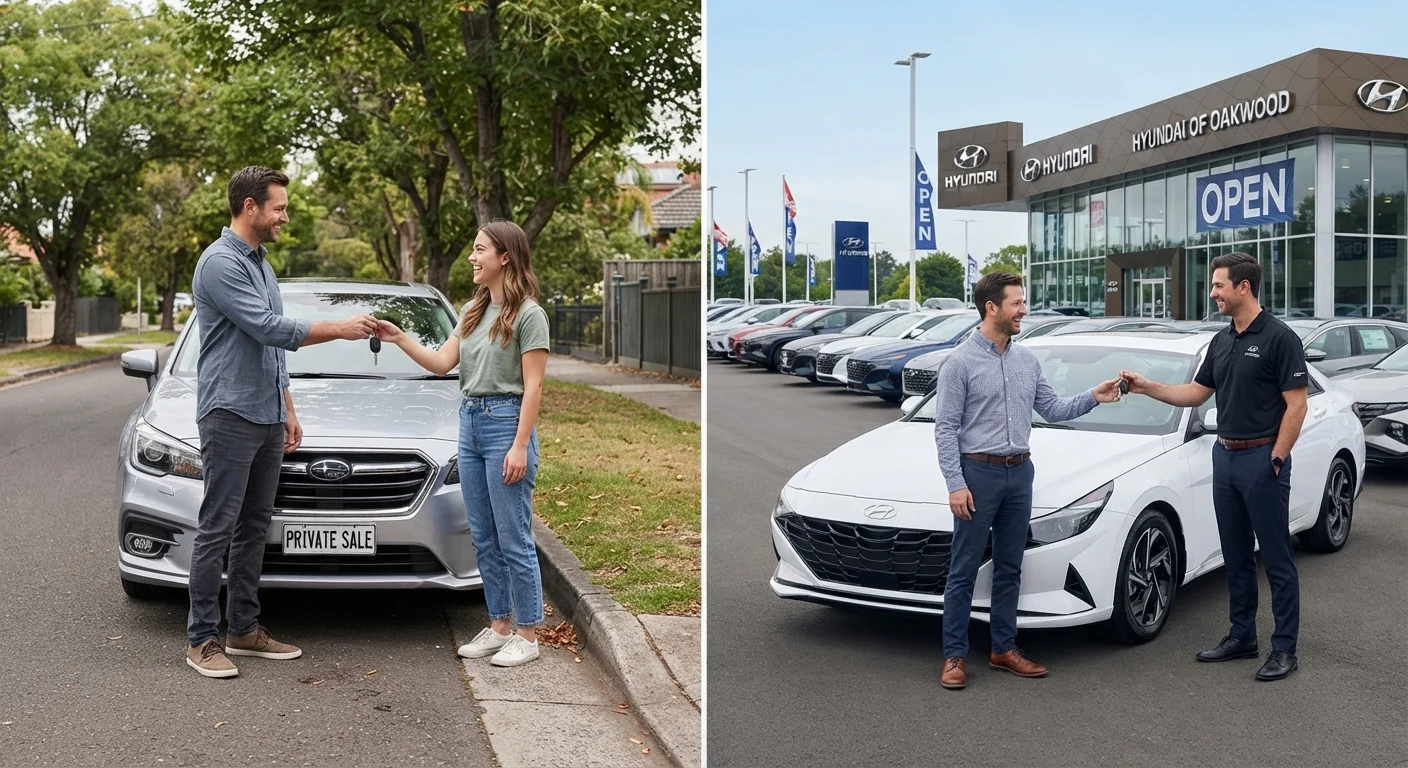
When it comes time to sell a car, most owners focus on what price to ask. But the channel through which you sell can have just as large an impact on the outcome — financially and practically. The two most common routes are selling privately (directly to another individual) and selling to or through a dealership, either as a trade-in on a new vehicle or as an outright cash sale.
Understanding the real trade-offs between these options helps you avoid leaving money on the table — or underestimating the time and responsibility involved. If you're also considering financing a replacement vehicle, it's worth reviewing how trade-in values interact with loan structures; our article on financing a car covers those concepts clearly.
The Case for Selling Privately
Selling directly to another buyer is consistently cited by automotive consumer guides as the route most likely to return a higher sale price. Because there is no dealership margin to account for, private buyers are often willing to pay closer to a vehicle's true market value.
Higher potential sale price than a dealership offer
Without a dealer's resale margin built in, private buyers may pay noticeably more — particularly for well-maintained, popular vehicles with documented service history.
Full control over the selling process and timing
You set the price, choose whom to sell to, and can walk away from any offer. There's no pressure to accept a deal on someone else's schedule.
Opportunity to present the vehicle's history directly
Sellers can share service records, explain any repairs, and build buyer confidence in ways a dealership transaction does not easily allow.
No trade-in bundling that obscures true value
When selling privately, the transaction is standalone — you're not at risk of having a low trade-in value offset by what appears to be a generous deal on a new car.
That said, a higher price is not guaranteed, and the difference varies considerably by vehicle type, condition, mileage, and local demand. A well-maintained, in-demand vehicle may sell quickly at a strong price. A high-mileage or older model may sit unsold for weeks, or require price reductions to attract interest.
Private sellers are also responsible for all aspects of the transaction: advertising, fielding inquiries, arranging test drives safely, negotiating, and completing transfer paperwork correctly. Errors in documentation — such as failing to notify the relevant motor vehicle authority promptly — can create legal liability even after the sale.
The Case for Using a Dealership
Dealerships provide a structured, faster selling experience. Whether you're trading in as part of a new car purchase or selling outright for cash, the process is typically handled by the dealership's staff, with paperwork completed on-site.
Time-consuming to advertise, show, and negotiate
From crafting a listing and responding to inquiries to managing test drive logistics, a private sale can absorb significant time — sometimes weeks or longer for slower-moving vehicles.
Seller bears all legal and administrative responsibility
Correctly completing title transfer, notifying motor vehicle authorities, and ensuring the buyer has appropriate insurance for a test drive all fall to the seller in a private transaction.
Safety and fraud risks in dealing with strangers
Meeting unknown buyers, accepting payment, and allowing test drives introduce personal safety and financial risks that require careful vetting and precautions.
Lower offer prices from dealerships reduce net proceeds
Dealer offers routinely reflect wholesale rather than retail value, meaning sellers typically receive less than they would through a well-executed private sale.
Vehicles in poor condition are difficult to sell privately
Private buyers scrutinize condition closely and negotiate hard on any defects; cars that need work may sit unsold or require significant price reductions.
The main concession is price. Dealers need to inspect, potentially recondition, and then resell the vehicle at a profit, so their offers almost always fall below private sale market value. However, the gap is not always as wide as sellers fear — and for certain vehicles in poor condition, a dealer's offer may be surprisingly competitive compared to a realistic private sale price after factoring in advertising costs and time spent.
10–20%
Typical gap between private sale and trade-in value
Consumer automotive research consistently finds that private sale prices tend to run roughly 10–20% higher than dealer trade-in offers for the same vehicle, though the gap varies by model, condition, and market conditions.
1–8 weeks
Average private car sale timeframe
Depending on the vehicle's desirability and local demand, private sellers should expect the process to take anywhere from a few days to several weeks before completing a transaction.
For those trading in as part of a new purchase, dealers may also structure offers to make the overall deal feel more attractive, so it's important to evaluate the trade-in value and the new vehicle price separately.
Practical Factors to Weigh Before Deciding
Beyond price, several practical considerations should shape your decision:
- Time available: Private sales can take days to months. If you need funds quickly or want to avoid carrying two cars simultaneously, a dealership may be more practical.
- Vehicle condition: Cars with known mechanical issues, high mileage, or cosmetic damage are harder to sell privately at a fair price. Buyers in the private market tend to negotiate aggressively on anything imperfect.
- Your comfort with negotiation: Private buyers frequently negotiate. If you find this stressful or unfamiliar, a dealership's fixed offer may be easier to manage.
- Outstanding finance: If there's an existing loan on the vehicle, selling privately requires settling that loan before or at the point of sale — a process that adds complexity. Dealers are generally experienced at handling this.
Outstanding Finance Changes the Equation
If your vehicle is still under a finance agreement, you cannot transfer clean title to a private buyer until that loan is settled. In practice, this means either paying off the balance before listing the car or coordinating a simultaneous payoff at the point of sale — both of which add complexity. Dealerships are generally set up to handle this process routinely, which is one reason sellers with outstanding finance sometimes find the dealer route more straightforward.
Managing the proceeds wisely matters too. If you're carrying other financial obligations, reviewing how to handle competing priorities — such as those discussed in our piece on managing high-interest debt — can help you make the most of whatever sale price you achieve.
Making the Right Call for Your Situation
A useful starting point is to obtain a realistic estimate of your vehicle's private sale value and a dealership offer, then compare them honestly — accounting for your advertising costs, the time you're willing to invest, and any reconditioning you'd need to do to attract private buyers.
Neither option is inherently better. The dealership route's convenience has real value; so does the private route's earning potential. The decision should reflect your circumstances, not a general assumption that one path is always superior.
If you're also weighing servicing costs as part of your overall car ownership budget, our comparison of franchised garages versus independent mechanics may help you plan ahead.