

Key Takeaways
Our Verdict
Franchised garages and independent mechanics each fill a genuine need. For newer vehicles still under manufacturer warranty, a franchised garage typically provides the safest continuity. For older, out-of-warranty cars, a reputable independent mechanic often delivers comparable quality at a lower cost. The key is vetting whoever you choose with equal care.
| Best for | Recommended |
|---|---|
| Owners of newer vehicles with an active manufacturer warranty | Franchised Garage |
| Drivers with older or out-of-warranty vehicles seeking cost-effective servicing | Independent Mechanic |
| Those who want specialized brand expertise and OEM parts as standard | Franchised Garage |
| Drivers who value a long-term personal relationship and flexible pricing | Independent Mechanic |
What Each Option Actually Involves
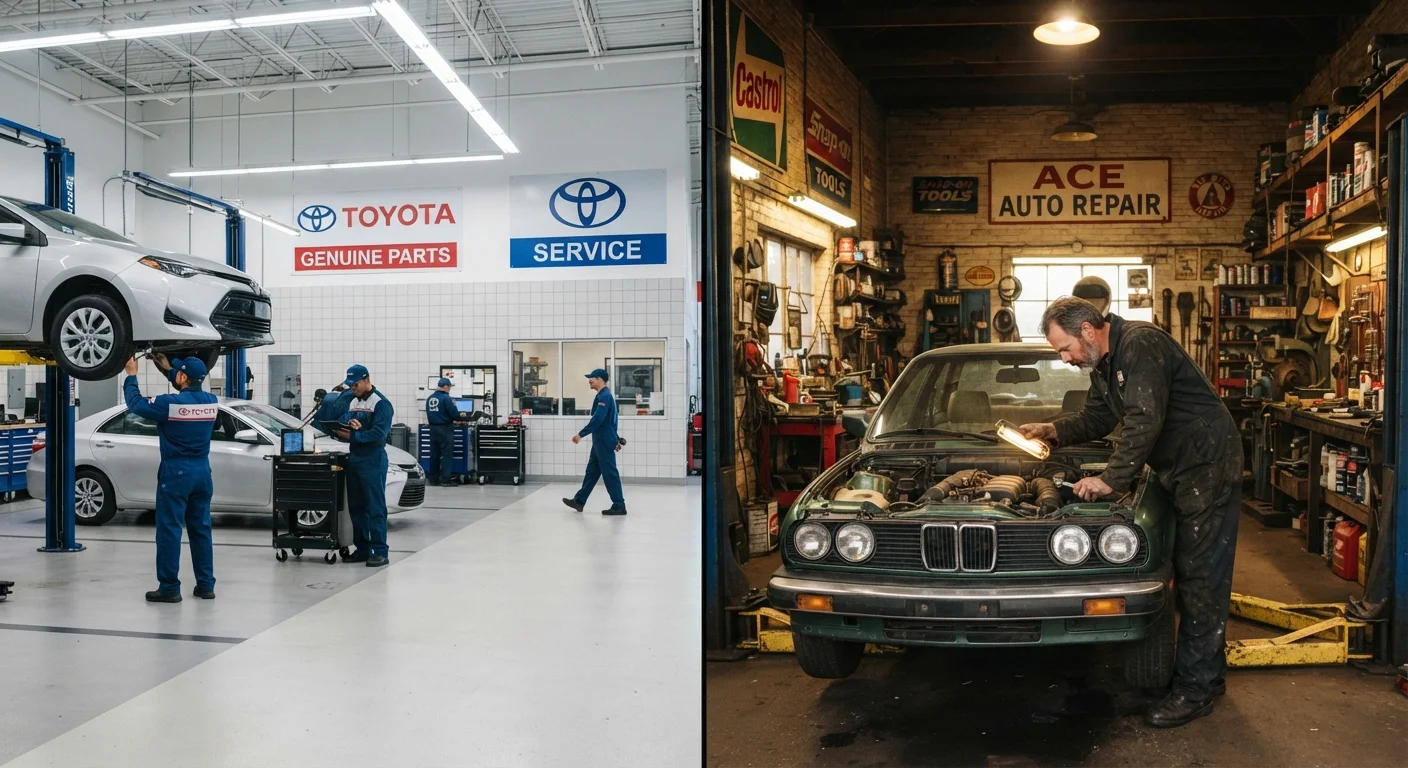
A franchised garage — sometimes called a main dealer or authorized service center — operates under a vehicle manufacturer's banner. Technicians receive brand-specific training, the workshop is stocked with OEM parts, and digital service records feed directly into the manufacturer's database.
An independent mechanic operates outside any brand agreement. This can mean a sole trader working from a small unit or a multi-bay workshop with several employed technicians. Quality and specialization vary widely, which is why credentials matter more here than the independent label itself.
Understanding what your service schedule actually requires is a useful first step before choosing where to take the car, since it tells you whether the upcoming job is routine or more complex.
Comparing the Key Trade-Offs
The decision hinges on several practical factors — cost, expertise, convenience, and how the choice affects your vehicle's value over time. The table below lays out where each option typically stands.
| Franchised Garage | Independent Mechanic | |
|---|---|---|
| Labor cost | Typically higher hourly rates | Often lower hourly rates |
| Parts used | OEM parts as standard | OEM or quality aftermarket options |
| Technician training | Brand-specific factory training | Varies; look for ASE certification |
| Diagnostic tools | Proprietary manufacturer tools | Generic or aftermarket scan tools |
| Warranty implications | No risk to manufacturer warranty | Generally safe if work is documented |
| Service record integration | Logged in manufacturer database | Paper or independent digital records |
| Relationship and flexibility | Standardized, process-driven | Often more personal and adaptable |
| Best vehicle age | Newer, in-warranty vehicles | Older, out-of-warranty vehicles |
One nuance worth noting: under U.S. federal law (the Magnuson-Moss Warranty Act), manufacturers generally cannot void a warranty solely because you used an independent mechanic for routine maintenance — provided the work meets manufacturer specifications and is properly documented. That said, warranty terms vary, so review your specific agreement or ask a dealer directly before assuming this applies to your situation.
When a Franchised Garage Makes More Sense
For vehicles still within the manufacturer's warranty period, a franchised garage is the low-risk choice. Technicians have direct access to proprietary diagnostic tools, technical service bulletins, and software updates that independent shops may not. If a fault is discovered that falls under warranty, having the car's history held entirely within the manufacturer's network simplifies the claims process.
Complex, brand-specific systems — advanced driver assistance systems, hybrid powertrains, or vehicles with over-the-air software integration — can also genuinely benefit from factory-trained hands. The higher labor rates reflect that specialization.
Check for Recall Completions at the Dealer
Franchised dealerships are the only places that can perform manufacturer-issued safety recalls at no charge to the owner. Even if you use an independent mechanic for routine servicing, it's worth checking the NHTSA recall database periodically and visiting a dealer if any open recalls apply to your vehicle.
When an Independent Mechanic Is Worth Considering
Once a car is out of warranty, the calculus shifts. Independent mechanics frequently charge lower hourly labor rates and have more flexibility on parts sourcing — using quality aftermarket components where OEM pricing would be disproportionate to the car's value.
A long-standing independent shop often builds a genuine working knowledge of a specific customer's vehicle. That continuity can lead to faster diagnosis of recurring issues and more candid conversations about whether a repair is worth doing at all. For drivers trying to keep ownership costs predictable over the long term, this kind of straightforward relationship has real practical value.
The critical qualifier is verification. Look for mechanics accredited through recognized programs such as ASE (Automotive Service Excellence) certification, check independent reviews across multiple platforms, and ask whether the shop provides written estimates and itemized invoices.
For context on which maintenance tasks you might handle yourself versus where professional help is non-negotiable, see our guide to DIY car maintenance boundaries.
Credentials Vary Widely Among Independent Shops
The independent label alone tells you very little about quality. Before committing to any shop, confirm technician certifications, ask about the warranty offered on parts and labor, and get the estimate in writing. A reluctance to provide written quotes or itemized invoices is a red flag worth taking seriously.
Making a Well-Informed Choice
Whichever route you take, a few habits protect you regardless of who turns the wrench. Always request a written estimate before work begins, ask for replaced parts to be returned to you, and keep a personal copy of every service invoice. These records support resale value and give any future mechanic a clear picture of the vehicle's history.
The franchised vs. independent question is not permanent — many drivers use a main dealer during the warranty years, then switch to a trusted independent afterward. Treating the choice as context-dependent rather than ideological leads to better outcomes and, often, lower costs over the life of the vehicle.