

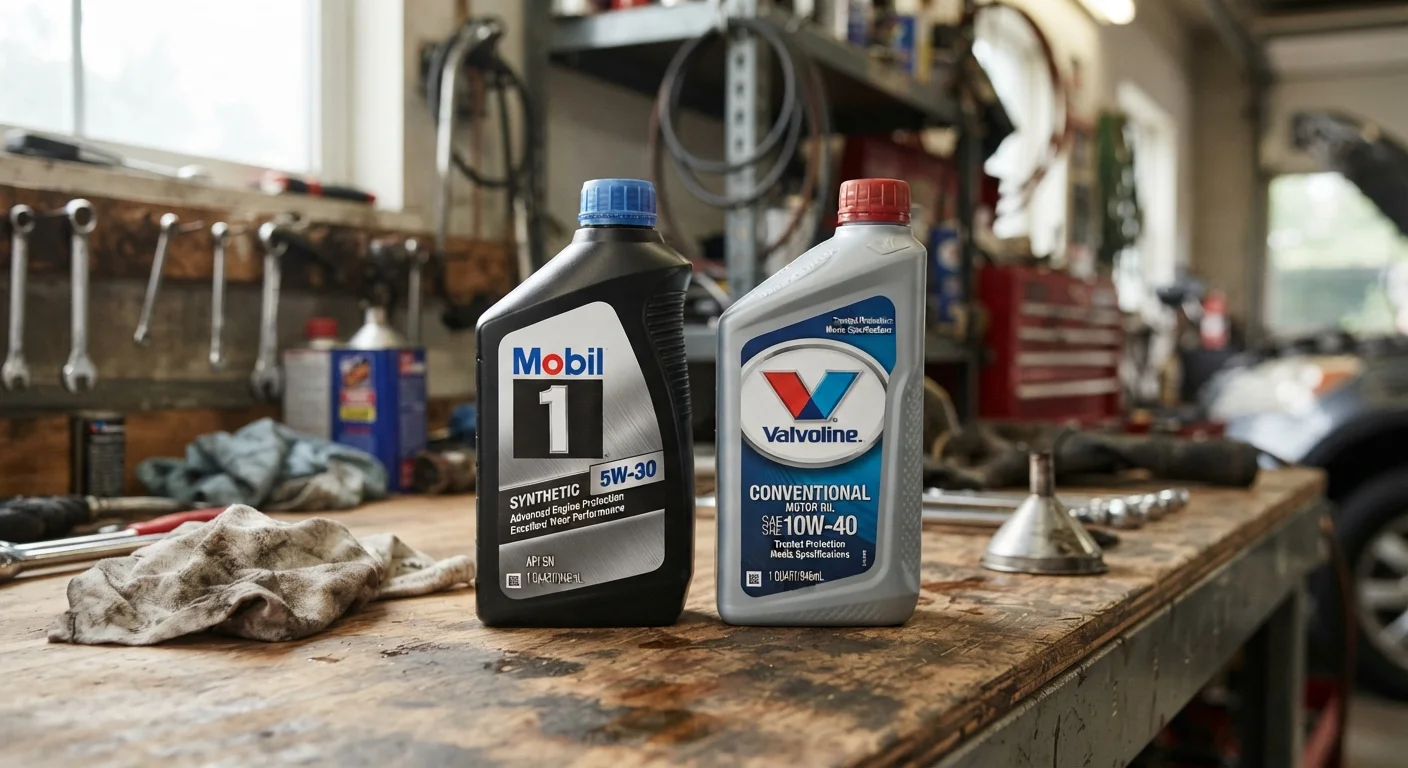
Key Takeaways
Option A
Synthetic Engine Oil
The engineered, high-performance formulation.
Best for: Drivers with newer vehicles, turbocharged engines, extreme climates, or longer intervals between oil changes.
Option B
Conventional Engine Oil
The time-tested, naturally derived standard.
Best for: Owners of older or simpler engines with low to moderate mileage and regular driving in mild conditions.
If you drive a newer vehicle with a turbocharged or high-output engine
Synthetic Engine Oil
Modern turbocharged engines run hotter and demand tighter lubrication tolerances. Synthetic oil's thermal stability and superior film strength protect these engines more reliably.
If you own an older, simpler vehicle with modest performance demands
Conventional Engine Oil
Many older engines were designed and sealed around conventional oil's viscosity characteristics. If your manufacturer specifies it and your engine runs well, there's little reason to change.
If you live in a region with extreme hot summers or cold winters
Synthetic Engine Oil
Synthetic oil resists thinning in high heat and flows more freely at low temperatures, providing better cold-start protection than conventional alternatives.
If you're looking to reduce how often you visit the shop for oil changes
Synthetic Engine Oil
Full synthetic oils typically support drain intervals of 7,500 to 15,000 miles, compared to 3,000 to 5,000 miles for conventional oil, depending on manufacturer guidance.
What Makes These Two Oils Different
At its core, the difference is in the origin and refinement of the base oil. Conventional engine oil starts as crude petroleum extracted from the ground, then refined to remove impurities. It works — billions of engines have run on it for decades — but its molecular structure is inherently inconsistent, with varying chain lengths and residual contaminants that can affect performance under stress.
Synthetic oil is either fully synthesized from chemical compounds or highly refined from petroleum to achieve a uniform, engineered molecular structure. This consistency means more predictable viscosity behavior, better resistance to oxidation (the breakdown of oil over time), and superior performance at temperature extremes. A synthetic oil rated at 5W-30 will hold that rating more reliably than its conventional equivalent across the full range of operating conditions.
There's also a middle category — synthetic blend oil — which mixes conventional base oil with synthetic additives. It offers some of synthetic's benefits at a cost between the two, and it's a reasonable option for drivers who want an upgrade without the full price jump.
| Criterion | Synthetic Oil | Conventional Oil |
|---|---|---|
| Base material | Chemically engineered compounds | Refined crude petroleum |
| Molecular consistency | Highly uniform | Variable chain lengths |
| Temperature performance | Excellent in extremes | Moderate range |
| Typical drain interval | 7,500–15,000 miles | 3,000–5,000 miles |
| Cost per quart | Higher | Lower |
| Turbocharged engine suitability | Generally recommended | Often insufficient |
| Older engine compatibility | Verify seal condition first | Generally compatible |
When Your Engine's Needs Should Drive the Decision
The single most important factor in this decision isn't price or brand loyalty — it's your vehicle manufacturer's specification. Your owner's manual will state a required oil type and viscosity grade. Using the wrong specification can, in some cases, void warranty coverage or, more critically, fail to protect engine components designed around a specific lubricant profile.
Turbocharged engines are one area where this matters considerably. Turbochargers spin at extraordinary speeds and generate intense heat. The oil must flow quickly to critical bearings at startup and resist breaking down at sustained high temperatures. Most turbocharged vehicle manufacturers specify full synthetic for exactly this reason. Common maintenance myths — like the idea that you must change oil every 3,000 miles regardless — often ignore these manufacturer-specific recommendations entirely.
High-mileage vehicles (typically above 75,000 miles) present a separate consideration. Worn seals and slightly looser tolerances can mean that a switch to synthetic, which is thinner at low temperatures, may cause minor leaks in engines that were previously fine on conventional oil. Some manufacturers produce high-mileage synthetic blends with seal conditioners specifically for this scenario.
Can You Switch Between Oil Types?
Switching from conventional to synthetic — or vice versa — is generally safe for most modern engines. The two are chemically compatible and can even be mixed, though mixing reduces synthetic's performance advantage. If your engine has high mileage or known seal wear, consult a qualified mechanic before switching to full synthetic, as thinner cold-flow properties could surface existing leak points.
Cost, Drain Intervals, and the Real Math
Conventional oil typically costs less per quart, but that single-transaction comparison misses the fuller picture. Because synthetic oil degrades more slowly, it supports longer drain intervals — often two to three times longer, depending on your vehicle's guidance. That means fewer changes per year, less time at the shop, and potentially lower overall annual spend, even if each individual change costs more.
That said, longer drain intervals only apply if your manufacturer actually endorses them for your vehicle. Pushing beyond recommended intervals regardless of oil type is a maintenance risk worth avoiding. Always confirm what your manual specifies. To understand what your oil is telling you between changes, checking your oil correctly is a practical skill every driver should have.
2–3×
Longer drain intervals for full synthetic
Industry guidance from oil manufacturers and automakers generally supports synthetic drain intervals of 7,500 to 15,000 miles, versus 3,000 to 5,000 for conventional, depending on driving conditions and vehicle specifications.
~60%
New vehicles specifying synthetic oil
A growing majority of new vehicle models from major automakers now require or recommend full synthetic engine oil, driven largely by tighter tolerances in modern engines and turbocharged powertrains.
The bottom line: neither oil type is universally superior. The right answer is the one that matches your engine's design, your climate, your driving patterns, and your manufacturer's specifications — in that order.
This article is for general informational purposes only. Always consult your vehicle's owner's manual and a qualified mechanic before making changes to your maintenance routine.