

Key Takeaways
Tyre Rotation
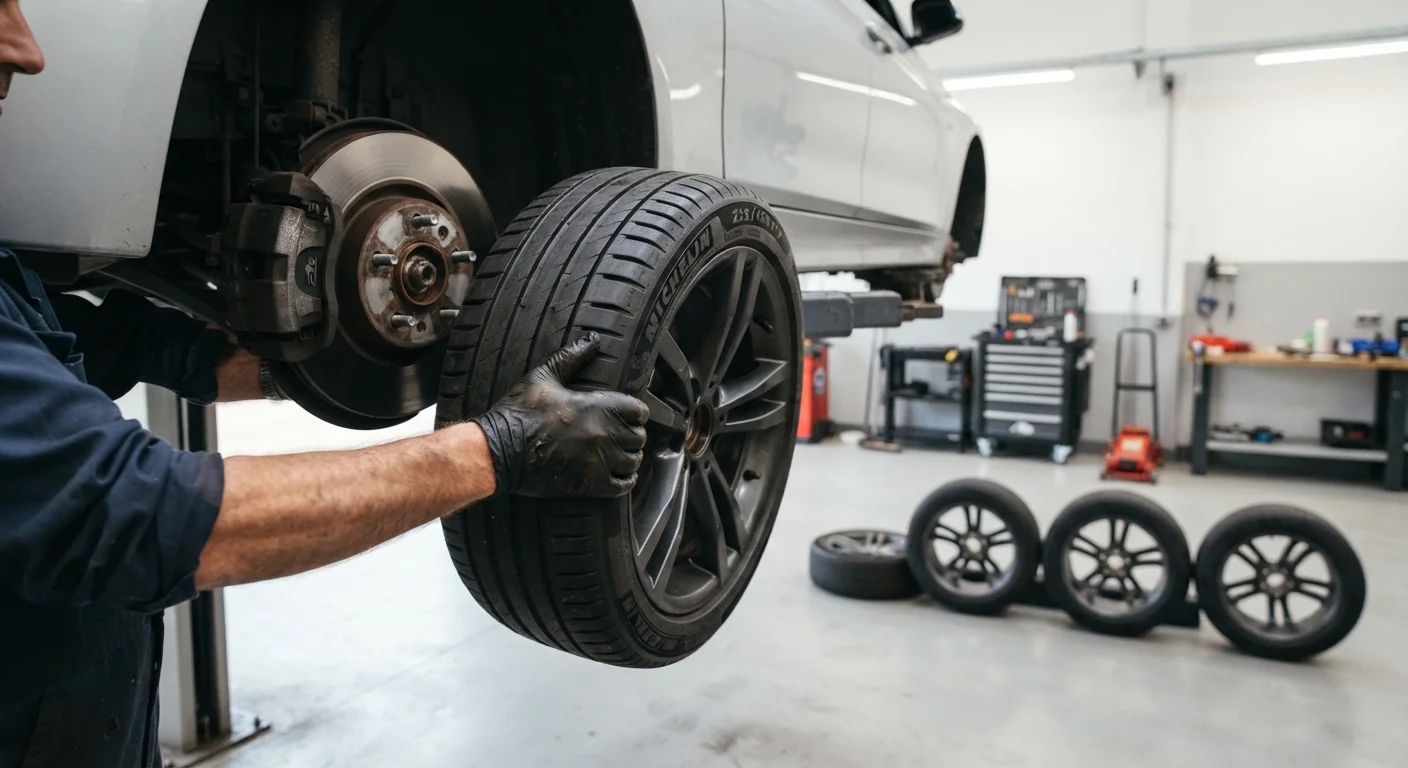
Tyre rotation is the practice of moving each tyre to a different position on your vehicle at regular intervals — for example, swapping the front tyres to the rear and vice versa. Because different wheel positions experience different forces, tyres wear unevenly over time. Rotating them spreads that wear more evenly across all four tyres, extending their useful life.
The optimal rotation pattern depends on your drivetrain (front-wheel drive, rear-wheel drive, or all-wheel drive) and whether your tyres are directional or non-directional. Your vehicle's owner's manual specifies the recommended pattern and interval.
Why Tyres Wear Unevenly in the First Place
It might seem like all four tyres do the same job, but the physics of driving create very different demands depending on wheel position. On a front-wheel drive vehicle, the front tyres handle acceleration, steering, and a significant share of braking load — often wearing 2–3 times faster than the rear pair. Rear-wheel drive vehicles push the load rearward, stressing those tyres differently. Even all-wheel drive systems distribute torque unevenly under normal driving conditions.
Steering geometry also plays a role. Slight misalignment, aggressive cornering habits, and road camber all create localized wear patterns — such as the inner or outer shoulder wearing faster than the center of the tread. Left unaddressed, these patterns become permanent and accelerate tyre degradation. See our guide to habits that reduce long-term wear for how routine choices compound over a vehicle's lifetime.
2–3×
Faster front-tyre wear on FWD vehicles
Front tyres on front-wheel drive vehicles absorb steering, acceleration, and braking simultaneously, causing them to wear significantly faster than rear tyres.
5,000–7,500 mi
Recommended rotation interval
Most vehicle manufacturers specify tyre rotation every 5,000 to 7,500 miles — often aligned with oil change schedules for convenience.
Up to 20%
Potential tyre life extension from regular rotation
Automotive maintenance experts commonly cite even tread wear as a key factor in maximizing total tyre mileage before replacement is required.
What Rotation Actually Does
Rotating tyres redistributes these unequal stresses. When a tyre that's been absorbing heavy braking forces at the front moves to a rear position, it enters a lower-demand role and effectively gets a chance to wear more gradually. Meanwhile, the previously lightly used rear tyre moves into the front position, picking up the heavier workload while it still has plenty of tread to handle it.
The practical result is that all four tyres approach the end of their usable life at roughly the same time. That matters for two reasons. First, it means you replace all four at once — which is ideal for consistent grip and handling balance. Second, it means you get substantially more total mileage out of the set before replacement is necessary.
Pair Rotation With Your Oil Change
Scheduling tyre rotation at the same time as your oil change is one of the most reliable ways to stay on interval without needing a separate reminder. Many service centres include rotation as part of an oil change package, making it a low-effort addition to a visit you're already making.
The Real Cost of Skipping Rotation
Many drivers skip rotation simply because no warning light illuminates and the tyres look fine from a distance. But wear develops gradually and becomes visible only once it's already significant. By that point, the tyre's structural performance — particularly its ability to channel water in wet conditions — may already be compromised.
The financial consequences are straightforward. A tyre set that might last 50,000 miles with proper rotation may wear out in 30,000–35,000 miles without it, with the worn tyres concentrated at one axle. That often means purchasing two new tyres while the opposite pair still has usable tread — an inefficient outcome that increases both spending and complexity. For a broader look at how maintenance choices affect ownership costs, see our guide to controlling long-term car running costs.
Building Rotation Into Your Maintenance Rhythm
The easiest way to stay on schedule is to tie rotation to another recurring service. Many shops perform tyre rotation during oil changes, which aligns neatly with a 5,000–7,500 mile interval for most modern vehicles. If your oil change interval is longer, set a separate reminder. Some tyre manufacturers also tie warranty coverage to documented rotation history — worth checking when purchasing a new set.
Also worth noting: if your vehicle's tyre pressure monitoring system flags one tyre repeatedly, or if you notice the car pulling to one side, those can be early signs of uneven wear — not just a pressure issue. Our article on tyre pressure loss covers the overlap between pressure and wear-related symptoms. For a full maintenance timeline that includes rotation alongside other key services, see our routine maintenance schedule.
Directional Tyres Require a Different Approach
Directional tyres — those with a tread pattern designed to rotate in one specific direction — can only be moved front-to-rear on the same side of the vehicle. They cannot be crossed side-to-side without dismounting and remounting the tyre on its rim. If you're unsure whether your tyres are directional, look for an arrow on the sidewall or check with your tyre installer.
Rotation Doesn't Replace Alignment Checks
Tyre rotation helps even out wear but does not correct the underlying alignment or balance issues that cause uneven wear in the first place. If you notice wear concentrated on one edge or a consistent pull to one side, have wheel alignment checked separately — otherwise the new rotation pattern will simply reproduce the same wear problem.