

Key Takeaways
Summary
22 items · 30–60 minutes per seasonal check
Why a Seasonal Checklist Beats Waiting for a Warning Light
Most drivers respond to problems rather than prevent them. A warning light illuminates, a tyre goes soft, or a wiper smears the windshield in the middle of a downpour — and suddenly a minor issue becomes an urgent, expensive one. Seasonal maintenance breaks that reactive cycle.
Vehicles experience different stresses across the year. Summer heat degrades coolant and accelerates tyre wear. Winter cold thickens engine oil, weakens batteries, and reduces tyre pressure. Spring and fall are transition points — ideal moments to reset your vehicle's readiness before conditions change. Working through this checklist four times a year covers nearly every system that affects safety and reliability.
For a broader look at how routine upkeep fits into the cost of owning a car, see our guide on keeping car running costs under control over the long term. And if you're new to car ownership, our first-time driver's roadmap to routine car care explains which tasks are DIY-friendly and which belong in a workshop.
Don't Skip the Owner's Manual
Generic maintenance intervals are useful starting points, but every vehicle has specific requirements. Using the wrong oil viscosity, incorrect coolant type, or a non-recommended tyre size can void warranty coverage or cause damage. Always cross-reference this checklist against your vehicle's owner's manual before purchasing fluids or parts.
What You'll Need Before You Start
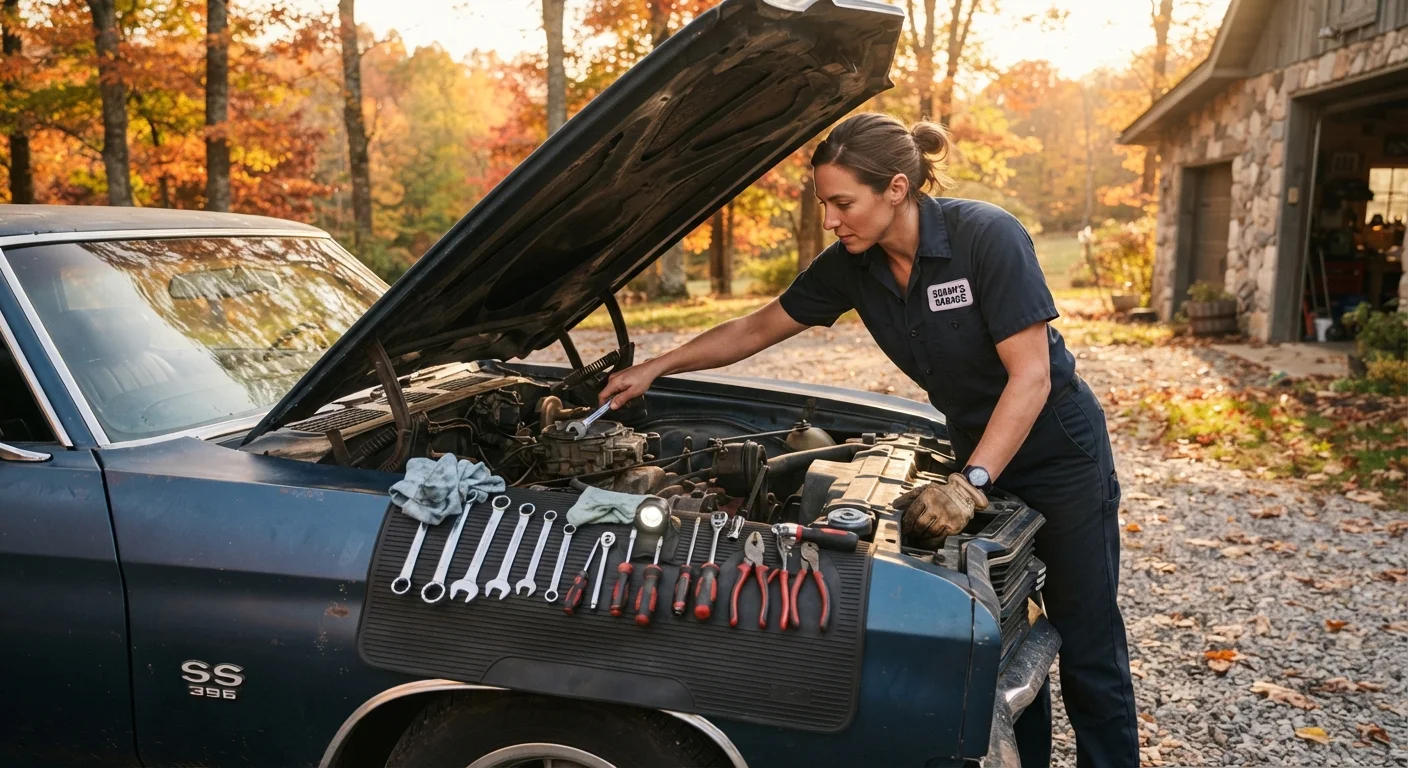
Most seasonal checks require only basic tools and a well-lit driveway. Gather everything before you begin so the inspection flows without interruption. Always work on a level surface, with the engine cold for fluid checks unless the owner's manual specifies otherwise.
Tyre pressure gauge
Accurately measures tyre inflation so you can adjust to the manufacturer's recommended PSI.
Tread depth gauge
Provides a precise tread depth reading to determine whether tyres are still safe for use.
Flashlight or work light
Illuminates hard-to-see areas under the hood, beneath the vehicle, and around tyre sidewalls.
Clean rags or shop towels
Used to wipe dipsticks cleanly for accurate fluid level readings.
Battery load tester
Tests whether the battery can hold a charge under load — many auto parts stores offer this service for free.
Coolant test strips
Quickly verify the freeze-protection level of your antifreeze without sending a sample to a lab.
Owner's manual
Contains your vehicle's exact fluid specifications, service intervals, and tyre pressure recommendations.
The Full Seasonal Checklist
Work through each group in order. Items marked must are non-negotiable for safety and legal roadworthiness. Items marked should are strongly recommended to avoid breakdowns. Nice-to-have items extend your vehicle's life and comfort but won't leave you stranded if skipped this cycle.
Tyres
Fluids
Lights and Electrical
Wipers and Visibility
Brakes and Suspension
Belts, Filters, and Under the Hood
Brake and Suspension Work Belongs in a Shop
Brake components are safety-critical systems. While you can monitor warning signs — unusual noises, a spongy pedal, or pulling to one side — do not attempt to service brake calipers, rotors, or brake lines without professional training and the correct equipment. An improperly serviced brake system can fail without warning. If you have any doubt about brake condition, have a qualified mechanic inspect it before driving further.
For a condensed version of what to check before any individual trip, see our pre-trip safety walkthrough. For a full service timeline, consult our routine car maintenance schedule.
Seasonal-Specific Priorities at a Glance
While all items on this checklist apply year-round, certain checks carry extra weight in specific seasons:
- Spring: Inspect the undercarriage and brake components for corrosion after winter road salt exposure. Check wiper blades after heavy use.
- Summer: Monitor tyre pressure weekly — heat causes pressure to rise, then drop as it cools. Verify coolant concentration and air conditioning function.
- Fall: Test the battery load, swap to all-season or winter tyres as temperatures approach 45°F (7°C), and top off washer fluid with a freeze-resistant formula.
- Winter: Keep fuel above the halfway mark to reduce condensation in the tank. Check that all lights function — days are shorter and visibility matters more.
Changing road conditions demand adjusted driving habits too. Our article on driving in rain, fog, and ice covers the specific adjustments that keep you safe when conditions deteriorate.