

| Standard color for urgent warnings | Red (Common automotive industry convention) |
| Color for 'needs attention soon' alerts | Amber / Yellow (Common automotive industry convention) |
| OBD-II system required in US vehicles since | 1996 (US EPA regulation) |
| TPMS mandated in new US vehicles since | 2008 (TREAD Act, US federal law) |
| Recommended tire pressure location | Driver's door jamb sticker (Vehicle manufacturer specification) |
| Most common check engine trigger | Loose or faulty gas cap (General industry diagnostic data) |
Why Warning Lights Exist — and Why They Deserve Attention
Modern vehicles are equipped with onboard diagnostic systems that continuously monitor dozens of sensors. When something falls outside normal parameters, the system triggers a warning light on your instrument cluster. These lights aren't optional suggestions — they're your car's direct line of communication.
Ignoring a warning light rarely makes the underlying issue disappear. In many cases, a small, inexpensive problem becomes a costly repair when left unaddressed. Understanding what each symbol signals — and how urgently you need to act — is one of the most practical skills any driver can develop. It also connects directly to broader safe driving habits every driver should practice.
| Standard color for urgent warnings | Red (Common automotive industry convention) |
| Color for 'needs attention soon' alerts | Amber / Yellow (Common automotive industry convention) |
| OBD-II system required in US vehicles since | 1996 (US EPA regulation) |
| TPMS mandated in new US vehicles since | 2008 (TREAD Act, US federal law) |
| Recommended tire pressure location | Driver's door jamb sticker (Vehicle manufacturer specification) |
| Most common check engine trigger | Loose or faulty gas cap (General industry diagnostic data) |
The Warning Light Spectrum: Urgent vs. Monitor vs. Informational
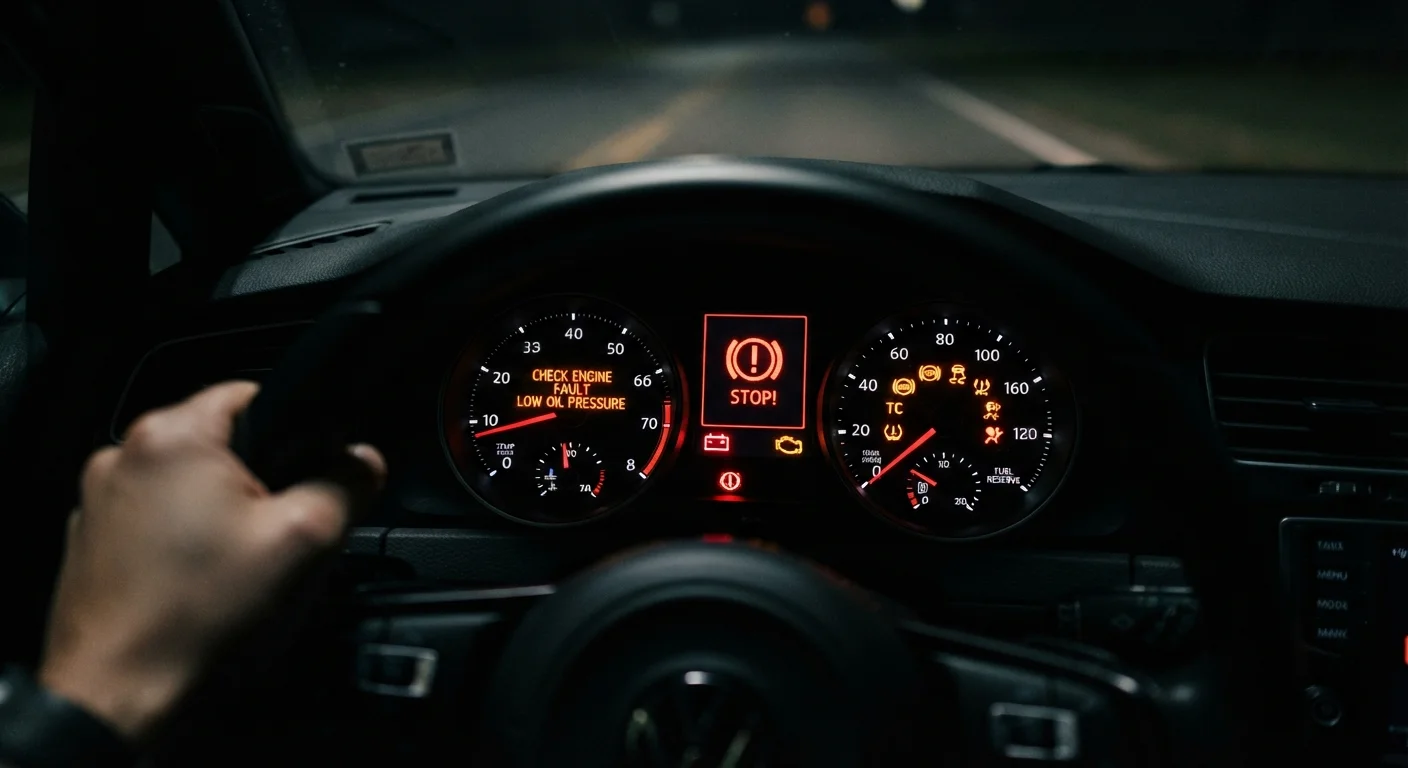
Not every illuminated symbol demands an immediate roadside stop. Most manufacturers use a color-coded system to convey urgency:
- Red lights signal a serious or safety-critical issue. Pull over safely as soon as possible and do not continue driving until the problem is diagnosed.
- Yellow or amber lights indicate a condition that needs attention soon — typically within a day or two — but is not immediately dangerous in most cases.
- Green or blue lights are simply informational, confirming that a system (like high beams or turn signals) is active.
This framework gives you a reliable first filter: if it's red, treat it as urgent. If it's amber, investigate promptly. Always consult your owner's manual for the specific meanings assigned to your vehicle, since symbols can vary by manufacturer.
OBD-II (Onboard Diagnostics)
A standardized system used in most vehicles sold in the US after 1996 that monitors engine and emissions components. When a fault is detected, it stores a diagnostic trouble code (DTC) and triggers the check engine light.
Diagnostic Trouble Code (DTC)
A specific alphanumeric code stored by the vehicle's computer when a sensor reads outside its normal range. A scan tool or code reader translates these into descriptions that help technicians pinpoint the problem.
TPMS (Tire Pressure Monitoring System)
A federally mandated system in US vehicles since 2008 that uses sensors to monitor tire pressure and alert the driver when pressure drops significantly below the recommended level.
Catalytic Converter
An exhaust system component that converts harmful combustion byproducts into less harmful gases. Engine misfires can send unburned fuel into the converter, causing expensive damage if not addressed quickly.
Alternator
A generator driven by the engine that charges the battery and powers electrical systems while the car is running. A failing alternator causes the battery warning light to illuminate and can leave you stranded.
The Most Common Warning Lights, Decoded
Here's what the lights you're most likely to see actually indicate:
- Check Engine (Engine Management) Light
- An amber engine-shaped symbol that can mean anything from a loose gas cap to a misfiring cylinder. A flashing check engine light, however, signals a more serious fault — typically an engine misfire that can damage the catalytic converter. Have a mechanic read the diagnostic trouble code promptly. Many auto parts stores will scan for codes at no charge.
- Oil Pressure Warning
- A red oil can symbol means your engine's oil pressure has dropped dangerously low. Stop the engine as soon as it is safe to do so — driving with low oil pressure can cause irreversible engine damage within minutes. Check the oil level first; if it's adequate, the issue may be a failing oil pump and requires immediate professional attention.
- Battery / Charging System Light
- A red battery symbol means the electrical charging system isn't functioning correctly. This could be a failing alternator, a weak battery, or a broken drive belt. See our guide to spotting a dying battery for early warning signs to watch between service visits. Limit electrical load (turn off AC, radio) and head to a shop promptly.
- Coolant Temperature Warning
- A red thermometer in liquid indicates the engine is overheating. Pull over, switch off the engine, and allow it to cool before checking the coolant reservoir. Never open a hot radiator cap.
- Tire Pressure Monitoring System (TPMS)
- An amber symbol resembling a cross-section of a tire alerts you that one or more tires are significantly under-inflated. Check pressures at the nearest gas station and inflate to the specification on your door jamb sticker — not the number on the tire sidewall.
- Brake System Warning
- A red exclamation point inside a circle (or the word BRAKE) can indicate the parking brake is engaged, low brake fluid, or a fault in the braking system. Release the parking brake first; if the light persists, treat it as serious and avoid highway driving until it's inspected.
Your Owner's Manual Is the Definitive Source
Warning light symbols and their precise meanings can differ between manufacturers and even between model years from the same brand. The descriptions in this article reflect common industry conventions, but your vehicle's owner's manual will always have the authoritative explanation for your specific car. If you've misplaced a printed copy, most manufacturers provide digital versions through their official websites.
What to Do When a Light Comes On
Follow this practical sequence whenever a new warning light appears:
- Note the color and symbol. Consult your owner's manual — always keep one in the glove box or bookmark the digital version.
- Assess how the car feels. Strange noises, vibrations, loss of power, or unusual smells add urgency to any warning light.
- Act proportionally. Red lights with abnormal driving behavior mean stop now. Amber lights in a car driving normally mean schedule a shop visit within 24–48 hours.
- Don't reset and ignore. Clearing a code without fixing the problem only delays diagnosis and may allow damage to worsen.
If you drive a used vehicle, knowing its history can help you anticipate recurring issues. The vehicle history report guide explains how to flag service gaps and prior damage before they become dashboard surprises. And since a reliable vehicle is part of responsible car ownership, reviewing your car insurance policy terms ensures you understand your coverage if a breakdown leads to a larger claim.