

Key Takeaways
Why Batteries Rarely Fail Without Warning
A dead battery on a cold Monday morning feels sudden — but in most cases, the car was signaling trouble for weeks. Lead-acid batteries, which power the vast majority of vehicles on the road, degrade gradually. Their internal plates corrode, electrolyte evaporates, and the ability to hold a full charge slowly erodes. The result is a battery that looks fine but can no longer reliably deliver the burst of power your starter motor demands.
Knowing what to look for puts you ahead of an expensive roadside call. The warning signs below range from sounds you hear when you turn the key to numbers you can check with a basic voltmeter. For broader context on what your dashboard is communicating, see what your warning lights are actually telling you.
Slow or labored engine cranking
When you turn the ignition, the starter motor draws a heavy current from the battery. A healthy battery delivers that surge instantly. A weakening one hesitates — you'll hear the engine turn over more slowly than usual, sometimes with a dragging or sluggish sound before it catches. This is particularly noticeable on cold mornings, when low temperatures reduce a battery's available cranking power by a measurable margin.
A dragging, slow-to-catch startup is one of the clearest early battery warnings you'll encounter.
Needing frequent jump-starts
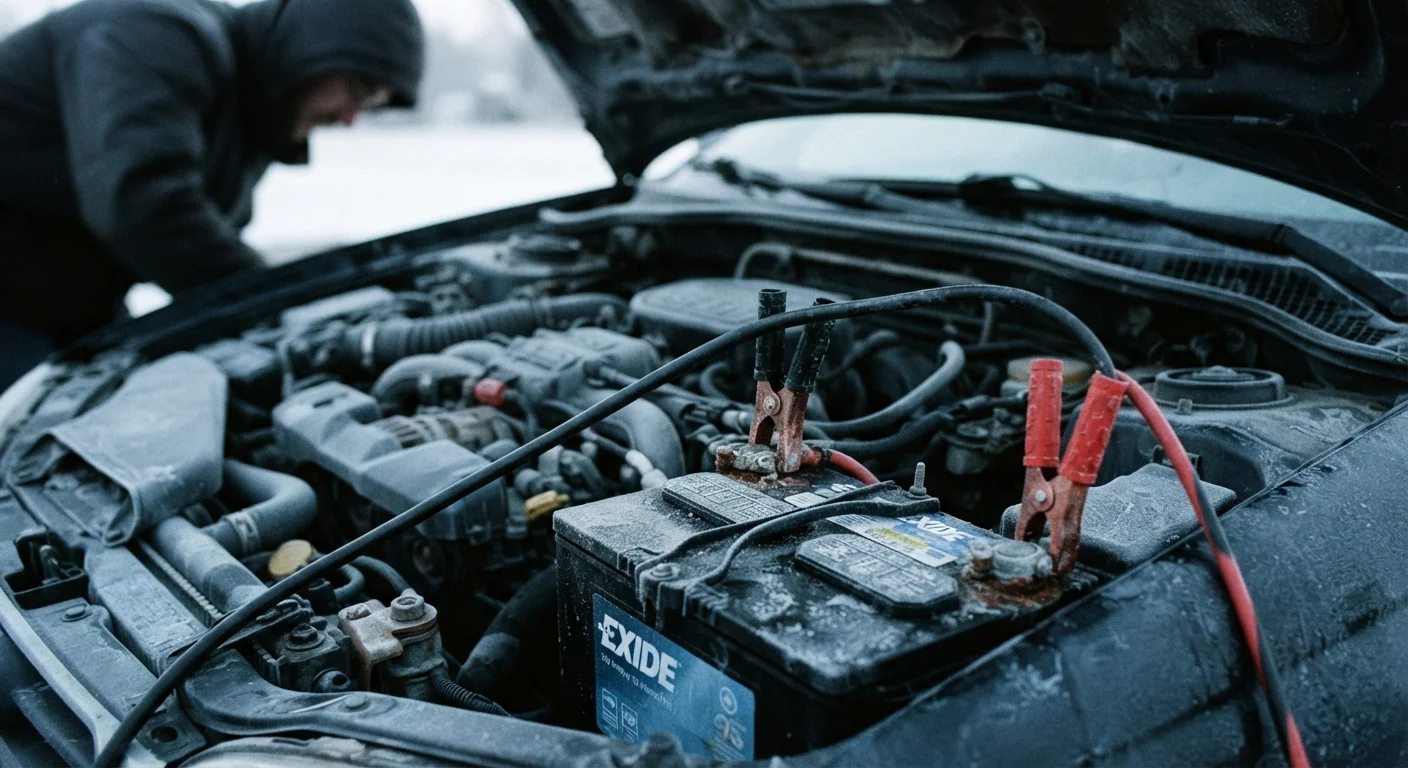
Jump-starting a car occasionally isn't cause for alarm — leaving lights on overnight can drain any battery. But needing a jump more than once in a short period, especially without an obvious cause like a parasitic drain or left-on accessory, points directly to a battery that can no longer hold a full charge. At that point, a jump is a temporary fix, not a solution.
Recurring jump-starts with no clear cause almost always mean the battery itself has reached end of life.
Dimming headlights and interior electrical issues
Your car's electrical system is powered by the battery at startup and by the alternator once the engine is running. When the battery weakens, voltage fluctuations become visible: headlights may appear dimmer than usual, especially at idle; interior lights might flicker; power windows and seats could respond more slowly. These symptoms tend to be intermittent at first, which makes them easy to dismiss — but they're worth taking seriously.
Flickering lights and sluggish power accessories are electrical clues that often trace back to the battery.
The battery warning light appears on the dash
Modern vehicles monitor charging system voltage and will illuminate a battery-shaped warning light when something is off. Contrary to what many drivers assume, this light doesn't only mean the battery is dead — it signals that the charging system (battery, alternator, or associated wiring) is operating outside normal parameters. Either way, it deserves prompt attention rather than being ignored until the next oil change.
The battery light signals a charging system problem — not just a dead battery — and should be checked promptly.
Visible corrosion or a swollen battery case
Pop the hood and take a look at the battery terminals. A white or blue-green powdery buildup around the terminals is corrosion — a byproduct of normal battery venting — but heavy buildup can impede electrical conductivity and accelerate decline. More serious is a swollen or bloated battery case, which typically results from excessive heat causing internal gas buildup. A swollen battery should be inspected by a mechanic without delay, as it can pose a safety risk.
A bloated battery case is a physical safety flag — have it inspected by a qualified mechanic promptly.
The battery is more than three years old
Age alone is a meaningful indicator. Most conventional lead-acid car batteries have a service life of roughly three to five years, depending on climate, usage patterns, and how often the vehicle is driven. In hot climates, heat accelerates internal degradation and batteries may decline closer to the three-year mark. If you don't know your battery's age, a date code is typically stamped or stickered on the case.
[note_callout]If your battery is over three years old, proactive testing is smarter than waiting for a failure on the road.
What to Do Once You've Spotted the Signs
Suspecting a weak battery is not the same as confirming one. The most reliable next step is a professional load test — a quick, inexpensive procedure that applies a controlled electrical demand to the battery while measuring its voltage response. Many auto parts stores and service shops perform this test at no charge. If the battery fails under load, replacement is typically straightforward and can often be done same-day.
Get a Load Test Before You Replace
A visual check or simple voltage reading won't tell the full story. A load test stresses the battery under conditions that simulate startup demand and gives a much more accurate picture of remaining capacity. Ask for one before committing to a replacement — it takes only a few minutes and can save you unnecessary expense if the battery still has useful life remaining.
Keep in mind that a battery doesn't exist in isolation. A failing alternator — the component that recharges the battery while the engine runs — can cause identical symptoms and will drain a brand-new battery just as quickly. A qualified mechanic can test the charging system as a whole to rule this out.
Addressing battery health is one of the simpler habits that extends overall vehicle reliability. For a broader look at low-effort practices that add real longevity, see habits that make a measurable difference.