

Key Takeaways
Why Tyres Lose Pressure in the First Place
A tyre that keeps losing air isn't necessarily failing — but it is telling you something. Pressure loss happens for a handful of well-defined reasons, and correctly identifying the source determines whether you need a $15 valve cap or an entirely new tyre.
The most common culprits are: a slow puncture (a small nail or screw embedded in the tread), a faulty or corroded valve stem, a compromised bead seal where the tyre meets the wheel rim, a damaged or warped rim itself, or simply ambient temperature dropping in autumn and winter. Tyre pressure falls roughly 1 PSI for every 10°F (about 5.5°C) decrease in temperature — meaning a tyre that was fine in September may read low by November without anything being wrong structurally.
Understanding the difference matters enormously for deciding what action to take. Drivers who misdiagnose temperature-related pressure loss as a puncture may waste money on unnecessary repairs, while those who dismiss a slow puncture as a seasonal quirk risk a dangerous blowout. See our Car Maintenance Myths article for a broader look at how misdiagnosis can lead to costly decisions.
Relying solely on the TPMS warning light to judge tyre condition.
Why it happens: The Tyre Pressure Monitoring System is a safety net, not a maintenance tool — many drivers treat the light as the only signal they need.
Inflating a tyre to the pressure printed on its sidewall rather than the vehicle placard.
Why it happens: The number on the sidewall is the tyre's maximum rated pressure, which looks authoritative and is easy to find.
Topping up a slow-leaking tyre repeatedly without investigating the cause.
Why it happens: Adding air feels like a fix, and identifying the actual source requires a bit more effort.
Assuming a nail in the tread always means the tyre must be replaced.
Why it happens: Seeing a foreign object embedded in a tyre is alarming, and replacement feels like the safest response.
Neglecting valve stem condition during routine tyre maintenance.
Why it happens: Valve stems are small and easy to overlook; they're rarely checked unless a problem is obvious.
How to Diagnose and Respond Correctly
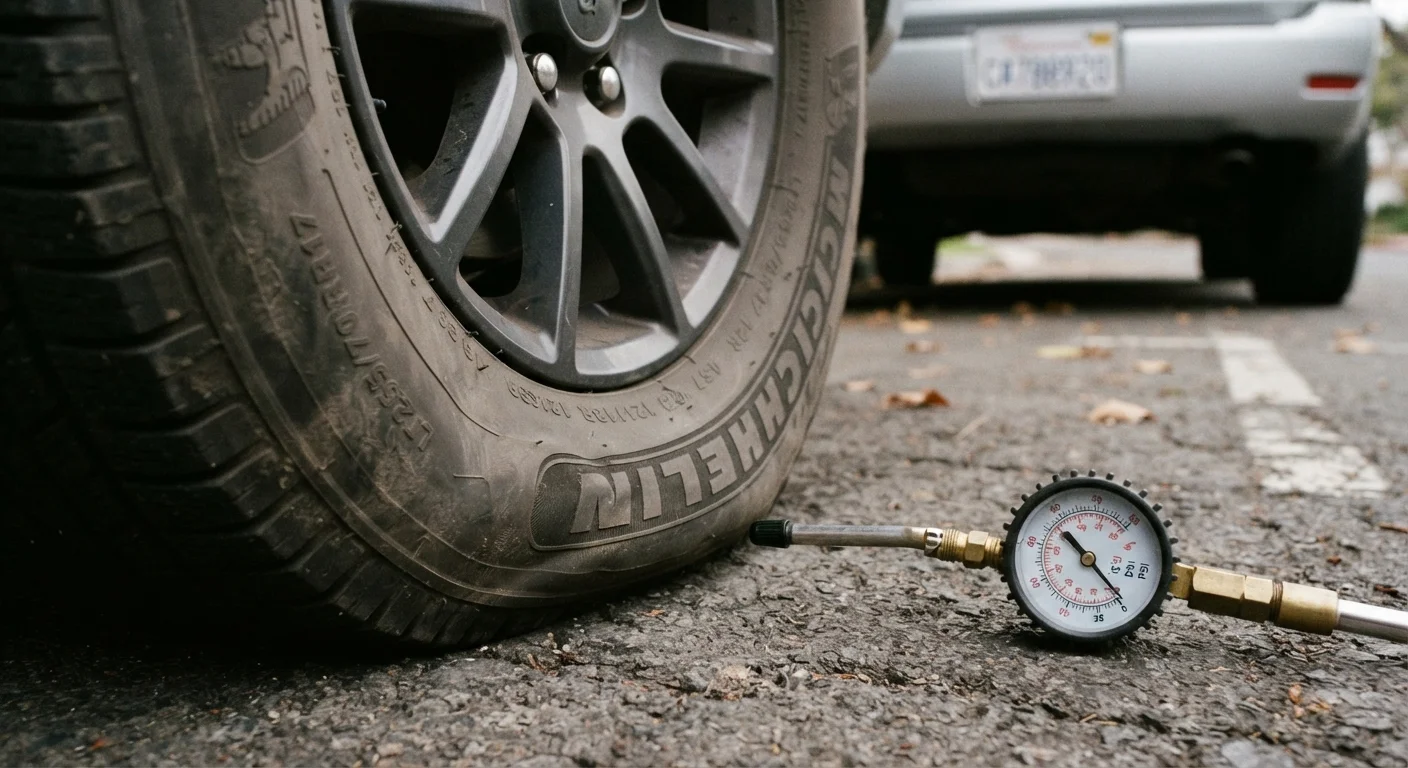
Start with a calibrated pressure gauge — not the readout at the petrol station pump, which can drift significantly over time. Check all four tyres when the vehicle has been stationary for at least three hours (cold inflation pressure is the standard used by manufacturers). Compare your readings against the placard inside the driver's door jamb, not the maximum pressure stamped on the tyre sidewall.
Do Not Drive on a Visibly Flat or Bulging Tyre
If a tyre appears visibly flat or shows a bulge in the sidewall, do not attempt to drive to a garage. A bulge indicates internal structural failure — the tyre can fail without warning at speed. Pull over safely, use your spare or a roadside assistance service, and have the tyre inspected before returning to the road.
If one tyre is consistently 5 PSI or more below the others after being correctly inflated, suspect a slow leak. Spray soapy water around the valve stem and across the tread surface — bubbles will pinpoint the air escape. A visible nail or screw in the tread that hasn't penetrated more than the centre three-quarters of the tread width is generally repairable by a qualified tyre technician. Sidewall damage is not.
For rim leaks, corrosion at the bead — common on aluminium alloy wheels in areas where road salt is used — often requires the tyre to be dismounted, the rim cleaned and sealed, and the tyre remounted. This is workshop work; attempting it without the right tools risks injury and tyre damage. Tyre care is also worth factoring into your broader ownership budget — the guide to keeping car running costs under control covers how to anticipate these expenses before they catch you off guard.
Don't overlook rotation as a contributing factor in uneven wear patterns that accelerate pressure loss vulnerability. Our tyre rotation explainer covers why skipping this step shortens tyre life and creates safety risks.
1 PSI
Pressure lost per 10°F temperature drop
The U.S. Department of Energy notes that tyre pressure decreases by approximately 1 PSI for every 10°F fall in ambient temperature.
25%
Pressure drop before TPMS activates
Federal regulations require TPMS systems to alert drivers when any tyre falls 25% or more below the recommended inflation level.