

Key Takeaways
Why Snacking Gets a Bad Reputation
Snacking itself isn't the nutritional problem — mindless, habitual, or emotionally driven snacking often is. Research consistently shows that what people eat between meals, and why, matters far more than the simple act of snacking. When snacks are deliberate and balanced, they can prevent energy crashes, reduce overeating at main meals, and fill genuine nutrient gaps.
The challenge is that modern snack food environments are stacked against good choices. Convenience stores, vending machines, and office break rooms tend to offer ultra-processed options loaded with added sugar, refined starch, and sodium — foods specifically formulated to be hyperpalatable and easy to overconsume. Understanding this context helps readers make snacking decisions from an informed position rather than one of self-blame.
For a broader look at how to build sustainable eating patterns day to day, the Everyday Nutrition complete guide covers meal balance, macronutrients, and lasting habit formation.
Best Practices for Smarter Snacking
The following evidence-informed practices can help you snack in ways that sustain energy without undermining overall nutrition goals.
Always pair a carbohydrate with a protein or healthy fat when snacking.
Carbohydrates digest quickly and can cause a rapid rise and fall in blood sugar, leaving you feeling low-energy shortly after eating. Adding protein or fat slows digestion and supports a more gradual, sustained release of energy. This combination also tends to be more satisfying, reducing the urge to keep grazing.
Eat in response to genuine hunger, not habit or boredom.
Habitual snacking — reaching for food at a specific time regardless of hunger — can lead to consuming more calories than your body needs. Learning to distinguish physical hunger (gradual, felt in the stomach) from situational urges (stress, boredom, routine) is a foundational skill for balanced eating. It takes practice but significantly improves dietary awareness over time.
Prepare snacks in advance so the nutritious choice is also the easiest one.
Decision fatigue is real — when you're hungry and busy, you'll almost always reach for whatever requires the least effort. Pre-portioned snacks in accessible containers remove friction from the equation. This is one of the most consistently effective behavioral strategies for improving between-meal nutrition.
Choose snacks that contribute nutrients, not just calories.
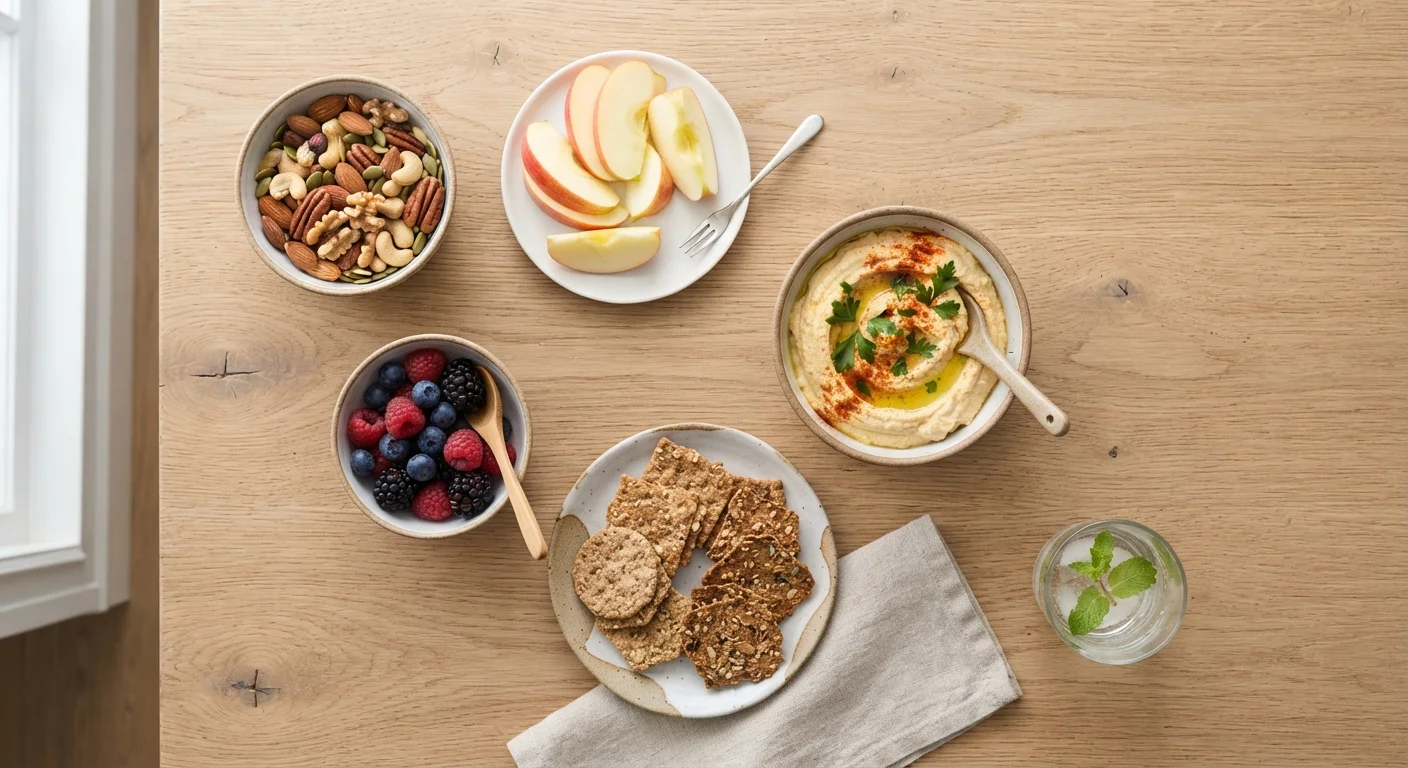
Every eating occasion is an opportunity to add vitamins, minerals, fiber, or quality protein to your day. Snacks built around whole or minimally processed foods — fruit, vegetables, legumes, dairy, nuts, seeds — do double duty: they satisfy hunger and contribute meaningfully to daily nutritional needs.
Keep portion awareness in mind, especially with calorie-dense snacks.
Nutrient-dense foods like nuts, nut butters, cheese, and dried fruit are excellent choices, but their caloric density means portions can add up quickly. Eating directly from a large container makes it harder to track how much you've actually consumed. A simple pre-portioning habit sidesteps this issue without requiring calorie counting.
Limit ultra-processed snack foods rather than trying to eat them 'in moderation' without a plan.
Ultra-processed foods are specifically engineered for high palatability and often undermine natural satiety signals, making 'moderation' harder in practice than in theory. Rather than relying on willpower, a more effective strategy is to reduce their availability in your immediate environment while keeping better options visible and accessible.
Start With These Actions Today
Habits change incrementally. Rather than overhauling your entire approach at once, these quick wins let you build momentum immediately.
If meal timing is a recurring challenge for you, the weekly nutrition readiness checklist offers a practical prep system for busy schedules. And if you're curious whether skipping a snack — or even breakfast — might suit your routine, the evidence on skipping breakfast is worth reading before making that call.
This article provides general nutrition information for educational purposes only and is not a substitute for personalized advice from a registered dietitian or qualified healthcare professional.