

Key Takeaways
Summary
22 items · 30–60 minutes once per week
Why a Weekly Reset Beats Daily Willpower
Eating well when life is hectic isn't primarily a motivation problem — it's a preparation problem. When nutritious food is already washed, chopped, or ready to assemble, it competes effectively with the convenience of takeout or vending machine snacks. When it isn't, even the most health-conscious person defaults to whatever is fastest.
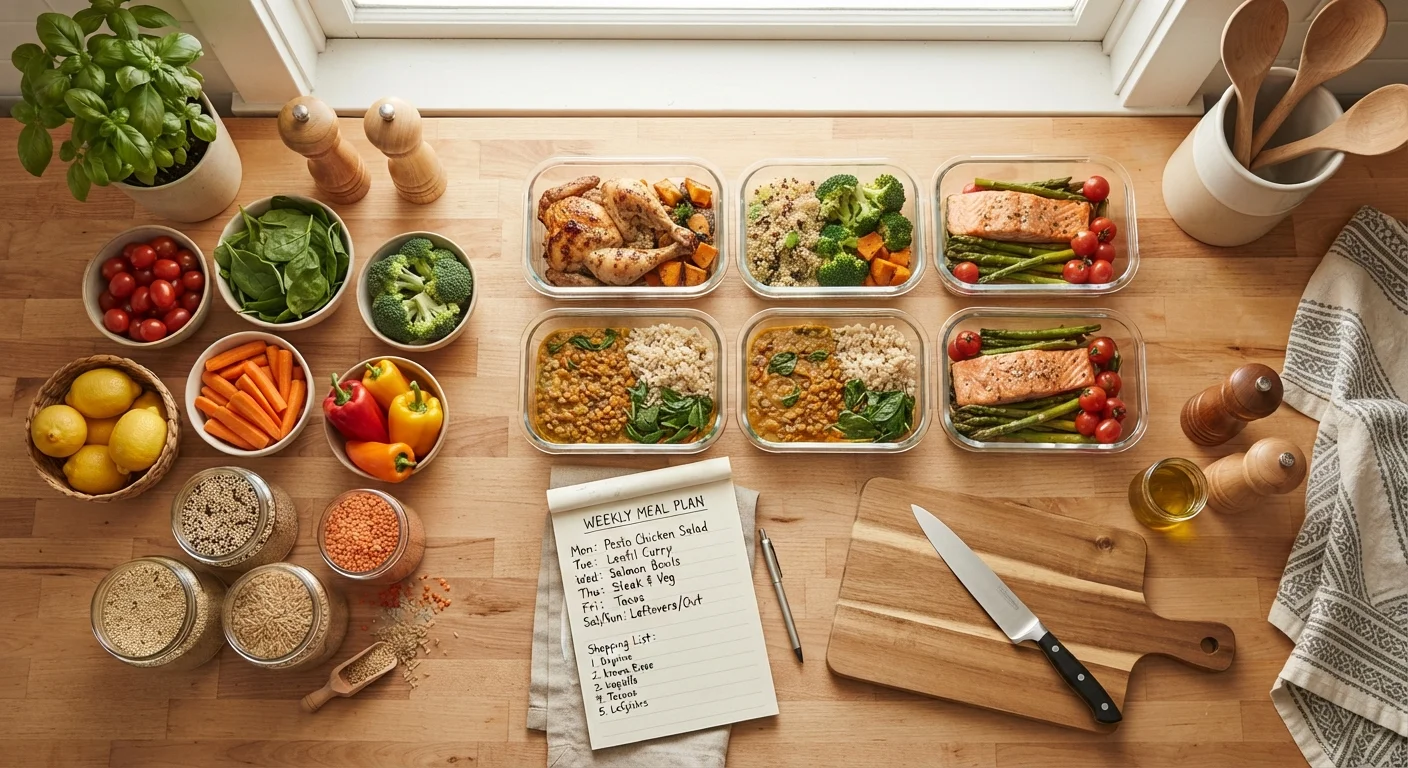
This checklist is designed to take about 30 to 60 minutes once per week — a realistic investment that pays dividends across all seven days. It covers four key areas: assessing what you have, planning what you need, prepping the ingredients that make meals fast, and setting up your environment for success.
If you want to understand the nutritional principles behind meal balance before diving in, our complete everyday nutrition guide walks through macronutrients, label reading, and sustainable habit-building in plain language. And if your past attempts at weekly planning have stalled mid-week, it's worth reviewing common meal planning pitfalls before you start.
Assess Your Kitchen
Plan and Shop
Batch Prep Essentials
Set Up Your Environment
Tools That Make the Checklist Work
You don't need a chef's kitchen. A handful of practical tools make weekly prep faster and help food last longer through the week.
Airtight glass or BPA-free plastic containers (assorted sizes)
Store batch-cooked grains, proteins, and prepped vegetables safely in the fridge for up to five days.
Large cutting board
Makes washing and chopping a full week's vegetables in one session faster and safer.
Sheet pan and rimmed baking dish
Enables batch roasting of vegetables and proteins with minimal hands-on time.
Reusable shopping list app or notepad
Helps you capture pantry gaps during your weekly audit and avoid duplicate purchases.
Kitchen scale
Useful for portioning batch-cooked items consistently, especially for households tracking intake for medical reasons.
Insulated lunch container
Makes it practical to bring prepped meals to work or on the go, reducing reliance on less nutritious options outside the home.
One note on cooking technique: how you prepare food affects what nutrients survive it. A factual comparison of cooking methods — from steaming to roasting to boiling — can help you choose approaches that preserve more nutritional value without complicating your routine.
Don't Over-Plan — Flexibility Is Part of the System
Scheduling seven rigid meals for seven nights often backfires when one day runs long or plans change. Aim to plan and prep for four to five meals, with two flexible backup options. A system that bends with your week is far more sustainable than one that collapses the moment life doesn't cooperate.
Once your kitchen is stocked and prepped, don't overlook the smaller moments between meals. Evidence-informed snacking habits can help you sustain energy without undoing the work of your weekly prep. And when you're shopping, understanding nutrition labels helps you make faster, better-informed choices at the shelf.
This article is for general informational and educational purposes only and is not a substitute for personalized nutrition or medical advice. Consult a qualified healthcare provider or registered dietitian for guidance specific to your health needs.