

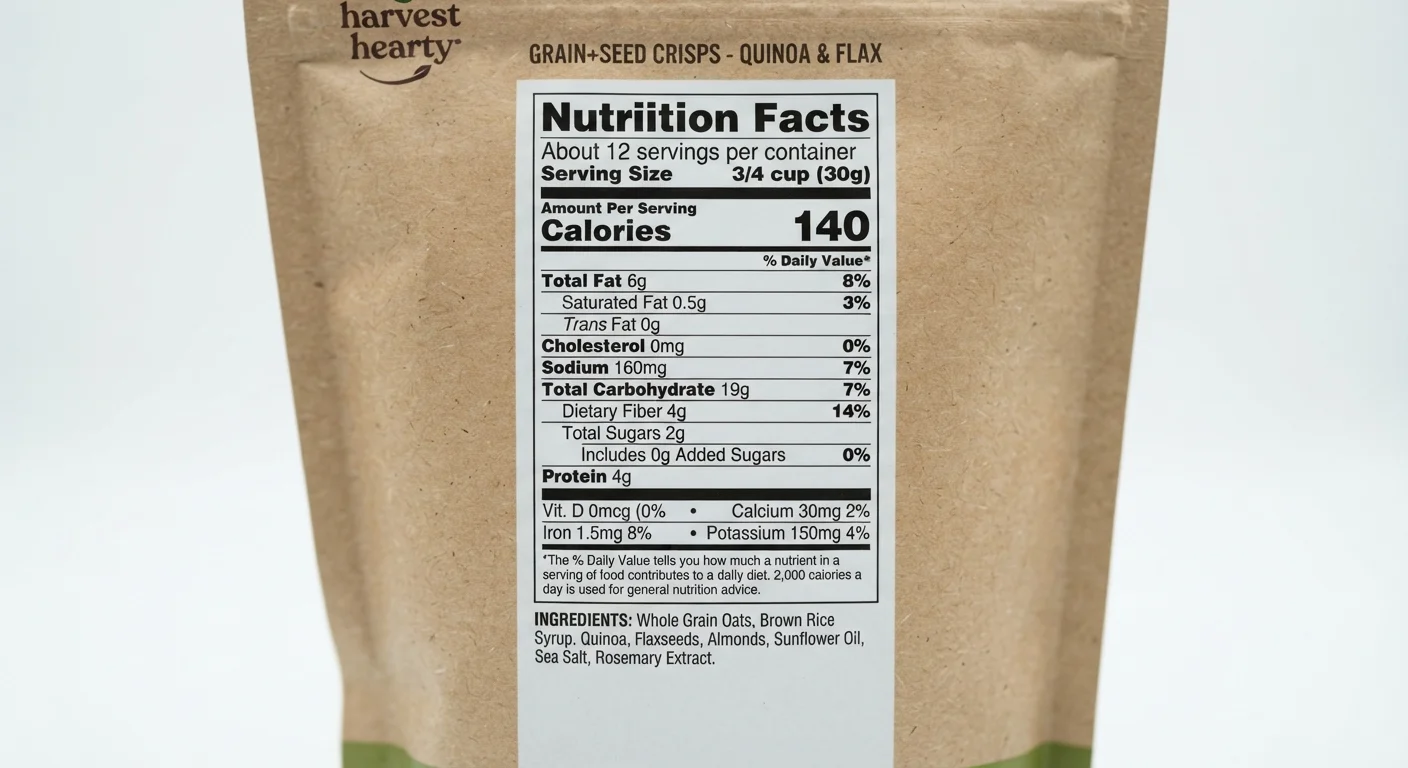
Why the Nutrition Facts Label Exists
The Nutrition Facts label is a federally standardized panel required on most packaged foods sold in the United States. Regulated by the U.S. Food and Drug Administration (FDA), it's designed to give consumers consistent, comparable information about what they're eating. The label was updated in 2020 to reflect current nutrition science — including a larger, bolder calorie count and the addition of added sugars as a separate line item.
Reading it confidently is a foundational skill. As part of a broader approach to eating well, label literacy works best when paired with understanding how foods fit together — something covered in our practical meal-building framework.
Breaking Down Every Section of the Label
Labels follow a top-to-bottom structure. Here's what each section actually tells you:
Serving Size and Servings Per Container
This is the single most important section to check first. All values on the label are based on one serving — not the whole package. A bag of chips labeled "3 servings" means every number you see must be multiplied by three if you eat the bag. Serving sizes are standardized by the FDA to reflect amounts people typically eat, not recommended portions.
Calories
Calories measure the energy a food provides. The number shown is per serving. Context matters: calorie needs vary widely by age, body size, and activity level. For general orientation, understanding what macronutrients do helps explain where those calories come from and why the source matters.
% Daily Value (%DV)
The % Daily Value tells you how much of a nutrient one serving contributes toward a general daily reference intake (based on a 2,000-calorie diet). A quick rule of thumb: 5% DV or less is considered low; 20% DV or more is considered high. Use %DV to compare foods or to spot a nutrient that deserves attention — either because a product has too much of something to limit, or too little of something to encourage.
Nutrients to Limit
The label highlights saturated fat, sodium, and added sugars — nutrients most Americans consume in excess. Total fat is listed separately and includes all fat types. Dietary guidelines generally recommend limiting saturated fat and sodium without eliminating fat entirely. See also: how grain choices affect your nutrient intake.
Nutrients to Encourage
Below the dividing line, you'll find dietary fiber, vitamin D, calcium, iron, and potassium — nutrients many people don't get enough of. Higher %DV values here are generally a positive sign.
Serving Size
A standardized amount of food set by the FDA to reflect what people typically eat in one sitting. All nutrient values on the label are calculated for this amount.
% Daily Value (%DV)
A percentage showing how much of a nutrient one serving contributes to a general daily diet based on 2,000 calories. It helps you assess whether a food is high or low in a given nutrient.
Added Sugars
Sugars and syrups added to a food during processing or preparation, separate from naturally occurring sugars in ingredients like fruit or milk.
Saturated Fat
A type of dietary fat found mainly in animal products and some tropical oils. Dietary guidelines recommend limiting saturated fat intake as part of a heart-healthy eating pattern.
Dietary Fiber
The indigestible portion of plant foods that supports digestive health. Most Americans consume less fiber than recommended daily amounts.
Trans Fat
A type of unsaturated fat produced when vegetable oils are partially hydrogenated. Artificial trans fats are largely phased out of the U.S. food supply but may still appear in trace amounts.
Common Label Misconceptions
Front-of-Package Claims Aren't the Whole Story
Terms like "reduced fat," "light," or "multigrain" have specific FDA definitions, but they don't guarantee a food is nutritious overall. A "reduced fat" product may compensate with higher sodium or added sugar. Always look past marketing language to the Nutrition Facts panel and ingredient list for the full picture.
Two areas trip up even careful shoppers:
- "0 grams trans fat" doesn't always mean zero. FDA rules allow products to round down to zero if a serving contains less than 0.5 grams. If partially hydrogenated oils appear in the ingredient list, the product contains trace trans fats.
- "Natural" and "organic" are not nutrition claims. These terms address sourcing and processing methods — not whether a food is low in sodium or added sugar. Always check the Nutrition Facts panel regardless of front-of-package language.
- Ingredient lists matter too. Ingredients are listed in descending order by weight. If added sugar appears in the first three ingredients under several different names (cane syrup, dextrose, honey), the product is likely high in sugar even if each individual form appears small.
For a broader look at building lasting eating habits — including how packaged foods fit into a varied diet — see the complete everyday nutrition guide. And if you're balancing all of this on a busy schedule, our weekly nutrition readiness checklist offers a practical starting point.
This article is for general informational and educational purposes only and is not a substitute for advice from a qualified healthcare professional or registered dietitian.