

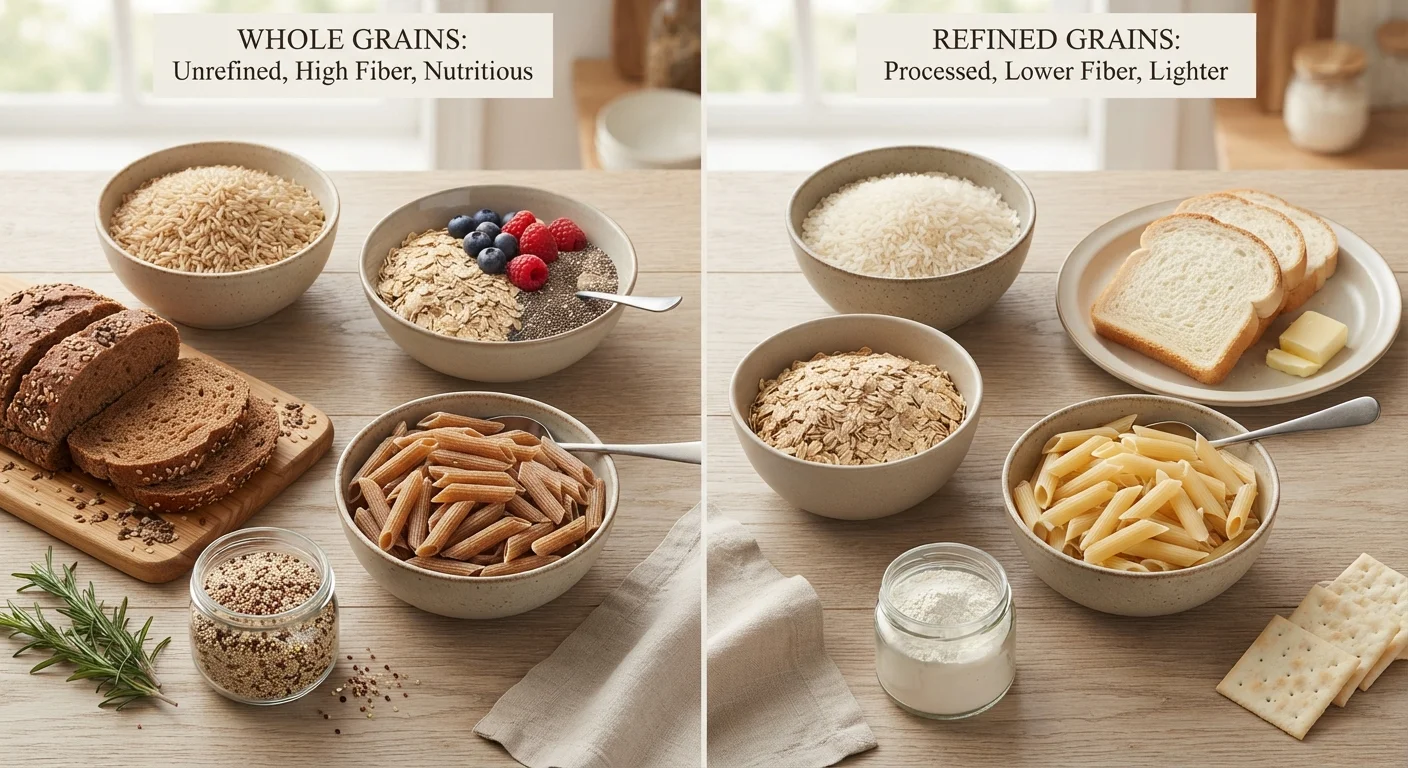
Key Takeaways
Option A
Whole Grains
The nutritionally complete, fiber-rich foundation.
Best for: Readers looking to improve digestive health, manage blood sugar, and support long-term well-being through everyday food choices.
Option B
Refined Grains
The processed, widely available pantry staple.
Best for: Situations where convenience, texture, or palatability take priority, or when enriched options partially restore key nutrients.
If you want to support digestive health and steady energy levels
Whole Grains
The fiber in whole grains slows digestion, which helps maintain more stable blood sugar and keeps you feeling fuller longer.
If you need a versatile cooking base with a milder texture
Refined Grains
Refined grains like white rice or pasta have a neutral flavor and softer texture that suits a wide range of dishes and is often easier to digest for some individuals.
If you are building healthier long-term eating habits
Whole Grains
Research consistently links higher whole grain intake with reduced risk of cardiovascular disease, type 2 diabetes, and digestive issues over the long term.
If you are cooking for picky eaters or young children
Refined Grains
Refined grains are often more palatable as a starting point; you can gradually blend whole grain versions in to build acceptance over time.
What Separates a Whole Grain from a Refined One
Every grain kernel is made up of three distinct parts: the bran (the fibrous outer layer), the germ (the nutrient-dense inner embryo), and the endosperm (the starchy center). A whole grain keeps all three parts intact. A refined grain has had the bran and germ removed — leaving behind mostly the starchy endosperm.
That milling process extends shelf life and creates a smoother texture, but it comes at a real nutritional cost. The bran contains most of the fiber. The germ is where you find B vitamins like thiamine, niacin, and folate, along with vitamin E, healthy fats, and antioxidants. Stripping both layers out significantly reduces the grain's overall nutrient density.
Common whole grains include oats, brown rice, whole wheat, quinoa, farro, barley, and bulgur. Refined grain products include white rice, white bread, standard pasta, and most pastries and crackers made with white flour.
| Criterion | Whole Grains | Refined Grains |
|---|---|---|
| Kernel parts retained | Bran, germ, and endosperm | Endosperm only |
| Fiber content | Higher (bran intact) | Significantly lower |
| B vitamins & minerals | Naturally present | Partially added back (enriched) |
| Antioxidants & phytochemicals | Present in bran and germ | Largely removed |
| Blood sugar impact | More gradual rise | Faster, sharper rise |
| Shelf life | Shorter (oils in germ go rancid) | Longer |
| Texture and taste | Chewier, nuttier flavor | Softer, milder flavor |
How the Nutritional Differences Show Up in Practice
The most meaningful practical difference is dietary fiber. Fiber slows the rate at which carbohydrates are absorbed, leading to a more gradual rise in blood sugar compared to low-fiber refined grains. For everyday eating, this can translate into steadier energy and longer-lasting fullness after meals.
The U.S. Dietary Guidelines for Americans recommend that at least half of all grain servings come from whole grains — a benchmark most Americans fall short of. According to the Whole Grains Council, the average American consumes fewer than one daily serving of whole grains, well below recommended levels.
<1 serving
Daily whole grain intake for average American
The Whole Grains Council estimates most Americans consume less than one daily serving of whole grains, far below the recommended minimum.
50%+
Grain servings that should be whole grains
The U.S. Dietary Guidelines for Americans recommend that at least half of all grain servings come from whole grain sources each day.
25–30%
Reduction in fiber lost during milling
Milling to produce white flour removes roughly 70–80% of fiber along with the bran layer, according to nutritional comparisons published by the USDA.
Many refined grain products in the U.S. are enriched, meaning manufacturers add back iron and some B vitamins after milling. However, enrichment does not restore fiber, and it typically does not replicate the full range of antioxidants, phytochemicals, and trace minerals found in the original bran and germ. Knowing this distinction matters when reading food labels — a product labeled "enriched" is not the same as "whole grain." For a deeper look at how to decode those labels, see our guide to reading nutrition labels to understand what each claim on a package actually means.
Making Smarter Grain Choices Without Overhauling Your Diet
You don't need to eliminate refined grains to eat well. A more realistic and sustainable approach is gradual substitution. Swapping white bread for a whole grain variety at breakfast, or choosing brown rice instead of white rice a few nights a week, adds up meaningfully over time without requiring a complete dietary overhaul.
When shopping, look for the words "whole grain" or "whole wheat" as the first ingredient on the label — not just "wheat flour" or "multigrain," which don't guarantee that the bran and germ are intact. Products labeled multigrain simply contain more than one type of grain; they may still be refined.
What "Multigrain" Actually Means
"Multigrain" on a label simply means the product contains more than one type of grain — it says nothing about whether those grains are whole or refined. Similarly, "wheat bread" or "made with whole grain" language can be misleading if whole grain isn't the primary ingredient. Always check that "whole grain" or "whole wheat" appears first in the ingredients list to confirm you're getting the full nutritional benefit.
This grain-by-grain approach to better nutrition fits into the broader framework of building sustainable eating habits. For a comprehensive look at how grains fit alongside other macronutrients, our complete everyday nutrition guide covers the full picture from meal balance to long-term habits.
This article is for general informational and educational purposes only and is not a substitute for personalized nutrition or medical advice. Consult a registered dietitian or qualified healthcare provider for guidance tailored to your health needs.