

Key Takeaways
The Stress Response
Stress is the body's built-in reaction to perceived demands or threats. When the brain detects a challenge — physical, emotional, or social — it triggers a cascade of hormonal and neurological signals that prepare the body to respond. This response is not inherently harmful; it evolved to keep humans alive and alert.
The primary pathway involved is the hypothalamic-pituitary-adrenal (HPA) axis, which regulates the release of cortisol and adrenaline (epinephrine) during a stress event.
How the Brain Detects and Responds to Stress
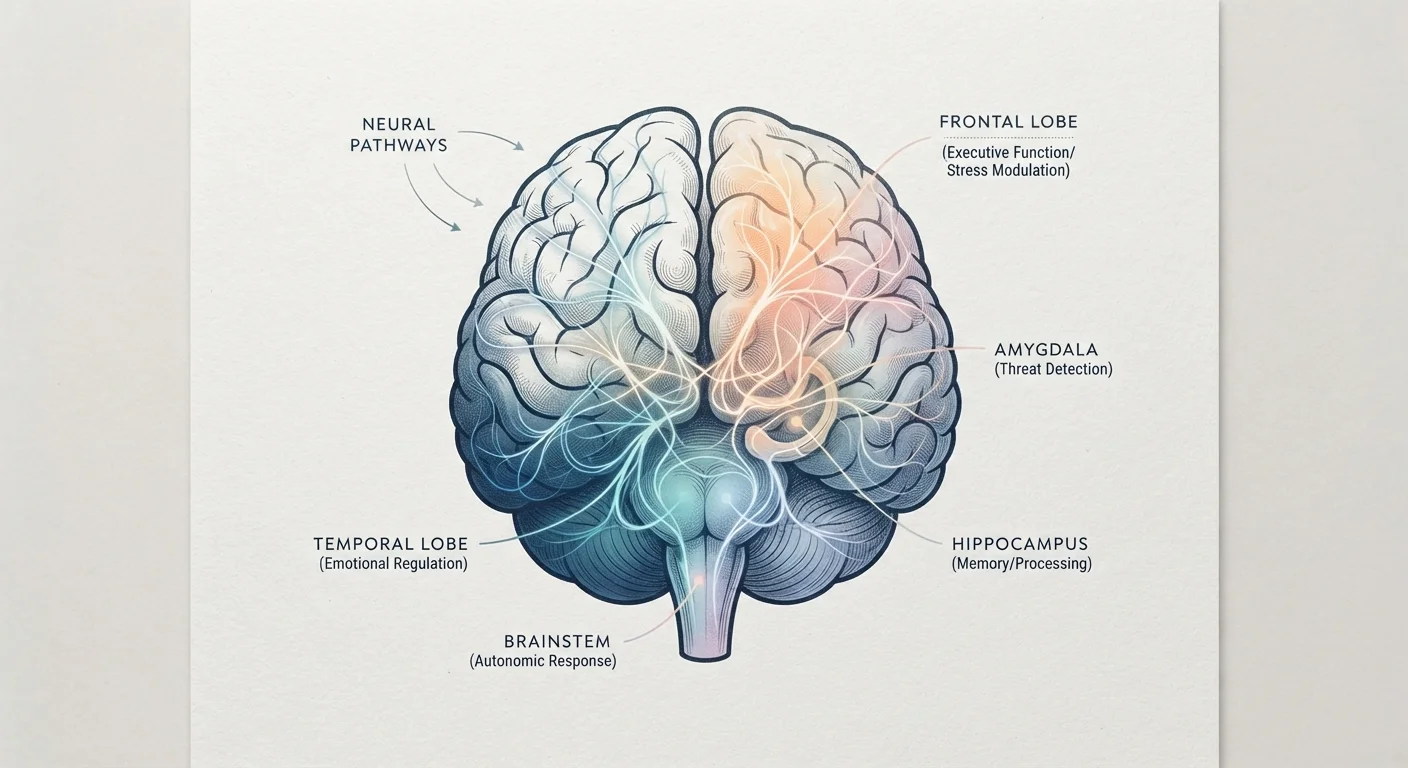
When the brain perceives a threat — real or imagined — a small almond-shaped structure called the amygdala fires an alarm signal. This triggers the hypothalamus to activate the autonomic nervous system, flooding the body with adrenaline. Heart rate climbs, breathing quickens, and muscles tense. This is the classic "fight-or-flight" response, and it happens within seconds.
What's less commonly understood is the role of the prefrontal cortex — the brain's reasoning center. It works to contextualize and regulate the amygdala's alarm, essentially asking, "Is this actually dangerous?" Under mild stress, this checks-and-balances system functions well. Under extreme or prolonged stress, the prefrontal cortex's ability to moderate the response can become compromised.
“It's not stress that kills us — it is our reaction to it. The stress response itself is a neutral tool; what matters is whether the body is given the chance to recover.”
— Hans Selye, Endocrinologist and pioneering stress researcher
This is why stress that feels overwhelming can impair judgment and decision-making — it's a physiological process, not a character flaw. Understanding this mechanism is a foundational step, and it's also why some mental health myths — like "just think positively" — fall short of what the science actually shows.
Acute vs. Chronic Stress: A Critical Distinction
Research consistently draws a sharp line between two types of stress, and conflating them leads to unnecessary alarm — or, conversely, dangerous dismissal.
- Acute stress is short-term and situational. Giving a presentation, swerving to avoid an obstacle, or meeting a tight deadline all produce acute stress. Studies suggest this type can actually enhance cognitive performance and immune function temporarily.
- Chronic stress is prolonged exposure to stressors without adequate recovery. This is the form linked to elevated cortisol levels, inflammation, cardiovascular strain, disrupted sleep, and increased vulnerability to anxiety and depression.
77%
Adults reporting physical stress symptoms
According to the American Psychological Association's Stress in America surveys, a large majority of U.S. adults report experiencing physical symptoms they attribute to stress.
3x
Increased cardiovascular risk with chronic stress
Research published in peer-reviewed cardiology literature suggests chronically high perceived stress is associated with meaningfully elevated cardiovascular risk compared to low-stress peers.
The distinction matters practically. If you feel stressed before an important conversation, that response may actually help you stay sharp. If you feel that same level of activation for months without relief, your body is paying a cumulative cost. For a deeper look at where stress ends and anxiety begins, see our guide on understanding anxiety.
Why Stress Feels Different for Different People
One of the most consistent findings in stress research is the central role of perception. Two people can face an identical situation — a job loss, a health scare, a major life change — and experience profoundly different stress responses. Psychologist Richard Lazarus's influential appraisal theory suggests that it's not the event itself but the person's evaluation of it — as threatening or manageable — that determines the stress response.
Factors that shape individual stress response include prior experience, social support, sense of control, and baseline mental health. This is also why interventions that build perceived coping capacity — such as cognitive reframing or bolstering social connections — are evidence-supported strategies, not just feel-good suggestions.
Support Your Recovery Window
After a stressful event, the body needs time to return cortisol levels to baseline. Activities like slow diaphragmatic breathing, gentle physical movement, or even a short walk have research support for accelerating this recovery. Consistency matters more than intensity — small, regular practices tend to compound over time.
Once stress is understood as a response rather than a verdict on someone's resilience, it becomes easier to approach recovery constructively. When you're ready to explore practical methods for winding down, our overview of structured vs. unstructured relaxation examines what the evidence supports.
This article is for general informational and educational purposes only and is not a substitute for professional medical or mental health advice. If you are experiencing significant or persistent stress symptoms, please consult a qualified healthcare provider.