

Key Takeaways
Why Mulching Myths Persist
Mulch is one of the most widely recommended tools in home gardening — and one of the most widely misunderstood. Advice passed down through garden centers, neighborhood lore, and well-meaning how-to guides has produced a set of persistent beliefs that, when acted upon, can genuinely harm plants rather than help them.
The good news is that correcting these habits is straightforward once you understand what mulch actually does: it moderates soil temperature, retains moisture, suppresses weeds, and — when organic — gradually feeds the soil. Problems arise when application strays from these core functions. The myth-and-fact pairs below address the most consequential misconceptions home gardeners encounter.
For a thorough look at mulch types and their benefits, see our guide to mulching your garden. And if you suspect other garden care habits may be worth revisiting, our garden watering myths article covers equally common missteps.
Myth
Piling mulch high against a tree trunk — creating a 'volcano' shape — gives the tree extra support and protection.
Fact
Volcano mulching traps moisture against bark, promotes fungal disease, and attracts pests that can girdle and kill the tree over time.
The volcano shape looks tidy and deliberate, which may be why it persists. In practice, bark is not designed to stay permanently wet. Constant moisture contact breaks down the protective outer layer, creating entry points for pathogens such as Phytophthora and encouraging boring insects. Pull mulch back so it sits 2–6 inches away from the base of any tree or woody shrub, keeping the root flare visible at the soil surface.
Myth
The more mulch you apply, the better — a thicker layer means more weed suppression and moisture retention.
Fact
Layers deeper than 4 inches can suffocate roots, prevent rainfall from penetrating, and create anaerobic (oxygen-depleted) conditions in the soil.
Two to four inches is the research-supported range for most garden beds. Beyond that, you risk creating a mat so dense that water sheets off rather than soaking in, and roots may grow up into the mulch layer rather than down into the soil — leaving them vulnerable to temperature swings and drought. If your existing mulch is already deep, rake it out rather than topping it up.
Myth
Wood chip mulch robs nitrogen from the soil, starving your plants.
Fact
Nitrogen tie-up from wood chips occurs primarily at the soil-mulch interface and has minimal effect on established plants growing beneath.
Microbes that decompose wood do temporarily consume nitrogen, but this activity happens at the surface layer rather than in the root zone. Established plants with roots growing deeper in the soil are largely unaffected. The concern is more relevant when wood chips are tilled into soil rather than laid on top. If you are establishing new seedlings, a thin buffer of compost directly in the planting hole addresses any marginal risk.
Myth
Using colored or dyed mulch is harmful to plants and soil.
Fact
Most commercially available dyed mulches use iron oxide or carbon-based colorants that are considered low-risk, though the quality of the base wood matters more.
The bigger variable with colored mulch is what the wood itself was made from. Mulch produced from recycled pallets or construction lumber may contain residues from treatments or finishes. Where possible, look for mulch that specifies its source material. Undyed wood chip or bark from known species remains the most straightforward choice, but color alone is not a reliable indicator of harm.
Myth
Organic mulch makes soil acidic, so it should not be used around plants that prefer neutral or alkaline conditions.
Fact
Most organic mulches have a modest and localized effect on pH; they are unlikely to meaningfully alter overall soil pH without confirmed testing.
Pine bark and pine needles are slightly acidic, but their influence on soil pH in typical garden applications is generally minor. If you have acid-loving plants alongside plants preferring neutral soil, the more reliable approach is to test your soil and amend with lime or sulfur as needed — rather than selecting mulch based on assumed pH effects. A basic soil test provides far more actionable information.
Myth
Covering beds with black plastic sheeting year-round is an effective, low-maintenance alternative to organic mulch.
Fact
Solid plastic sheeting blocks gas exchange, degrades soil biology, and can cause root stress — particularly in warm climates where it also superheats the soil.
While plastic does suppress weeds, it creates a sealed environment that prevents carbon dioxide from escaping and oxygen from entering the soil. Over a full growing season, this harms beneficial organisms including earthworms and mycorrhizal fungi that support plant health. In summer, black plastic can raise soil temperatures to levels that stress or damage roots. Breathable landscape fabric or a generous layer of organic mulch are more plant-friendly alternatives for long-term bed management.
Applying These Corrections in Your Garden
Fixing mulch mistakes is usually as simple as pulling material back from stems, redistributing depth, or switching to an organic alternative. A few practical pointers:
- Recheck depth annually. Mulch compacts and decomposes over time. Top up to maintain a 2- to 4-inch layer, but always measure rather than guess — layers can accumulate if you add each season without removing old material.
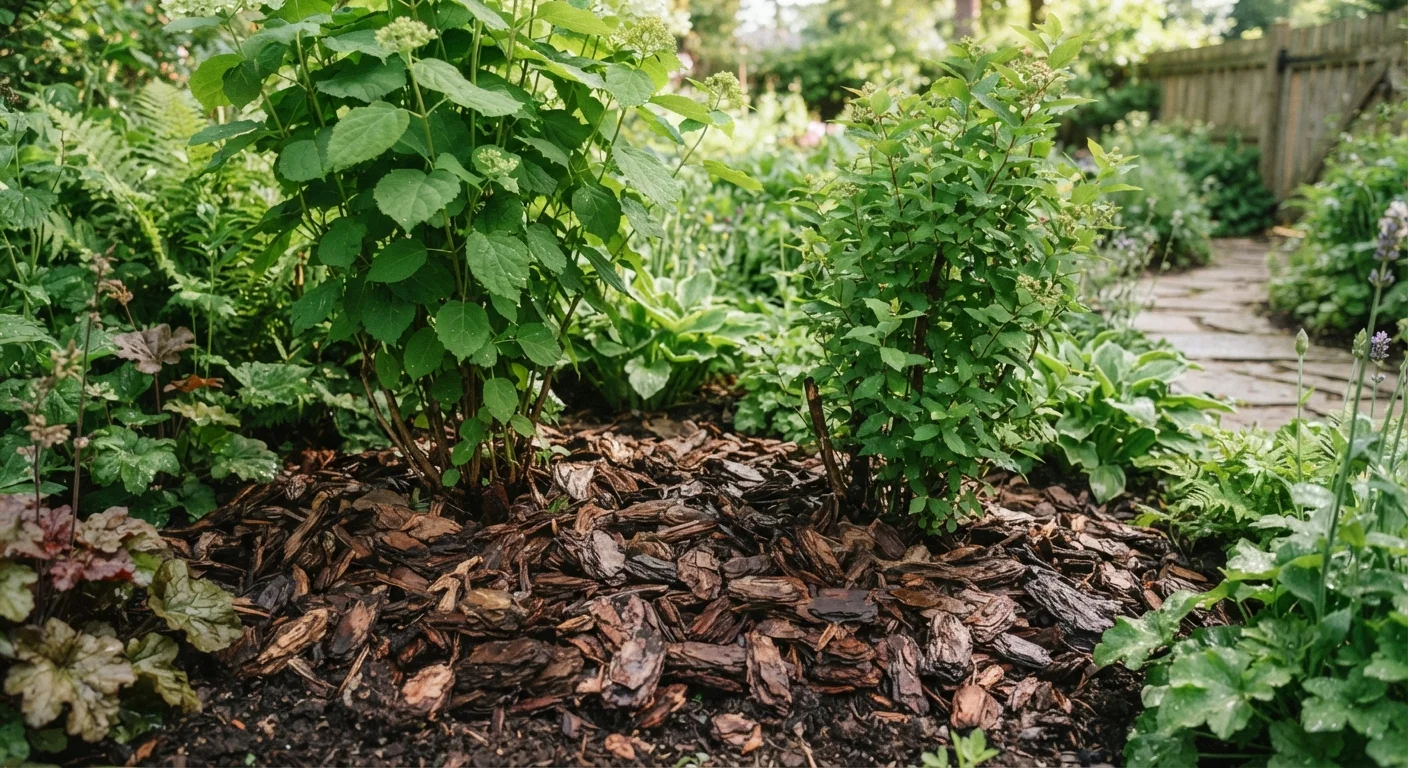
- Leave a clear collar around every trunk and stem. Aim for a 2- to 6-inch gap between the mulch edge and the base of trees or woody shrubs. This single adjustment eliminates the greatest risk associated with volcano mulching.
- Test your soil before adjusting pH. If you suspect your soil is too acidic or alkaline, use an inexpensive soil test kit (available at most garden centers) rather than assuming mulch type is the cause.
- Replace plastic sheeting with breathable landscape fabric or organic mulch. Landscape fabric is not perfect, but it allows gas exchange that solid plastic prevents. Organic options remain the most soil-friendly choice.
Watch for Mulch Sourced from Unknown Wood
Mulch made from recycled or reclaimed lumber may contain residues from wood preservatives or finishes. When sourcing bulk mulch, ask about the origin of the wood. Certified or composted wood chip products from garden centers typically disclose their source material, giving you more confidence in what you're adding to your soil.
Myths in home improvement and gardening often endure because a practice appears to work in the short term. Volcano mulching, for example, may not kill a tree immediately — damage accumulates over years. This delayed feedback loop is exactly why evidence-based practices matter more than short-term visual results. The same principle applies across home care; our home renovation myths piece explores how similar misconceptions shape renovation decisions.