

Key Takeaways
Significantly reduces soil moisture loss through evaporation
Studies from university extension programs consistently show that mulched beds can retain substantially more moisture than bare soil, reducing how often supplemental watering is needed during dry periods.
Suppresses weed germination effectively
A consistent 2–3 inch layer blocks light from reaching weed seeds in the soil, reducing germination without herbicides. This is most effective against annual weeds rather than established perennial weeds.
Moderates soil temperature year-round
Mulch acts as insulation, keeping soil cooler in summer heat and buffering against hard freezes in winter — helping plant roots survive seasonal extremes.
Organic types build soil structure over time
As wood chips, straw, and compost break down, they add organic matter that improves drainage in compacted clay soils and increases water retention in sandy soils.
Reduces soil compaction and erosion
Mulch absorbs the impact of heavy rain, preventing the surface crusting that compacts bare soil and reduces water infiltration.
Can harbour slugs, rodents, or fungal issues
Deep or damp mulch close to plant stems creates shelter for pests and conditions for fungal rot. Keeping mulch away from stems and avoiding over-application reduces this risk considerably.
Wood-based mulches may temporarily reduce nitrogen
When high-carbon materials like fresh wood chips decompose at the soil surface, soil microbes draw on available nitrogen, which can temporarily limit what's accessible to plants — especially in vegetable beds.
Inorganic mulches offer no soil benefit
Rubber, gravel, and plastic sheeting don't break down, so they provide no organic matter. They can also complicate future planting changes and may trap heat at levels harmful to some plants.
Straw mulch can introduce weed seeds
Straw that isn't certified weed-free may contain grass or weed seeds that germinate in your beds — counteracting one of mulch's primary benefits.
Requires replenishment as organic types break down
Organic mulches decompose, which is beneficial for soil but means gardeners need to top up the layer annually or bi-annually to maintain effective coverage.
Our Verdict
Mulching is one of the most cost-effective and practical habits a home gardener can adopt. When applied correctly, it reduces workload, supports plant health, and builds better soil over time. The key is matching the material to your garden's needs and avoiding common application mistakes.
Mulching benefits virtually every garden, but it is especially valuable for gardeners dealing with persistent weeds, irregular watering schedules, or soil that dries out quickly in summer.
What Mulch Actually Does for Your Garden
Mulch is any material — organic or inorganic — spread across the soil surface around plants. Its primary jobs are straightforward: slow water evaporation, block weed germination, and buffer soil against temperature swings. But the cumulative effect goes further than those basics suggest.
When organic mulches decompose, they feed soil microbes, improve drainage in clay soils, and help sandy soils hold moisture longer. Over multiple seasons, consistent mulching can meaningfully transform soil structure — a benefit that complements other soil-health practices. If you're working on broader soil health, our guide on soil pH and nutrient uptake explains how these factors interact.
Significantly reduces soil moisture loss through evaporation
Studies from university extension programs consistently show that mulched beds can retain substantially more moisture than bare soil, reducing how often supplemental watering is needed during dry periods.
Suppresses weed germination effectively
A consistent 2–3 inch layer blocks light from reaching weed seeds in the soil, reducing germination without herbicides. This is most effective against annual weeds rather than established perennial weeds.
Moderates soil temperature year-round
Mulch acts as insulation, keeping soil cooler in summer heat and buffering against hard freezes in winter — helping plant roots survive seasonal extremes.
Organic types build soil structure over time
As wood chips, straw, and compost break down, they add organic matter that improves drainage in compacted clay soils and increases water retention in sandy soils.
Reduces soil compaction and erosion
Mulch absorbs the impact of heavy rain, preventing the surface crusting that compacts bare soil and reduces water infiltration.
Common Mulch Types and Their Trade-Offs
Choosing a mulch type involves weighing longevity, cost, appearance, and what your plants actually need.
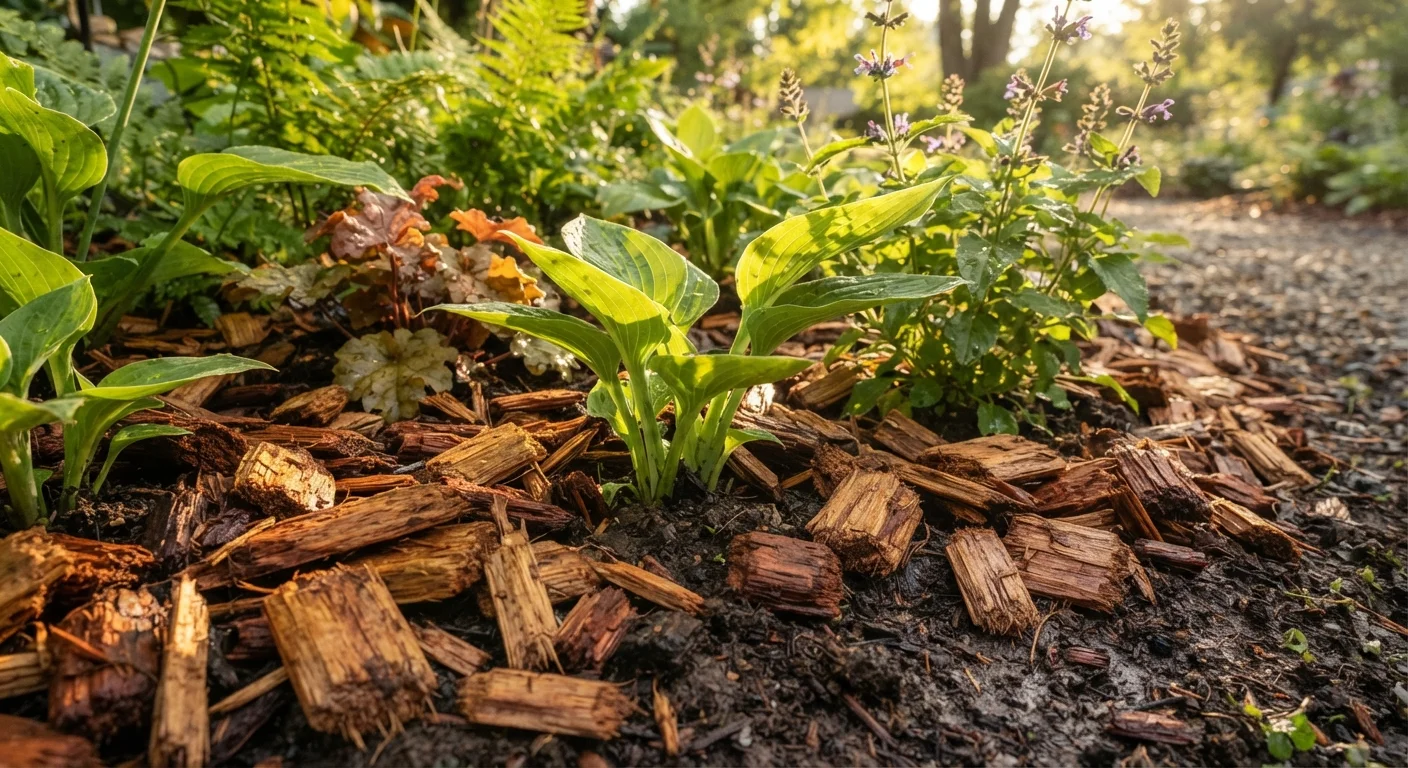
- Wood chips: Durable, slow to decompose, and effective at suppressing weeds. Best used around trees, shrubs, and perennials rather than annual vegetable beds, where they can tie up nitrogen as they break down near the surface.
- Bark mulch (shredded or nugget): Similar to wood chips but lighter in texture. Shredded bark knits together well and resists washing away. Nugget bark lasts longer but can float in heavy rain.
- Straw: A popular choice for vegetable gardens and new lawn seeding. Lightweight and easy to apply. Can introduce weed seeds if it's not certified weed-free — always check the label.
- Compost: Doubles as a soil amendment. Breaks down quickly, enriching the bed below. Pairs well with a coarser mulch on top for longevity. Our home composting guide covers how to make your own.
- Rubber or gravel (inorganic): Long-lasting and low-maintenance, but they contribute nothing to soil biology and can make future planting difficult.
Can harbour slugs, rodents, or fungal issues
Deep or damp mulch close to plant stems creates shelter for pests and conditions for fungal rot. Keeping mulch away from stems and avoiding over-application reduces this risk considerably.
Wood-based mulches may temporarily reduce nitrogen
When high-carbon materials like fresh wood chips decompose at the soil surface, soil microbes draw on available nitrogen, which can temporarily limit what's accessible to plants — especially in vegetable beds.
Inorganic mulches offer no soil benefit
Rubber, gravel, and plastic sheeting don't break down, so they provide no organic matter. They can also complicate future planting changes and may trap heat at levels harmful to some plants.
Straw mulch can introduce weed seeds
Straw that isn't certified weed-free may contain grass or weed seeds that germinate in your beds — counteracting one of mulch's primary benefits.
Requires replenishment as organic types break down
Organic mulches decompose, which is beneficial for soil but means gardeners need to top up the layer annually or bi-annually to maintain effective coverage.
How to Apply Mulch Correctly
Depth matters more than most gardeners realise. A 2–4 inch layer is the practical target for most beds — enough to suppress weeds and retain moisture without smothering roots or creating conditions for fungal problems.
Two application mistakes stand out as especially common:
- Volcano mulching: Piling mulch in a cone shape against tree trunks or shrub stems traps moisture against bark, invites rot, and can girtle stems over time. Keep mulch at least 2–3 inches away from any plant base.
- Over-mulching: Layers deeper than 4–6 inches can prevent rain and irrigation from reaching roots and may create anaerobic (oxygen-poor) conditions harmful to soil life.
Timing your application can also make a difference. Mulching in late spring — after the soil has warmed — helps retain heat and moisture through summer. A second application in fall can protect perennial roots from freeze-thaw cycles. See common mulching myths for a closer look at practices that can backfire.
A Note on Mulching Vegetable Beds
Vegetable gardens have different needs than ornamental beds. Straw and compost are generally better choices than wood chips for annual vegetables, as they decompose faster and avoid the nitrogen tie-up associated with high-carbon materials. Avoid using any mulch that may have been treated with herbicides, particularly around edible crops.
Mulching works alongside good planting decisions. Whether you're working with raised beds or in-ground planting, mulch adapts to both setups.