

Key Takeaways
Soil pH
Soil pH is a measure of how acidic or alkaline your garden soil is, expressed on a scale from 0 to 14. A pH of 7.0 is neutral; values below 7 are acidic and values above 7 are alkaline. Most garden plants grow best somewhere between pH 6.0 and 7.0, where essential nutrients are most available to roots.
pH stands for 'potential of hydrogen' and reflects the concentration of hydrogen ions in the soil solution. Even small shifts on the logarithmic scale — say from 6.0 to 5.0 — represent a tenfold change in acidity.
Why Soil pH Affects Plant Health
Many gardeners focus on adding fertilizer when plants look stressed, but the problem is often pH — not nutrient shortage. Soil pH directly controls how soluble, and therefore how accessible, essential minerals are to plant roots. In highly acidic soils (below 5.5), nutrients like phosphorus become chemically bound to soil particles, making them unavailable even when present in adequate quantities. At the same time, certain metals like aluminum and manganese become more soluble and can reach toxic levels for sensitive plants.
In alkaline soils (above 7.5), iron, manganese, zinc, and boron tend to lock up, causing visible deficiency symptoms such as yellowing leaves (chlorosis) even in well-fertilized beds. This is why understanding and managing soil pH is often more effective than simply adding more amendments. See our guide to organic vs. synthetic fertilizers to understand how fertilizer type also interacts with soil chemistry.
pH Varies Across Your Garden
Soil pH is rarely uniform across an entire yard. Areas near concrete foundations, driveways, or walls often test more alkaline due to lime leaching from building materials. Spots under established conifers may be more acidic from years of needle drop. Test each distinct area or bed separately for accurate results.
Testing Your Soil pH
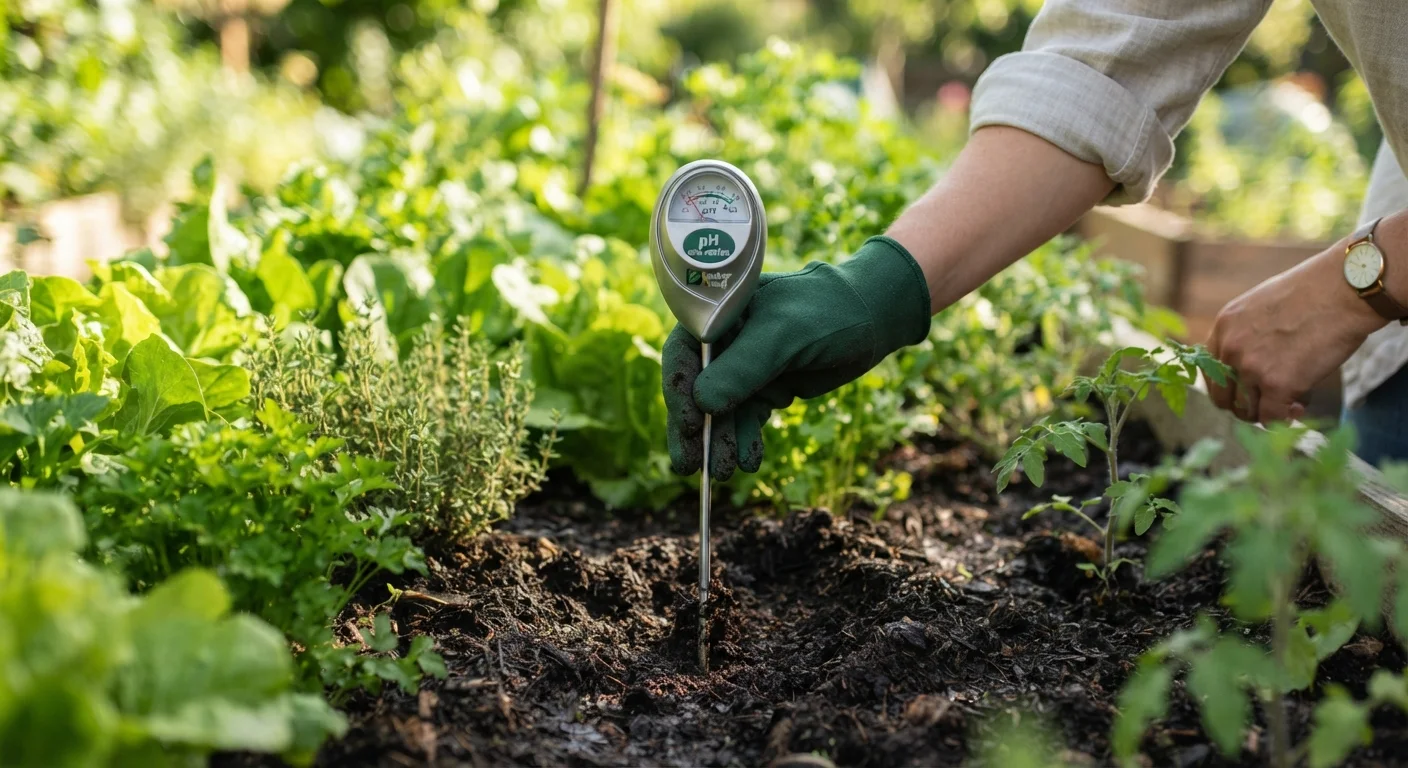
Before making any amendments, test your soil. Home test kits — typically colorimetric strips or liquid reagent kits — give a reasonable ballpark reading and are a practical starting point. Digital pH meters offer more precision but require proper calibration and care to maintain accuracy.
For the most actionable information, send a soil sample to your state's cooperative extension service. Extension labs analyze pH alongside macro- and micronutrient levels and provide site-specific amendment recommendations. This is particularly worthwhile for new garden beds or persistently underperforming areas.
6.0–7.0
Optimal pH range for most garden vegetables
This range is widely cited by university extension services across the United States as ideal for nutrient availability in vegetable production.
4.5–5.5
Preferred pH for acid-loving plants like blueberries
According to guidance from multiple state cooperative extension programs, blueberries and many ericaceous shrubs perform best in this strongly acidic range.
When collecting a sample, gather soil from several spots across the bed at a depth of 4 to 6 inches, then mix them together. A composite sample better represents the actual growing zone your roots will occupy.
How to Adjust Soil pH
Once you know your baseline, amendments can shift pH in either direction — but patience is essential. Soil chemistry changes slowly, especially in clay-heavy or heavily organic soils.
Raising pH (Making Soil More Alkaline)
Ground limestone is the most widely used amendment to increase pH. Calcitic lime adds calcium; dolomitic lime adds both calcium and magnesium. The amount needed depends on how far your pH needs to move and your soil's texture. Sandy soils require smaller quantities than clay soils to achieve the same shift.
Lowering pH (Making Soil More Acidic)
Elemental sulfur is the standard amendment for reducing pH. Soil bacteria convert the sulfur into sulfuric acid over several months. Incorporating organic materials such as compost also tends to nudge pH toward the acidic range over time. Mulching with organic materials like wood chips or pine needles can contribute to gradual acidification as they break down.
Time Amendments Before Planting Season
For best results, apply lime or sulfur in fall so it has the winter months to work into the soil profile. Testing in autumn also gives you time to make informed decisions before spring planting begins. Rushing amendments right before planting rarely gives the pH enough time to shift meaningfully.
pH Preferences by Plant Type
Knowing your plants' preferred pH range helps you decide whether amendment is worth pursuing or whether plant selection is the smarter path.
- Most vegetables: 6.0–7.0
- Blueberries, azaleas, rhododendrons: 4.5–5.5
- Lawns (most grass types): 6.0–7.0
- Roses: 6.0–6.5
- Potatoes: 5.0–6.0
- Lavender, clematis: 6.5–7.5
If your landscape already has established native species, their adaptation to local soil conditions often means less need for pH intervention. Native plants are typically suited to regional soil chemistry, which can simplify long-term garden management considerably.
For gardeners working with containers, pH management is more straightforward — choose a potting mix formulated for your plant's needs. Our container gardening guide covers soil mix selection in detail.