

Key Takeaways
Native Plants
A native plant is a species that evolved naturally in a specific region over thousands of years without human introduction. These plants are adapted to local soils, rainfall patterns, and climate extremes. Because they developed alongside local insects, birds, and other wildlife, they form ecological relationships that non-native species typically cannot replicate.
Botanists define nativity at the regional or ecoregion level, meaning a plant native to the Midwest may not be considered native in the Pacific Northwest, even within the same country.
What Makes a Plant 'Native' — and Why the Region Matters
The term native plant is frequently misunderstood. A plant sold as "American" or even grown organically is not automatically native. A species is native to a region only if it evolved there — shaped by that region's specific soils, rainfall, temperature swings, and native wildlife — before European settlement altered the landscape.
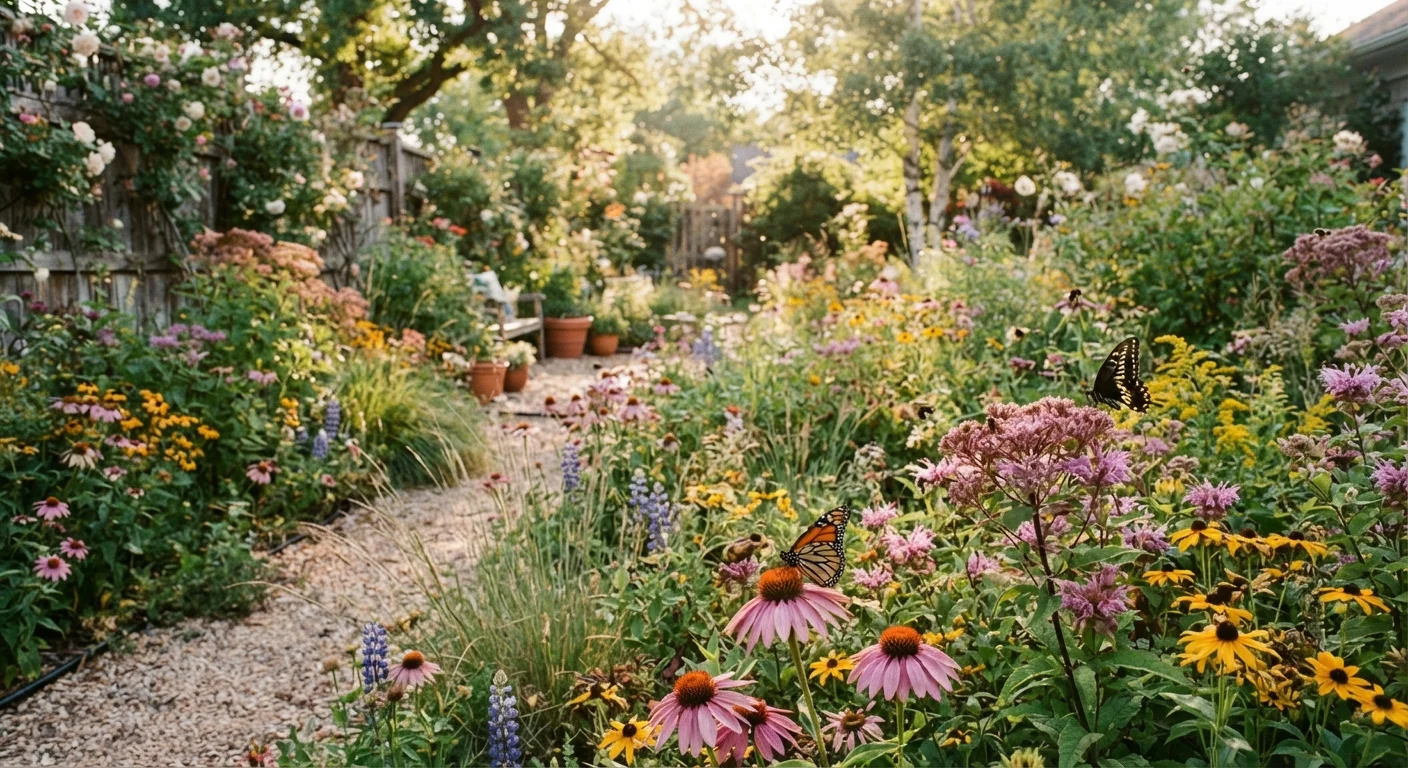
This distinction matters because nativity works at the ecoregion level, not the national level. A purple coneflower (Echinacea purpurea) native to the tallgrass prairies of Illinois is not equally at home in every US garden. When selecting plants, identify your ecoregion through resources like your local cooperative extension office or native plant society, rather than relying on broad national labels.
Understanding how your soil's pH and composition work is a practical first step, since native plants are calibrated to the natural soil chemistry of their home region.
How Native Plants Change Garden Ecology
Introducing native plants shifts a garden from a managed display to a functioning ecosystem. Here's why that change is significant:
- Insect relationships: Many native caterpillars and specialist bees can only feed on specific native plant genera. Research by entomologist Doug Tallamy has highlighted that native oaks alone support hundreds of caterpillar species — a resource non-native ornamental trees simply cannot provide.
- Soil biology: Native plants have co-evolved with local soil fungi (mycorrhizae) and bacteria, forming underground networks that improve nutrient uptake without synthetic inputs. This complements what you might already know about organic versus synthetic fertiliser approaches.
- Food web support: Birds that feed nestlings on insects depend on yards that support insect populations. A garden rich in native plants becomes a link in the local food chain.
90%
Of insect herbivores depend on specific native plants
Entomologist Doug Tallamy's research suggests roughly 90% of plant-eating insects are specialists, relying on the plants they co-evolved with.
70%
Less water needed by established native plantings
Various extension programs in drought-prone US states estimate established native landscaping can cut outdoor water use substantially compared to conventional lawns and beds.
4x
More bird species observed in native-plant yards
Studies comparing suburban yards found significantly higher bird diversity in properties with native plant cover compared to those planted predominantly with non-natives.
This ecological activity doesn't happen overnight, but it compounds season after season as plant root systems deepen and wildlife begin to use the space reliably.
What Changes in Day-to-Day Garden Management
For the everyday gardener, native plantings alter the practical rhythms of care in measurable ways.
Water use: Once established — typically after two full growing seasons — most native perennials and shrubs draw on deep root systems to access soil moisture, reducing supplemental irrigation needs significantly compared to many conventional plantings.
Fertilizing: Native plants evolved without lawn fertilizer programs. Excess nitrogen can push lush but weak growth and actually reduce drought resilience. In most cases, top-dressing with compost is sufficient.
Pest management: Because native plants and their local predator insects evolved together, pest outbreaks tend to self-regulate more than in gardens dominated by non-native species. This aligns well with companion planting strategies that use plant diversity to manage pest pressure naturally.
Seasonal cleanup: Many native gardeners leave seed heads and hollow stems through winter, providing food and nesting habitat for birds and native bees — a deliberate shift from conventional tidy-up practices.
Start Small for Better Results
Rather than converting your entire yard at once, begin with a single 4-by-8-foot bed of native perennials suited to your region's sun and moisture conditions. Establishing a small planting successfully teaches you how native species behave in your specific soil before you scale up. This incremental approach also reduces the risk of losing plants to conditions you haven't yet learned to read.
Building a Native Garden Over Time
Transitioning to a native garden is rarely an all-or-nothing project. A practical approach is to start with one bed or border, establish those plants through their first two seasons, and expand from there.
Many native perennials — such as native asters, milkweeds, and blazing stars — can be divided and spread through your yard as they mature. The process of dividing and replanting perennials applies equally to native species, allowing you to expand plantings at no cost once clumps are established.
If your garden space is limited, container planting can still support native species — though it requires more active watering management than in-ground plantings. Our guide to container gardening on patios and terraces covers the soil and watering considerations involved.
The key principle is patience. Native gardens operate on ecological time, rewarding gardeners who observe, adapt, and allow natural processes to unfold rather than trying to override them.