

| Core benefit types | Pest deterrence, pollinator attraction, soil improvement, space efficiency |
| Most documented pairing | Three Sisters: corn, beans, and squash (Traditional Indigenous agricultural practice, widely studied) |
| Marigold nematode effect | French marigolds can suppress root-knot nematodes over a full growing season (University extension horticulture literature) |
| Fennel compatibility | Broadly allelopathic — best isolated from most other garden plants |
| Evidence level | Ranges from well-documented (Three Sisters, juglone toxicity) to mostly observational (many herb pairings) |
What Is Companion Planting?
Companion planting is the practice of growing different plant species near one another so they provide mutual benefits — whether that's deterring pests, attracting pollinators, improving soil, or making better use of space. It's a well-established technique in organic gardening, though results can vary depending on your soil, climate, and garden layout.
The relationships between plants fall into a few broad categories: some plants repel insects harmful to their neighbors; others attract beneficial insects that prey on pests; and some improve soil conditions that help nearby plants thrive. Understanding which mechanisms are actually at work helps you make smarter planting decisions rather than following rules by rote.
To see how plant height and canopy structure interact with companion planting strategy, see our guide to plant layers and growth habits.
| Core benefit types | Pest deterrence, pollinator attraction, soil improvement, space efficiency |
| Most documented pairing | Three Sisters: corn, beans, and squash (Traditional Indigenous agricultural practice, widely studied) |
| Marigold nematode effect | French marigolds can suppress root-knot nematodes over a full growing season (University extension horticulture literature) |
| Fennel compatibility | Broadly allelopathic — best isolated from most other garden plants |
| Evidence level | Ranges from well-documented (Three Sisters, juglone toxicity) to mostly observational (many herb pairings) |
Classic Companion Pairings and How They Work
The most cited example in companion planting is the Three Sisters — corn, beans, and squash — practiced for centuries by Indigenous peoples of North America. Corn provides a vertical structure for beans to climb; beans fix atmospheric nitrogen into the soil, feeding the corn and squash; and squash's broad leaves shade the ground, suppressing weeds and retaining moisture. This is one of the most thoroughly documented examples of polyculture providing genuine, multi-directional benefit.
Other well-supported pairings include:
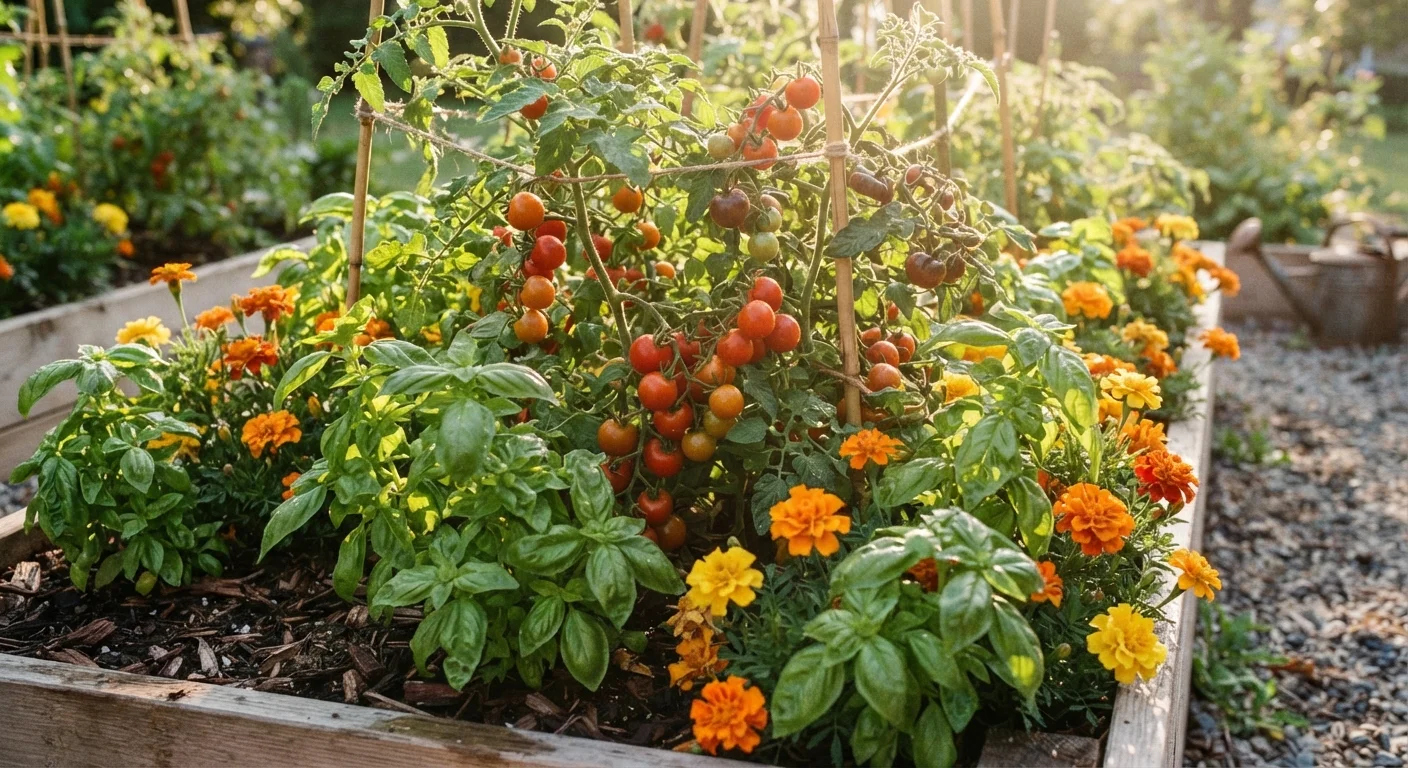
- Tomatoes and basil: Basil is widely planted near tomatoes. Some gardeners report fewer aphids and whiteflies, though controlled research findings are mixed. Basil does attract pollinators and is a productive use of space near tall tomato plants.
- Marigolds and vegetables: French marigolds (Tagetes patula) release compounds from their roots that can suppress certain soil nematodes over time. They also attract hoverflies, whose larvae feed on aphids. Planting marigolds as a border around vegetable beds is a reasonable, low-risk strategy.
- Carrots and onions: The scent of onions is thought to deter carrot fly, while carrot foliage may confuse onion fly. Evidence is largely observational, but interplanting these two is a common and practical approach.
- Nasturtiums as trap crops: Nasturtiums attract aphids strongly, drawing them away from more valued crops. Check and remove infested nasturtium growth regularly for this to be effective.
For a deeper look at what the evidence says about specific pairings, visit our article on companion planting combinations that actually work.
Companion planting
The intentional practice of growing different plant species close together to create beneficial relationships, such as pest deterrence, improved pollination, or better use of space.
Allelopathy
A biological phenomenon where one plant releases chemical compounds into the soil or air that inhibit the germination or growth of neighboring plants.
Nitrogen fixation
A process by which certain plants — especially legumes like beans and clover — convert atmospheric nitrogen into a form usable by soil organisms and nearby plants.
Trap crop
A plant grown deliberately to attract pests away from more valuable crops, concentrating pest pressure in one manageable location.
Polyculture
Growing multiple different plant species together in the same space, as opposed to monoculture. Polyculture is associated with greater biodiversity and reduced pest outbreaks.
Beneficial insects
Insects such as ladybugs, lacewings, and hoverflies that prey on or parasitize garden pests, helping to naturally manage pest populations without chemicals.
Plants That Don't Belong Together
Just as some plants support each other, others can inhibit growth or compete aggressively. Allelopathy — where a plant releases chemical compounds that suppress neighboring plants — is one documented mechanism. Black walnut trees, for example, produce juglone, which is toxic to many common garden plants including tomatoes, peppers, and blueberries. Avoid planting susceptible species within the root zone of walnut trees.
Other combinations to treat with caution:
- Fennel is broadly allelopathic and best grown in its own container or bed away from most vegetables and herbs.
- Brassicas (cabbage, broccoli, kale) compete heavily for nutrients and generally don't benefit from being paired with other brassicas or with strawberries.
- Onions and garlic near beans and peas may suppress their growth, though evidence varies — keeping them separated is a sensible precaution.
If you rely on companion planting as part of a broader pest management approach, organic pest control methods can complement your strategy with additional non-chemical tools.
Companion Planting Has Limits
Not every claimed companion planting benefit is supported by rigorous research. Many traditional pairings are based on long-standing observational practice rather than controlled trials. Results can also vary significantly based on your local soil type, climate, and specific pest pressure. Treat companion planting as one useful tool in a broader gardening strategy, not a standalone solution.
Putting Companion Planting Into Practice
Start with a clear planting plan before the season begins. Map out your beds, note which plants have similar water and sun needs, and identify where a companion might address a known problem — a perennial aphid hotspot, for instance, or a shaded corner that needs ground cover.
A few practical principles to guide your layout:
- Group by function: Decide whether you want a companion to deter pests, attract pollinators, fix nitrogen, or suppress weeds — then choose accordingly.
- Respect spacing: Companions should support, not crowd. Give each plant adequate root space and airflow.
- Observe and adapt: Keep simple notes across seasons. What worked in your garden last year is more reliable data than general advice.
- Use containers strategically: For small-space gardeners, companion planting still applies. Our container gardening guide covers how to pair plants effectively in pots.
Companion planting isn't a guaranteed solution to garden problems — it's one layer in a broader, integrated approach to growing. When combined with healthy soil, appropriate watering, and good crop rotation, thoughtful plant pairings can meaningfully improve the resilience and productivity of your garden over time.