

Key Takeaways
Why Companion Planting Is Worth Taking Seriously
Companion planting — the practice of growing different plants in close proximity for mutual benefit — has a long history in both traditional agriculture and home gardening. Some pairings are well-documented through horticultural research; others rest largely on anecdote. The key is understanding why a combination works, not just that gardening tradition recommends it.
Benefits generally fall into a few categories: pest deterrence through scent or volatile compounds, improved soil fertility through nitrogen fixation, physical support structures, and pollinator attraction. When you understand the mechanism, you can make smarter choices for your specific garden.
For gardeners also thinking about chemical-free growing, companion planting pairs naturally with other approaches — see our guide on organic pest control in the home garden for a broader toolkit.
Tomatoes and Basil
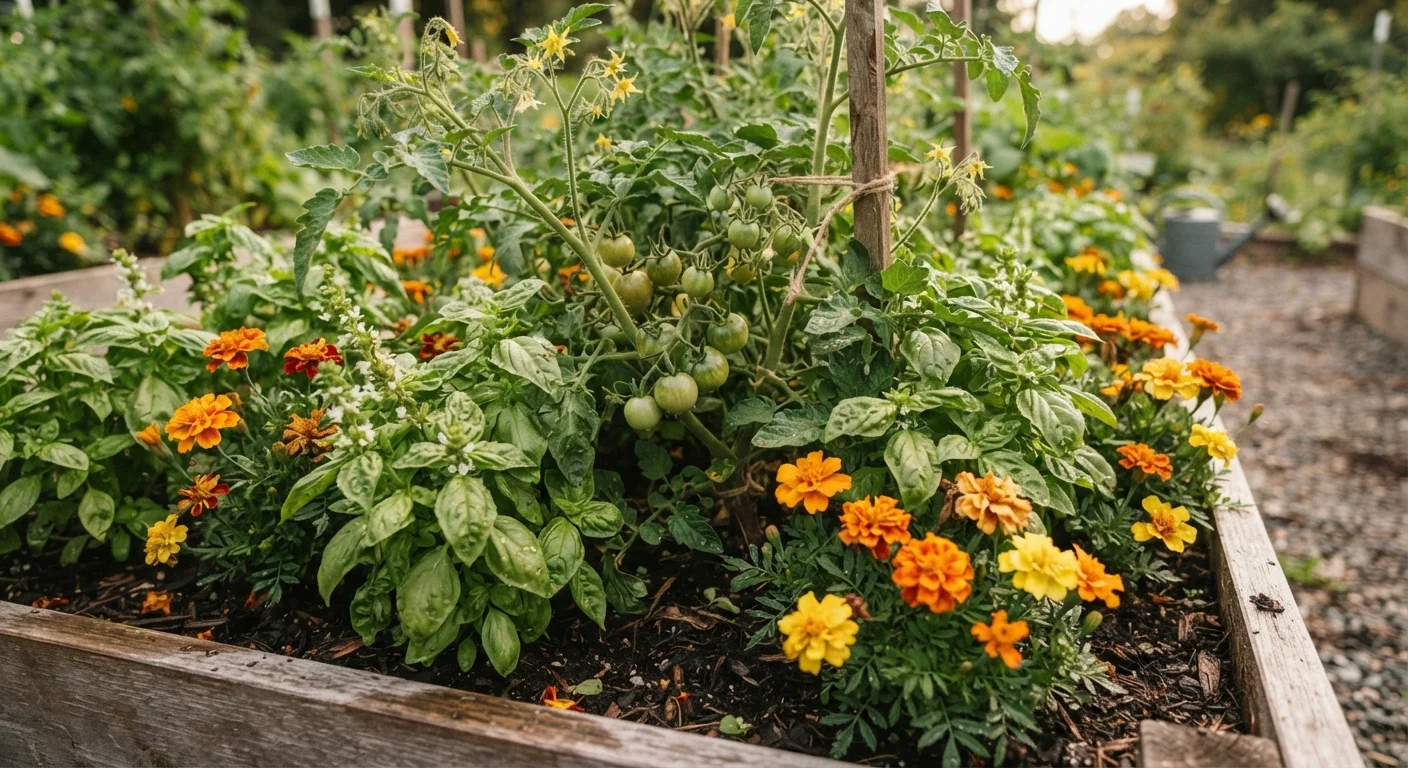
This is one of the most frequently cited companion pairs — and there is reasonable horticultural support for it. Basil produces volatile aromatic compounds that may help deter aphids, whiteflies, and thrips when planted in close proximity to tomatoes. Some gardeners also report that basil attracts pollinators that benefit tomato fruit set.
Plant basil within 12–18 inches of tomato plants, ensuring both receive full sun and well-drained soil. The practical benefit of having fresh basil adjacent to your tomato harvest is reason enough to try this combination, even if the pest-deterrent effect varies by garden.
Basil's aromatic compounds may help deter aphids and whiteflies near tomato plants.
The Three Sisters: Corn, Beans, and Squash
This Indigenous planting system — developed by Native American agricultural traditions — is one of the most well-studied companion combinations. Each plant plays a distinct ecological role: corn provides a vertical trellis for climbing beans; beans fix atmospheric nitrogen into the soil, feeding both corn and squash; and squash's broad leaves shade the ground, suppressing weeds and retaining soil moisture.
The system works best in warm climates with sufficient space — at least a 10×10-foot bed. Stagger planting so corn is established before beans are sown, and squash goes in last. This is a genuine example of synergistic polyculture, not just folklore.
The Three Sisters use vertical structure, nitrogen fixation, and ground shading as a complete system.
Marigolds and Most Vegetables
French marigolds (Tagetes patula) have earned a strong reputation as a companion plant, and the evidence is more substantive than with many other pairings. Research has shown that their root secretions can suppress soil nematodes over time — particularly beneficial near tomatoes, peppers, and eggplants. Above ground, their scent may confuse or deter some flying pests.
For nematode suppression, marigolds need to be planted densely and left in place for a full growing season — a one-season border planting offers limited soil benefit. That said, their value as pollinator attractors and aesthetic ground cover makes them a worthwhile addition regardless.
French marigold root secretions can suppress soil nematodes when planted densely for a full season.
Carrots and Onions (or Chives)
The pairing of carrots with alliums like onions, leeks, or chives is rooted in the idea that each plant's scent masks the other from specialist pests. Onion flies are reportedly deterred by carrot scent, while carrot flies may be confused by the sulfurous odor of alliums. Evidence from field studies is mixed, but the combination remains popular and carries minimal downside.
Interplant rows of carrots with chives or bunching onions, keeping alliums at the row edges. Chives also bloom attractively and draw beneficial insects — see more on natural pest control methods for how beneficial insects fit into the broader picture.
Alliums and carrots may mask each other's scent from their respective specialist pests.
Nasturtiums as Trap Crops
Nasturtiums serve a slightly different companion role: rather than repelling pests, they attract them away from more valuable crops. Aphids, in particular, are strongly drawn to nasturtiums, making them effective trap crops when planted at the margins of vegetable beds. This concentrates aphid populations in one place, where you can manage them more easily — by hand, with water spray, or by encouraging beneficial insects.
Plant nasturtiums at the edges or corners of beds rather than interspersed throughout. Their edible flowers and leaves also add practical kitchen value. Just monitor them regularly — a heavily infested trap crop that goes unmanaged can eventually become a population source rather than a control tool.
Nasturtiums draw aphids away from vegetable crops, concentrating them for easier management.
Legumes and Heavy Feeders
Legumes — including beans, peas, and clover — form symbiotic relationships with soil bacteria (Rhizobium) that fix atmospheric nitrogen into plant-available forms. Planting legumes near or before nitrogen-hungry crops like brassicas, corn, or leafy greens can improve soil fertility over time, reducing the need for supplemental fertilizer.
The benefit is most pronounced in rotation rather than simultaneous interplanting: growing beans in a bed one season and brassicas the next captures the nitrogen legacy left in root nodules after the legume is turned in. Simultaneous pairing still has value, but the soil improvement effect is less immediate.
Legume root nodules fix nitrogen into the soil, benefiting heavy-feeding crops planted nearby or after.
Putting These Pairings Into Practice
Companion planting is most effective when you treat it as one layer of a thoughtful garden design. Plant spacing, sun exposure, and watering needs still need to be compatible — a beneficial pairing on paper can underperform if one plant is shading or outcompeting the other.
Track Your Combinations Each Season
Keep a simple garden journal noting which pairings you tried, where you placed them, and what pest or yield outcomes you observed. Companion planting results vary by soil type, climate, and pest pressure — your own data from your own garden is the most reliable guide. Even rough notes from one season will sharpen your decisions the next.
If you're working with limited outdoor space, many of these combinations translate well to containers. Our article on container gardening on patios and terraces covers how to adapt soil mixes and spacing for pots. And for herb-heavy pairings, growing herbs in small outdoor spaces offers practical layout ideas for balconies and window boxes.
Finally, consider vertical relationships. Tall plants like corn or tomatoes create shade and microclimates that shorter companions can exploit. Our piece on plant heights and growth habits helps you think through those vertical dynamics systematically.
Start with one or two proven pairings and observe how your plants respond over a full season. Companion planting rewards patient, attentive gardeners who adjust based on real results rather than rigid formulas.