

Key Takeaways
Why Small Spaces Are Ideal for Herbs
Herbs are among the most rewarding plants for compact outdoor gardening because they're naturally suited to contained growing conditions. Many originated in rocky Mediterranean hillsides or thin-soiled environments — they're adapted to restricted root space and lean soil, which makes containers a natural fit rather than a compromise.
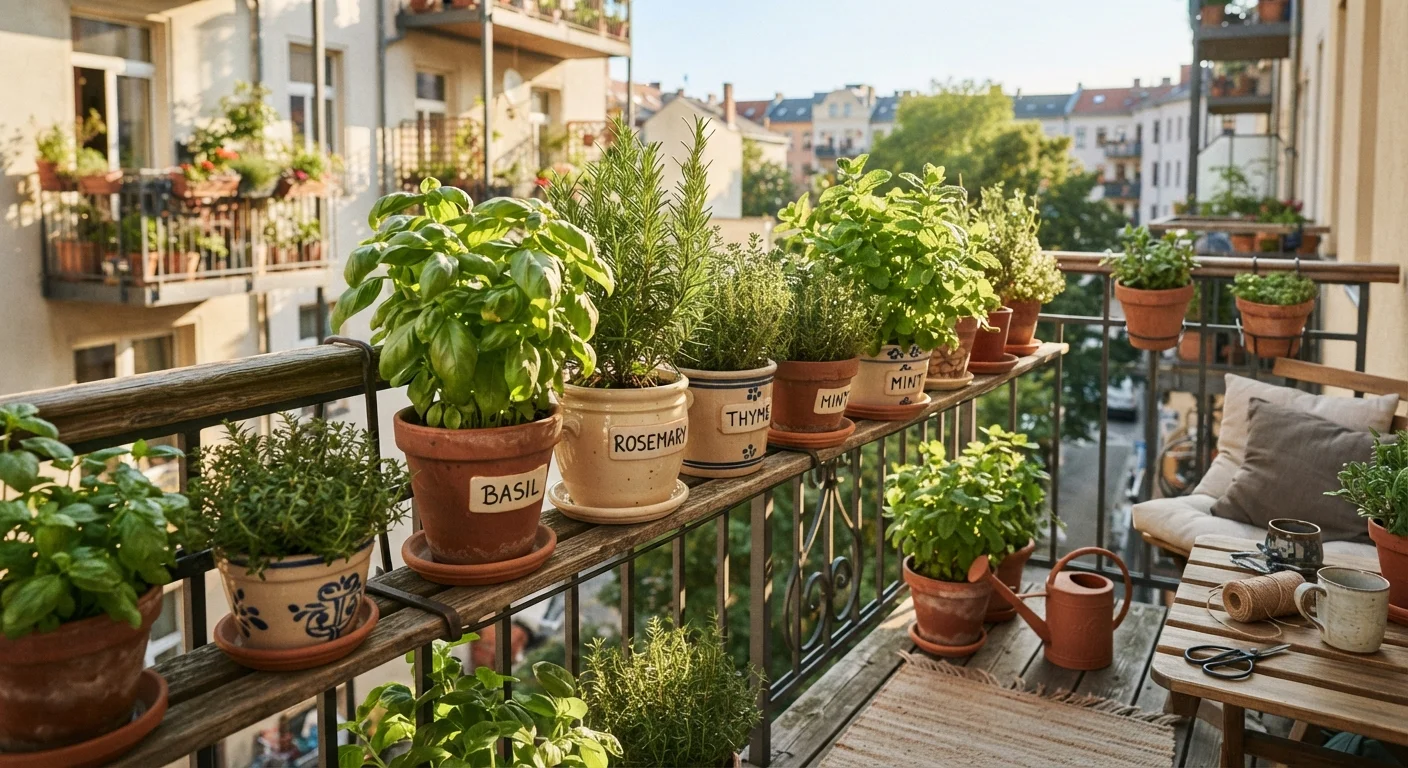
A modest balcony or window box can realistically support 8–12 herb varieties if planned thoughtfully. Unlike vegetables, most herbs don't require large volumes of soil or elaborate irrigation. They reward attentive, frequent harvesting and tolerate the microclimate variations — wind, reflected heat, temperature swings — that compact outdoor spaces often produce.
If you're also interested in growing edibles beyond herbs, our article on starting a vegetable garden from scratch covers the broader principles of outdoor food growing. And for the full picture on container setup and care, see our container gardening on patios and terraces guide before you begin.
What you will need
Containers with drainage holes
Hold soil and plant roots while allowing excess water to escape, preventing root rot.
Quality potting mix
Provides the aerated, nutrient-rich growing medium herbs need in containers — garden soil compacts and drains poorly.
Slow-release granular fertilizer
Feeds herbs steadily over weeks, reducing the need for frequent liquid feeding.
Watering can with a rose head
Delivers a gentle, even flow of water that won't disturb soil or damage seedlings.
Small hand trowel
Used for scooping soil, transplanting seedlings, and top-dressing pots.
Saucers or drip trays
Catch drainage water on balconies or patios to protect surfaces and collect moisture on hot days.
Step-by-Step: Setting Up and Maintaining Your Herb Garden
Follow these steps from setup through ongoing maintenance to build a herb garden that stays productive across the growing season.
Assess your sunlight conditions
Before selecting any herbs, spend a day observing how many hours of direct sun your space receives. Most culinary herbs — basil, thyme, rosemary, oregano — need a minimum of 6 hours of direct sunlight. If your balcony or patio gets only 3–4 hours, focus on shade-tolerant herbs like mint, chives, parsley, and cilantro, which perform reasonably well in partial sun.
Choose containers appropriate to each herb
Shallow-rooted herbs like thyme and oregano grow happily in 6-inch pots, while deep-rooted herbs like rosemary, basil, and dill need containers at least 10–12 inches deep and wide to develop properly. Always confirm drainage holes are present — without them, roots sit in water and rot. For a thorough overview of container selection and soil mixes, see our guide to container gardening for small spaces.
Fill containers with the right growing medium
Use a quality, peat-free potting mix designed for containers — never use soil dug from a garden bed, which compacts and drains poorly in pots. For Mediterranean herbs (rosemary, thyme, lavender), improve drainage further by mixing in about 20–30% perlite or coarse horticultural grit. At planting time, work a small amount of slow-release granular fertilizer into the top layer of mix according to package directions.
Group herbs by water needs
Grouping herbs that share similar watering requirements in the same pot or cluster makes maintenance far easier and reduces plant losses. Mediterranean herbs (rosemary, thyme, oregano, sage) prefer to dry out between waterings. Moisture-loving herbs (basil, mint, parsley, chives) prefer consistently damp — not waterlogged — soil. Keeping these two groups separate prevents you from drowning one while trying to satisfy the other.
Water correctly and check soil before each session
Push a finger about an inch into the soil before watering. If it still feels damp, wait. If it's dry at that depth, water thoroughly until it drains freely from the bottom of the pot. In warm summer months, small pots on sun-exposed balconies may need watering daily; in cooler weather, every 2–4 days may be sufficient. Underwatering is easier to correct than overwatering, which causes irreversible root rot.
Harvest regularly to encourage bushy growth
Once plants are established and have at least six sets of leaves, begin harvesting regularly. Snip stem tips just above a leaf node — the point where two leaves meet the stem. Avoid letting any herb bolt (go to flower and seed) without harvesting first, as this signals the plant to stop producing flavorful foliage. Pinch off flower buds as they appear on basil to extend the harvest season significantly.
Harvest Little and Often
Rather than stripping an herb plant bare, snip no more than one-third of its growth at a time. Cutting just above a leaf node prompts the plant to branch out, giving you a denser, more productive plant over the season. Morning is the best time to harvest, when essential oil concentration is highest.
Don't Plant Mint Directly with Others
Mint spreads aggressively through underground runners and will quickly crowd out neighboring herbs in a shared pot. Always grow mint in its own dedicated container to keep it contained. If you want mint near other herbs, set its pot alongside rather than combining them in a single planter.
Weight Limits Matter on Balconies
Filled pots are significantly heavier than they look — a large terracotta pot with moist soil can easily weigh 40–60 lbs. Before loading a balcony with containers, check your building's load capacity guidelines or consult a structural professional. Distribute weight across the space rather than concentrating pots in one area, and consider lightweight fabric or plastic containers as alternatives to terracotta.
Once your herbs are established, consider how pairing certain plants together can make the most of your small space. Our guide on companion planting explores which pairings naturally support each other and can even deter common pests.