

Key Takeaways
Start here
Choosing the Right Spot
Next
Preparing Your Soil
Then
Deciding What to Grow
Almost there
Sowing Seeds and Transplanting Seedlings
Keep it going
Watering, Feeding, and Ongoing Care
Choosing the Right Spot
Before you buy a single seed packet, spend time observing your yard. Sunlight is the single biggest factor determining whether your vegetable garden succeeds. The vast majority of vegetables — tomatoes, peppers, cucumbers, carrots, beans — need at least 6 full hours of direct sun per day. Leafy greens like spinach and Swiss chard are more shade-tolerant, but they still perform best with 4–6 hours.
Walk your yard at midmorning, noon, and late afternoon, and note which areas receive consistent, unshaded light. Avoid low spots where water pools after rain, and stay clear of large tree root zones, which compete aggressively for water and nutrients.
Consider access to water, too. Your plot should be within comfortable reach of a hose or rain barrel. A convenient water source dramatically increases the consistency of your care routine — which matters more than almost any other factor for beginners.
Start Small for Better Results
A 4×8-foot raised bed or a 10×10-foot in-ground plot is more than enough for a first-season vegetable garden. Smaller plots are easier to prepare well, water consistently, and monitor for problems. You can always expand once you've learned how your soil, sunlight, and schedule interact.
If your yard has limited open ground, container growing is a practical alternative. See our guide to container gardening for small outdoor spaces for a full comparison of approaches.
Preparing Your Soil
Good soil is the foundation of a productive garden. Vegetable roots need a growing medium that is loose, well-draining, and rich in organic matter. Compacted, nutrient-poor soil produces stunted, stressed plants regardless of how much you water or fertilize.
Start by removing weeds and any large stones from your plot. Then use a garden fork or spade to loosen the soil to a depth of at least 8–10 inches. If your native soil is heavy clay or sandy and quick-draining, amend it with finished compost. Work 2–4 inches of compost into the top layer — this single step improves both soil structure and fertility.
Direct sowing
Planting seeds directly into the ground where they will grow to maturity, rather than starting them indoors first.
Transplant
A young plant started in a pot or tray and then moved into the garden once it's established enough to handle the outdoor environment.
Compost
Decomposed organic matter — such as kitchen scraps and garden trimmings — used to enrich soil with nutrients and improve its structure.
Soil pH
A measure of how acidic or alkaline your soil is, on a scale from 0 to 14. Most vegetables grow best in the slightly acidic range of 6.0–7.0.
Last frost date
The average date in spring after which freezing temperatures are unlikely in your area. Used to time when warm-season crops can safely go outdoors.
Cut-and-come-again
A harvesting method for leafy greens where you cut outer leaves and leave the plant growing, allowing it to produce new leaves over several weeks.
If you're new to making your own compost, our composting at home guide walks you through building a system from scratch. A soil pH between 6.0 and 7.0 suits most vegetables; inexpensive test kits are available at garden centers if you want to check yours.
Deciding What to Grow
One of the most common beginner mistakes is planting too much, too varied. Start small and strategic. Choose 3–5 vegetables your household actually eats, and prioritize crops that are known to be forgiving in their first season.
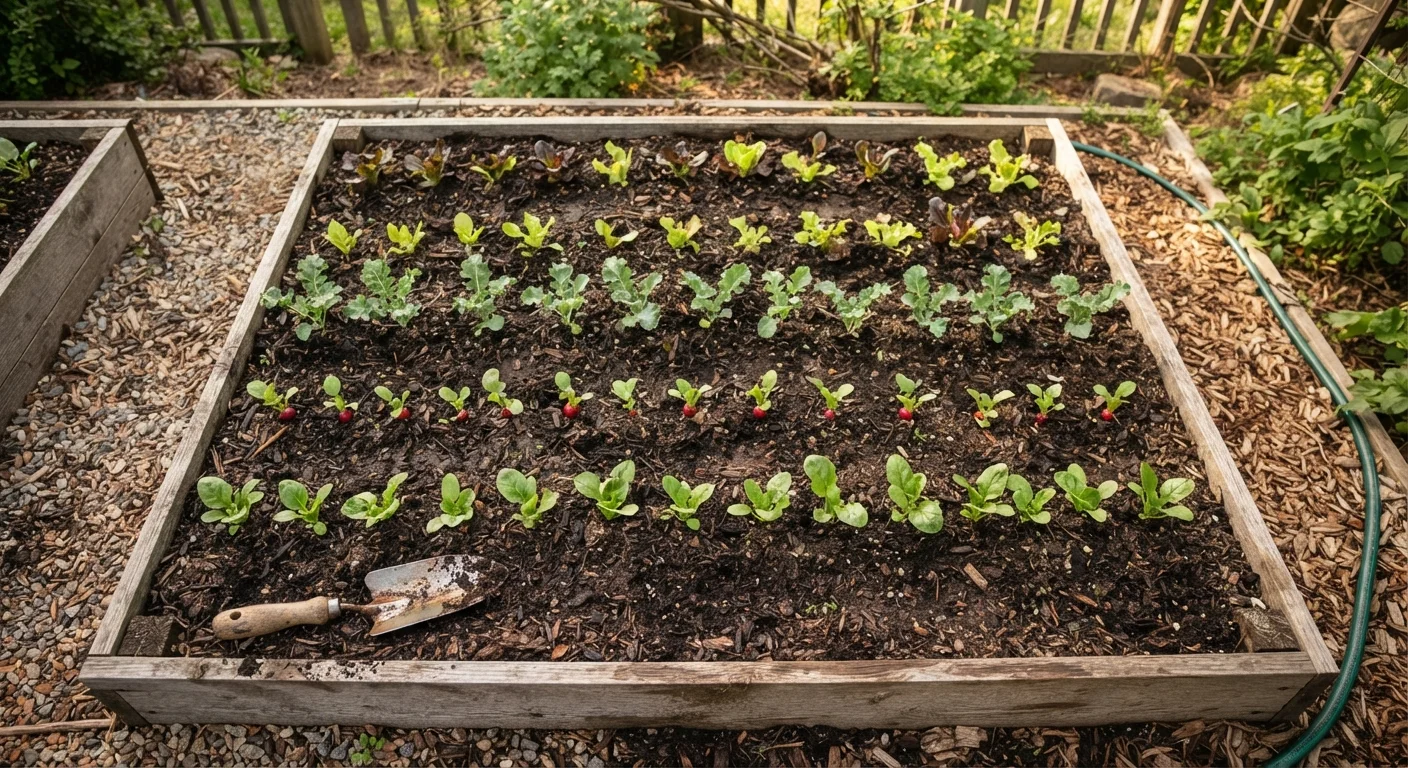
- Radishes: Ready in as little as 3–4 weeks; great for building early momentum.
- Lettuce and salad greens: Cut-and-come-again varieties provide weeks of harvests.
- Green beans: Bush types require no staking and produce abundantly.
- Zucchini: Highly productive with minimal effort — one or two plants is usually enough.
- Cherry tomatoes: More disease-resistant and forgiving than large-fruited types.
Check your local last frost date before planting. Cool-season crops (peas, kale, spinach) tolerate light frost and can go in earlier; warm-season crops (tomatoes, peppers, squash) go in only after frost risk has passed for your region.
Sowing Seeds and Transplanting Seedlings
You have two options for getting plants in the ground: direct sowing (planting seeds directly where they'll grow) or starting from transplants (seedlings you've grown indoors or purchased from a nursery).
Direct sowing works well for vegetables that dislike having their roots disturbed — carrots, radishes, beets, beans, and peas all fall into this category. Follow the seed packet depth and spacing guidance precisely; overcrowding is a leading cause of poor yield and disease.
Transplants give warm-season crops like tomatoes and peppers a head start in regions with short growing seasons. When planting transplants, handle roots gently, water them in well immediately after planting, and shield them from harsh afternoon sun for the first few days while they adjust.
Don't Skip Spacing Recommendations
Seed packets and transplant labels include spacing guidelines for a reason — crowded plants compete for light, water, and nutrients, and poor air circulation between them encourages fungal disease. It can feel wasteful to leave so much empty space early in the season, but plants fill in quickly and the yields from properly spaced crops are significantly better.
Watering, Feeding, and Ongoing Care
Most vegetable gardens need roughly 1 inch of water per week, whether from rainfall or irrigation. The key principle is watering deeply and less frequently — this encourages roots to grow downward rather than staying at the surface where they're vulnerable to heat and drought. A simple test: push your finger 2 inches into the soil. If it's dry at that depth, water thoroughly.
Water at the base of plants rather than overhead when possible. Wet foliage encourages fungal disease, particularly for tomatoes and squash. Early morning watering is ideal — any surface moisture dries off during the day.
Feeding with a balanced vegetable fertilizer supports steady growth, but avoid over-feeding, which can produce lush foliage at the expense of fruit. If you've built compost into your soil, you may need little or no additional fertilizer for the first season.
Pull weeds promptly before they set seed, and check plants weekly for early signs of pest damage. Catching problems early almost always makes them easier to manage. Most importantly, keep your plot to a size you can realistically maintain — a small, well-tended garden outproduces a sprawling neglected one every time.
As your interest grows, you might also enjoy exploring how homegrown produce can support your overall nutrition — our piece on eating enough vegetables without overhauling your diet offers practical, low-effort ideas.