

Key Takeaways
Why Container Gardening Works Differently Outdoors
Patio and terrace containers present a unique set of conditions that differ significantly from in-ground or raised-bed gardening. Because the root zone is enclosed, plants depend entirely on you for water, nutrients, and aeration — the surrounding soil can't buffer deficiencies or absorb excess moisture. Understanding this dependency is the foundation of every successful container planting.
Outdoor containers also face greater temperature swings than ground plantings. On a hot summer day, dark pots sitting on stone or concrete can heat root zones to damaging temperatures. In winter, small pots are vulnerable to freeze-thaw cycles that crack roots. Recognizing these stressors lets you make smarter choices about pot material, placement, and plant selection.
For readers exploring the broader range of growing formats, our comparison of raised beds versus in-ground planting covers how drainage, soil control, and maintenance differ across garden styles.
Soil, Drainage, and Feeding Fundamentals
The growing medium inside a container is not optional — it's the entire environment your plant lives in. Always use a quality potting mix formulated for containers. These mixes are engineered to drain freely while retaining enough moisture for root uptake. Garden soil compacts under repeated watering and suffocates roots; avoid it entirely in pots.
Every container must have drainage holes. Without them, water accumulates at the bottom, creating anaerobic (oxygen-depleted) conditions that rot roots even in otherwise healthy plants. Elevating pots slightly on pot feet or bricks helps drainage flow freely and prevents saucers from becoming standing water traps.
Because nutrients leach out with every watering, container plants need regular feeding throughout the growing season. A balanced slow-release granular fertilizer worked into the mix at planting, supplemented with liquid feed every two to four weeks, covers most edible and ornamental plants. If you maintain a home compost system, adding a small amount of finished compost to your potting mix can improve structure and introduce beneficial microbial activity — our guide to composting at home explains how to prepare ready-to-use compost.
Refresh Potting Mix Annually
Potting mix degrades over time — it compacts, loses its porous structure, and becomes depleted of nutrients. Plan to replace or significantly refresh the mix in your containers each spring before the main growing season. For large pots that are impractical to empty fully, remove the top third of old mix and replace it with fresh material blended with a slow-release fertilizer.
Plant Selection and Seasonal Planning
Matching plants to your patio's actual conditions — sun exposure, wind exposure, and your climate zone — is more important than picking attractive varieties in isolation. A shade-loving fern placed in full afternoon sun will struggle no matter how well you water it.
For sun-drenched terraces, consider drought-tolerant herbs like rosemary, thyme, and oregano alongside ornamentals such as pelargoniums, lavender, and portulaca. Shadier patios suit hostas, ferns, begonias, and impatiens. When choosing ornamentals, weighing the trade-offs between native and exotic species is worth the time — our article on native plants versus exotic ornamentals can help you make ecologically thoughtful decisions.
Plan for seasonal transitions. Spring bulbs give way to summer annuals; late summer chrysanthemums and ornamental cabbages carry interest into autumn. Keeping a few evergreen structural plants — boxwood, dwarf conifers, ornamental grasses — provides a reliable framework while seasonal plants rotate around them.
Watering Rhythms and Long-Term Container Care
Outdoor containers — especially terracotta, which is porous — can dry out within a day in hot, windy weather. Check soil moisture by pressing a finger an inch into the mix; water thoroughly when it feels dry at that depth, allowing water to drain from the bottom. Shallow, frequent watering encourages surface roots and leads to weaker plants.
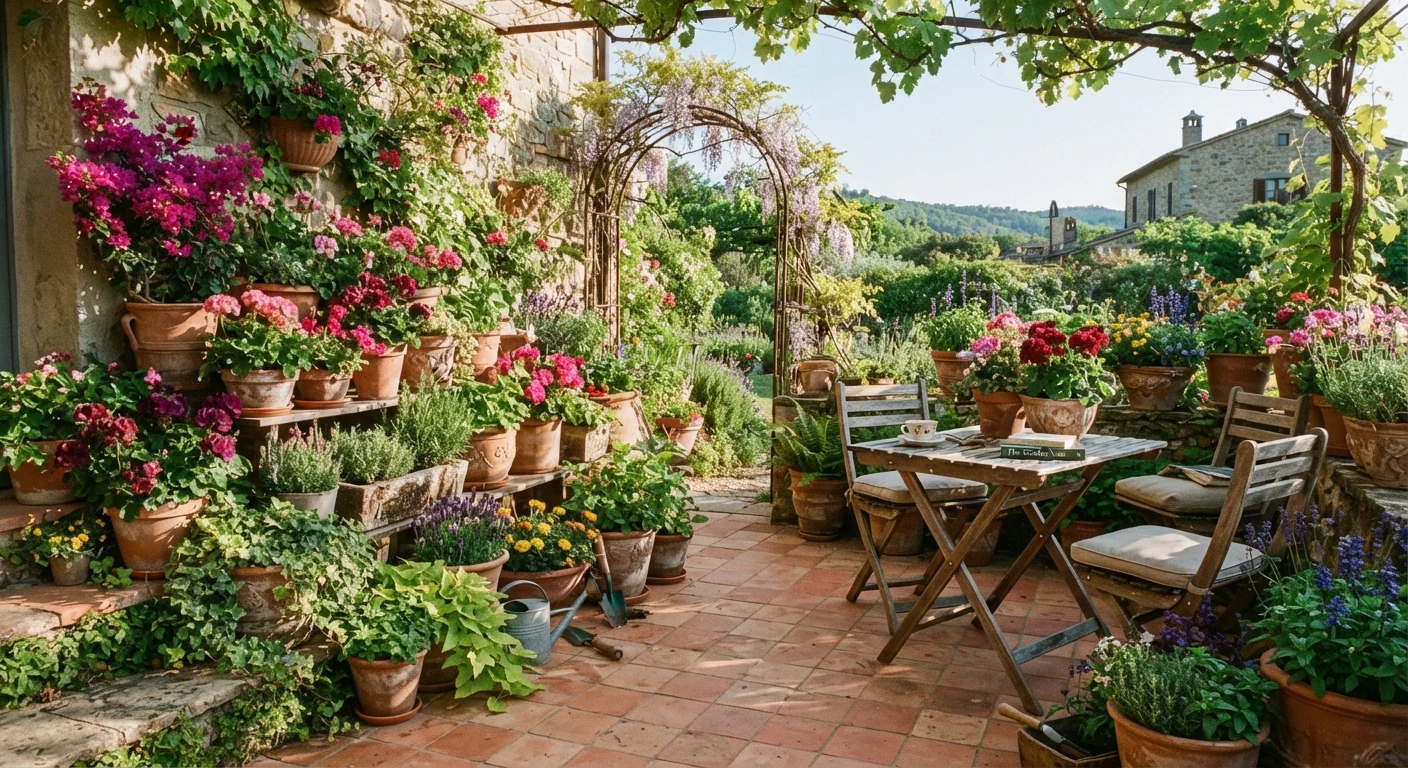
In extended dry spells, self-watering containers with built-in reservoirs reduce the maintenance burden considerably. Grouping pots together also helps — the microclimate created by clustered foliage reduces moisture evaporation from soil surfaces. If water conservation is a broader goal in your garden, the principles in our drought-tolerant gardening guide translate well to container settings.
At the end of the growing season, refresh or replace potting mix in large planters and divide any overcrowded perennials before overwintering. Our guide to dividing and replanting perennials covers the timing and technique for getting this right. Move frost-sensitive pots under cover or into an unheated garage to prevent root damage during hard freezes.
Overwintering Large Pots Safely
Terracotta and glazed ceramic pots are vulnerable to cracking when saturated soil freezes and expands. If you can't move large pots under cover, wrap them with horticultural fleece or bubble wrap insulation to buffer temperature swings. Ensure pots are raised off the ground on feet to prevent waterlogging, which accelerates frost damage. Always check plant hardiness ratings against your USDA zone before leaving container plants outdoors year-round.