

Key Takeaways
Option A
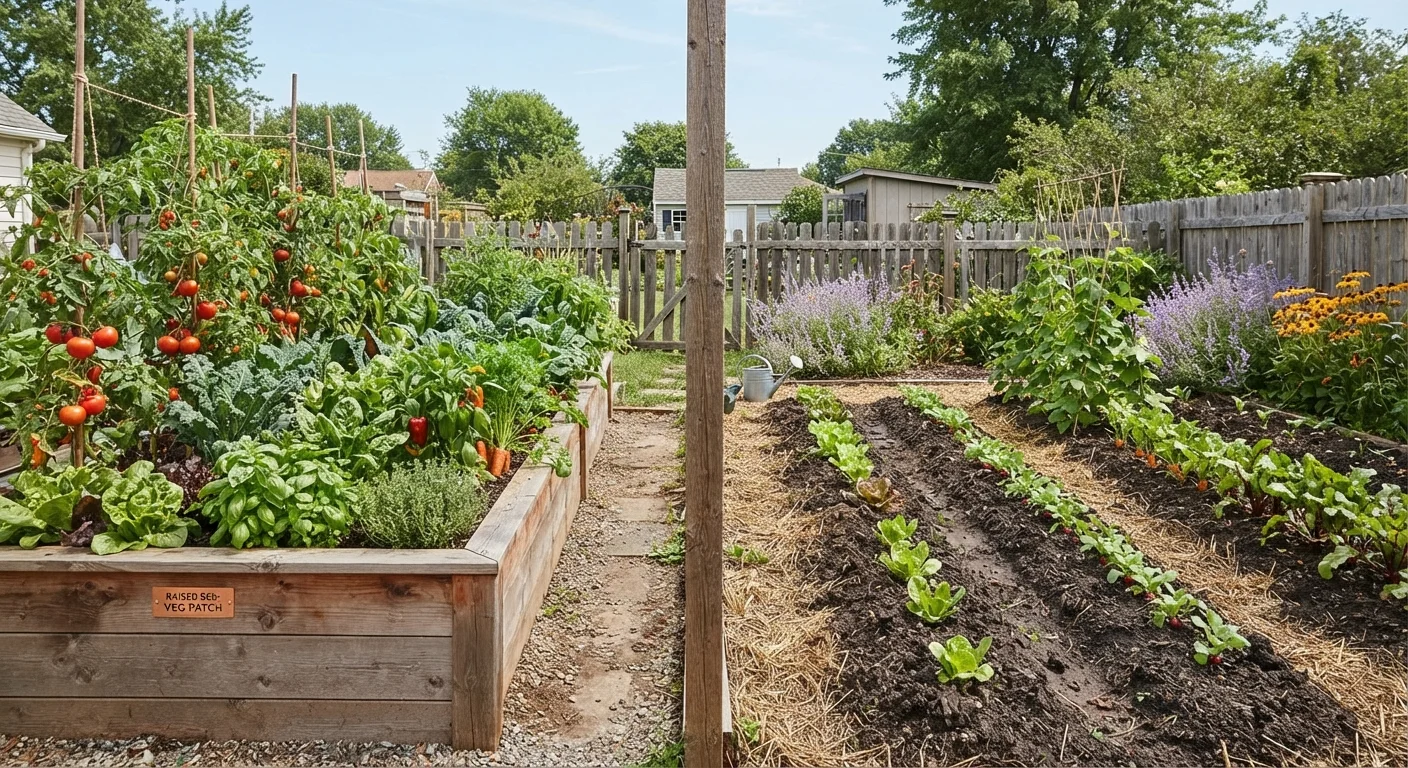
Raised Beds
The controlled, high-performing setup for challenging conditions.
Best for: Gardeners dealing with poor native soil, limited mobility, or who want precise control over drainage and soil composition.
Option B
In-Ground Planting
The traditional, cost-effective approach for established soil.
Best for: Gardeners with healthy, workable native soil who want to grow at scale without significant upfront investment.
If your soil is compacted, clay-heavy, or has drainage problems
Raised Beds
Raised beds let you bypass poor native soil entirely by filling with a custom mix, giving plants the drainage and nutrients they need from day one.
If you're working with a large plot and a tight budget
In-Ground Planting
In-ground planting eliminates the material and construction costs of raised beds, making it far more economical at scale.
If you have mobility challenges or back and knee pain
Raised Beds
The elevated height of raised beds significantly reduces bending and kneeling, making gardening more accessible and comfortable.
If you're growing deep-rooted perennials or trees
In-Ground Planting
In-ground soil allows unrestricted root depth and natural water uptake, which deep-rooted plants require to thrive long-term.
If you want the fastest productive start on a new garden plot
Raised Beds
Raised beds with fresh soil can be planted immediately, bypassing the need to test, amend, and condition native ground over a season or more.
Soil Control and Drainage
Soil quality is often the deciding factor between the two approaches. With raised beds, you fill the frame entirely with a custom blend — typically a mix of topsoil, compost, and amendments — giving you precise control from the start. This is particularly valuable if your native ground is clay-heavy, compacted, or has a history of contamination. Raised beds also drain more freely, reducing the risk of waterlogged roots that plague flat, poorly draining plots.
In-ground planting relies on your existing soil, which can be an advantage or a liability. Where loamy, well-structured native soil already exists, in-ground beds tap into a deep reservoir of nutrients and moisture that no raised bed can replicate. However, on degraded or heavy soils, improvement takes time — often multiple seasons of amendment with compost and organic matter. See our guide to mulching for practical ways to build soil health over time.
| Criterion | Raised Beds | In-Ground Planting |
|---|---|---|
| Upfront cost | Moderate to high | Low |
| Soil control | Full — custom fill | Limited by native soil |
| Drainage | Excellent | Depends on site |
| Spring warm-up | Faster | Slower |
| Watering demands | Higher — dries quickly | Lower — retains moisture |
| Root depth available | Limited by frame depth | Unrestricted |
| Weed pressure | Lower initially | Higher — needs management |
| Accessibility | High — less bending | Standard — ground level |
| Scalability | Costly to scale up | Easily expanded |
Cost and Setup
Upfront cost is one of the clearest differences between the two methods. Raised beds require materials — lumber, galvanized metal, or composite boards — plus the soil to fill them. A single 4×8-foot bed can run anywhere from $50 to several hundred dollars depending on materials and fill depth. Costs multiply quickly when establishing multiple beds across a garden.
In-ground planting has almost no setup cost beyond basic tools and seeds or transplants. If your soil needs improvement, compost and amendments add some expense, but even heavily amended ground is typically less costly than constructing and filling several raised frames. For gardeners on a limited budget, or those covering a large area, in-ground planting has a clear financial edge. If space is very limited, it's also worth reviewing container gardening as an alternative for compact outdoor setups.
6–8 inches
Minimum recommended raised bed depth
Most cooperative extension programs recommend at least 6–8 inches of soil depth for vegetable roots; 12 inches is preferred for root crops like carrots.
2–4 weeks
Earlier planting window in raised beds
University extension research suggests raised beds can allow planting two to four weeks earlier in spring due to faster soil warming compared to in-ground plots.
30–50%
Higher water evaporation rate in raised beds
Garden educators commonly note that raised beds can lose 30–50% more moisture than in-ground soil due to their elevated, well-drained structure.
Watering, Maintenance, and Season Length
Raised beds warm up faster in early spring — their elevated, well-drained soil absorbs heat more quickly than ground-level plots, giving you a head start on planting. This can extend your effective growing season by several weeks in cooler climates. The trade-off is that raised beds also dry out faster, especially in summer heat, so they typically need more frequent watering than in-ground beds. A drip irrigation system is often a practical pairing with raised beds to maintain consistent moisture without daily manual effort.
In-ground planting benefits from the thermal mass and moisture retention of deeper soil. Ground-level soil stays cooler and wetter longer, which reduces watering demands in summer but also means slower warming in spring. Weed pressure can be heavier in open ground, though a layer of mulch addresses much of this. Maintenance overall is comparable; each method demands attention, just in different ways.
A Note on Soil Testing
Before committing to in-ground planting, a basic soil test is worth the modest cost. Many US cooperative extension offices offer low-cost testing that identifies pH, nutrient levels, and potential contaminants. Results guide targeted amendments rather than guesswork. Raised bed gardeners benefit from soil testing too, particularly if sourcing bulk fill from unknown suppliers.
Plant Suitability and Long-Term Fit
Most annual vegetables, herbs, and compact flowering plants perform equally well in either setting. Where the two approaches diverge is with plants that need substantial root depth — established shrubs, fruit trees, and many perennials are better served by in-ground planting, where roots can follow moisture deep into the subsoil without hitting a frame wall. For layering a garden with plants at different heights and growth habits, in-ground flexibility is often easier to achieve; our guide to layered garden design walks through how to plan these arrangements effectively.
Raised beds shine for intensive annual vegetable production, cut flowers, and mixed salad plantings. Because you control the soil entirely, it's also simpler to rotate crops, rest beds, and recharge fertility with compost each season. Neither method is universally superior — the right choice comes down to your site conditions, what you want to grow, and how much upfront investment makes sense for your garden.