

Key Takeaways
Our Verdict
Drip irrigation outperforms sprinklers on water efficiency and targeted delivery for vegetable beds, shrubs, and trees. Sprinkler systems remain the practical choice for lawns and broad planting areas that need uniform coverage. Many homeowners benefit from using both in different zones of the same yard.
| Best for | Recommended |
|---|---|
| Vegetable gardens, raised beds, and water-conscious gardeners | Drip Irrigation |
| Lawns, ground covers, and large open planting areas | Sprinkler Systems |
| Mixed gardens with diverse plant types and zones | Hybrid of Both Systems |
How Each System Works
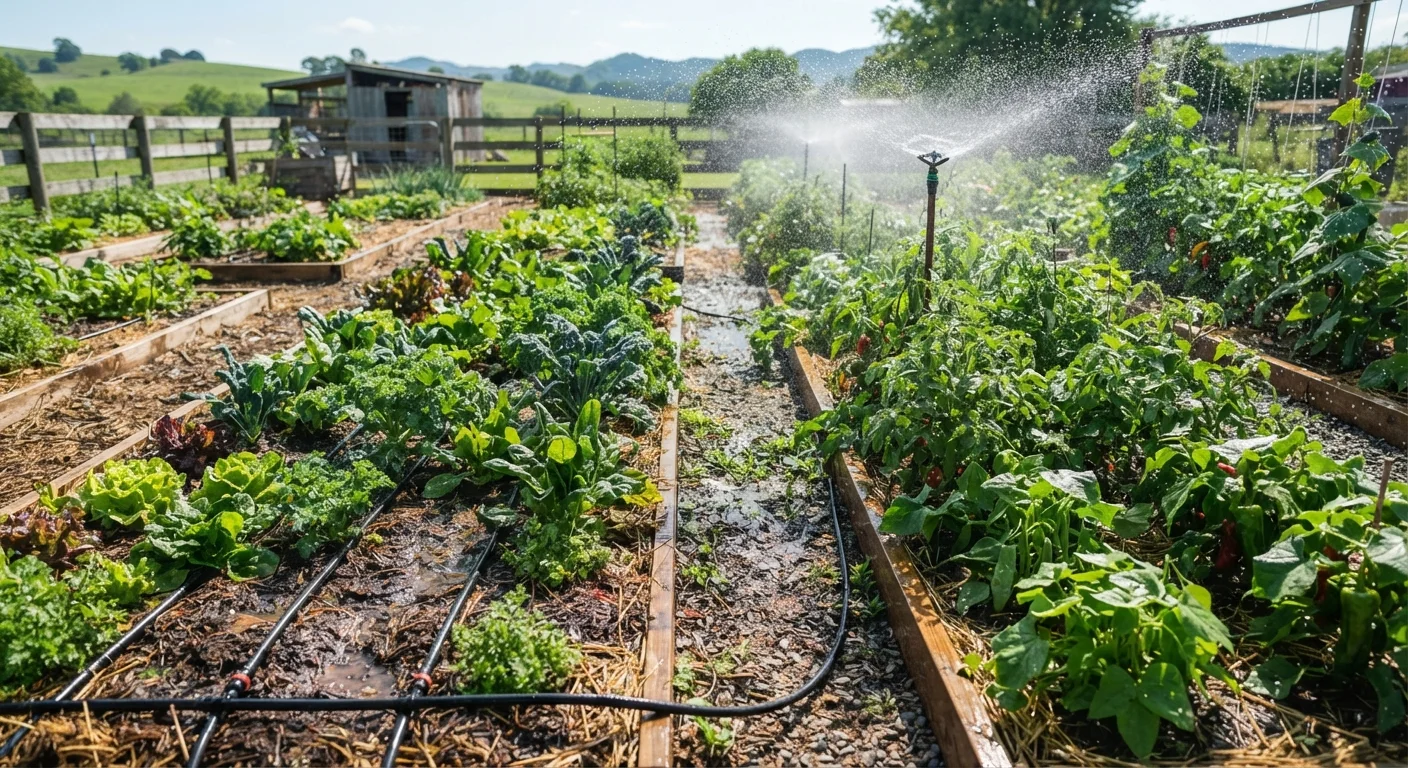
Understanding the mechanics of each system helps clarify where each excels. Drip irrigation delivers water slowly and directly to the root zone through a network of tubing, emitters, and micro-sprayers laid at or just below soil level. Water seeps into the ground with minimal runoff or evaporation.
Sprinkler systems — also called overhead or spray irrigation — distribute water through a series of heads or rotors that cast water in arcs across a surface area, mimicking rain. Pop-up heads are the most common residential form, retracting flush with the ground when not in use.
Each method suits a different relationship between plant, soil, and water delivery. For a broader look at how watering choices affect plant health, see our guide to common garden watering myths.
Water Efficiency and Environmental Impact
Water efficiency is often the deciding factor for homeowners in drought-prone regions or areas with seasonal watering restrictions. Drip irrigation is widely considered the more efficient option: because water targets the root zone directly, losses to evaporation and wind drift are minimal. Studies from university cooperative extension programs consistently note that drip systems can use 30–50% less water than comparable overhead systems under similar conditions.
Sprinklers, by contrast, spray water into the air — making them vulnerable to wind drift and surface evaporation, especially during midday heat. They can also wet foliage, which may promote fungal disease in susceptible plants.
30–50%
Water savings with drip vs. overhead irrigation
University cooperative extension research consistently documents this range under comparable conditions.
~50%
Residential outdoor water use going to landscapes
The U.S. Environmental Protection Agency estimates roughly half of residential outdoor water is applied to landscapes and gardens.
That said, modern sprinkler technology — including pressure-regulated heads and smart controllers with weather-based scheduling — has closed the efficiency gap considerably. If you're working toward a lower-water garden overall, pairing either system with drought-adapted planting is a smart strategy. Our drought-tolerant gardening guide covers complementary approaches.
Installation, Cost, and Maintenance
Installation complexity differs meaningfully between the two systems. A basic drip system can be assembled by most homeowners using off-the-shelf components: main supply line, emitter tubing, pressure regulator, and a filter. Costs are relatively modest for small garden beds, though larger or more complex layouts require more planning and materials.
Sprinkler systems, particularly in-ground pop-up installations, generally require trenching, connection to a home's water supply, and a controller — work that often benefits from a licensed irrigation professional, especially when tapping into pressurized mains. Permits may be required depending on your municipality; always check local codes before beginning any connection to household plumbing.
| Drip Irrigation | Sprinkler Systems | |
|---|---|---|
| Water Efficiency | High — targets root zone directly | Moderate — subject to evaporation and drift |
| Best Plant Types | Vegetables, trees, shrubs, containers | Lawns, ground covers, dense annual beds |
| Installation Complexity | Moderate — DIY-friendly for small areas | Higher — often requires professional for in-ground |
| Upfront Material Cost | Lower for small gardens | Higher, especially for in-ground systems |
| Foliage Wetting | Minimal — water stays near soil | Significant — can promote fungal issues |
| Winterization Needed | Flush tubing; store emitters | Drain or blow out lines in freezing climates |
| Smart Controller Compatible | Yes, with appropriate timer | Yes, widely supported |
Ongoing maintenance also differs. Drip emitters can clog with mineral deposits and should be inspected seasonally. Sprinkler heads can be knocked out of alignment by lawn equipment or foot traffic, and the lines may need winterization (draining or blowing out) in climates with freezing temperatures.
Plant Suitability and Garden Layout
Plant type and garden structure are arguably the most practical guides to system choice. Drip irrigation works especially well for:
- Vegetable gardens and raised beds — including setups discussed in our raised beds vs. in-ground planting comparison
- Trees, shrubs, and perennials with defined root zones
- Container plantings on patios — see our container gardening guide for watering rhythms that work
- Slope planting where runoff is a concern
Sprinkler systems are better suited to:
- Lawns and turf grass needing broad, even coverage
- Dense annual beds or ground covers where individual emitter placement is impractical
- Large flat areas where uniform distribution is the priority
Consider a Zoned Hybrid Approach
Rather than choosing one system for your entire property, map your garden into zones by plant type. Install drip lines in vegetable beds and around trees or shrubs, and reserve sprinkler coverage for lawn areas. A single smart irrigation controller can manage both zones on separate schedules, letting you optimize water delivery for each area without added effort.
In many residential yards, zoning a property — running drip in planting beds and sprinklers on lawn areas — delivers the benefits of both without compromise.