

Key Takeaways
Why Organic Pest Control Starts with Soil and Plant Health
Strong, pest-resistant plants begin underground. Soil that's rich in organic matter supports vigorous root systems, and vigorous plants are less vulnerable to pest damage. Compacted, nutrient-poor soil stresses plants, making them easier targets for insects and disease.
Before reaching for any control — organic or otherwise — focus on building your soil. Incorporate compost regularly to improve structure and microbial activity. See our guide to home composting for a practical starting point. Additionally, choose plant varieties described as resistant to common pests or diseases in your region; seed packets and nursery labels often carry this information.
Crop rotation — moving plant families to different beds each season — disrupts pest life cycles that depend on the same host plant returning to the same spot. Even in small gardens, rotating two or three main groups (nightshades, brassicas, legumes) makes a meaningful difference.
Start with Soil Testing
Before planting season, consider having your soil tested through your local cooperative extension service. A basic test reveals pH and nutrient levels, letting you amend accurately rather than guessing. Plants grown in balanced soil consistently show greater resistance to pest pressure — and you avoid the plant stress that invites opportunistic insects.
Physical Barriers: Keeping Pests Out Before They Move In
Physical exclusion is one of the most effective and lowest-risk pest control strategies available. When a pest can't reach your plant, it can't damage it — no sprays or biological controls needed.
Install row covers immediately after transplanting susceptible crops.
Covering plants from day one prevents egg-laying by moths and feeding by flea beetles before a population gets established. Early exclusion is far more effective than trying to control an active infestation.
Apply a continuous copper tape barrier around container rims and raised bed edges.
Slugs and snails cause significant overnight damage to seedlings and leafy greens. A physical barrier stops them without any ongoing effort or harm to other wildlife.
Plant insectary strips of dill, fennel, or alyssum alongside vegetable beds.
Beneficial insects need nectar and pollen sources to sustain their populations in your garden. Without these, predatory and parasitic insects move on, leaving pest species without natural checks.
Use cardboard stem collars around transplant bases to block cutworms.
Cutworms sever young stems at soil level, destroying transplants overnight. A simple collar costs almost nothing and eliminates this risk for individual plants.
Conduct weekly monitoring walks and keep a simple pest log.
Most pest problems are far easier to address when caught early. A log helps you recognize seasonal patterns and time preventive measures more accurately in future seasons.
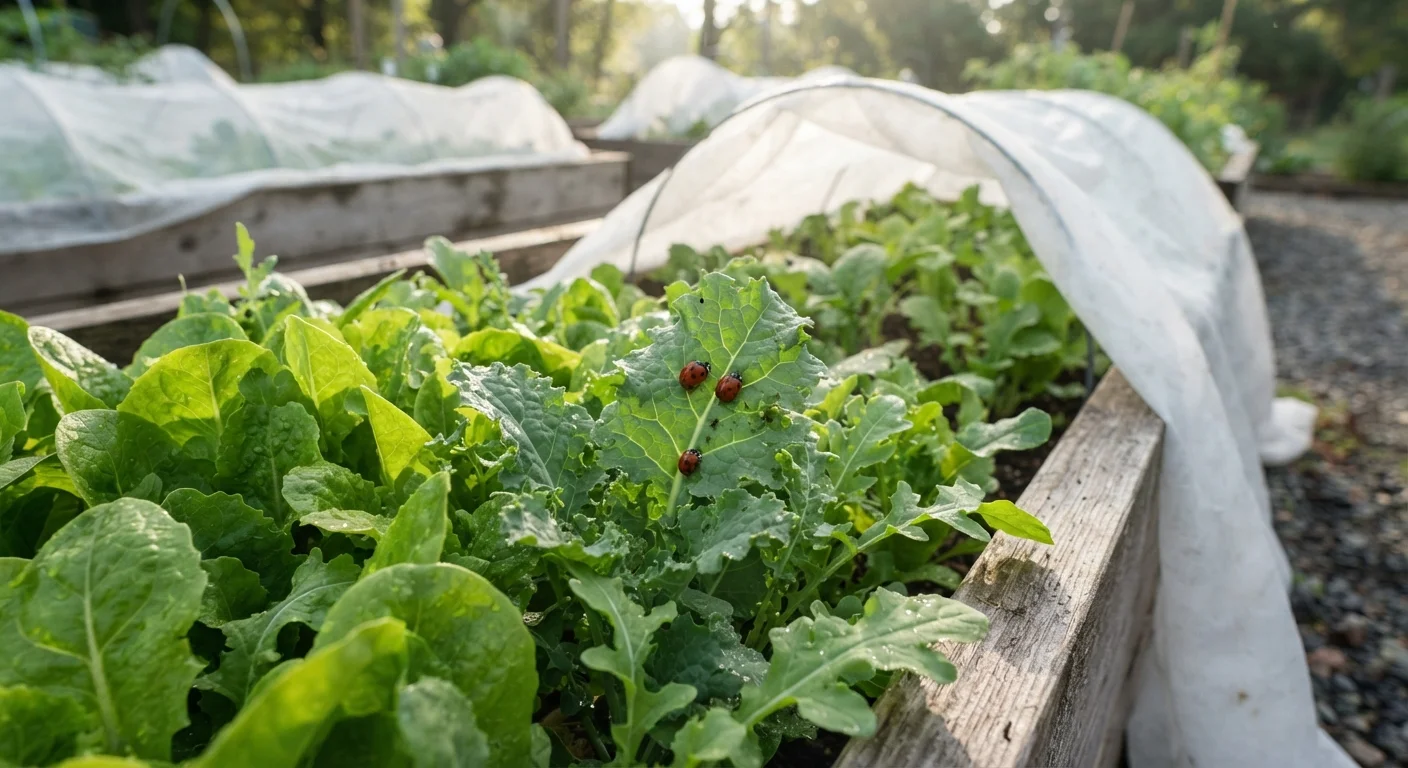
Row covers made from lightweight spun-bonded fabric allow sunlight and rain through while blocking moths, aphids, flea beetles, and many other insects. Secure edges firmly with soil or clips to prevent pests from sneaking underneath. Remove covers once flowering begins if your crops need pollination.
Copper tape creates a mild electrical reaction with slug and snail mucus, deterring them from crossing onto containers or raised beds. It works best when kept clean and applied as a continuous band with no gaps. For individual transplants, cardboard or plastic collars pressed a couple of inches into the soil block cutworms from chewing through young stems at ground level.
Beneficial Insects: Recruiting Natural Predators
A garden full of diverse flowering plants is a garden that attracts insects working in your favor. Ladybugs, lacewings, ground beetles, and parasitic wasps all prey on or parasitize common pests like aphids, caterpillar eggs, and whiteflies.
“The single greatest lesson the garden teaches is that our relationship with the natural world is reciprocal. Invite balance rather than fight against it.”
— Michael Pollan, Author and journalist writing on food, plants, and agriculture
To encourage these allies, plant small-flowered species that offer accessible nectar and pollen — dill, fennel, yarrow, and alyssum are popular choices in US home gardens. Minimize bare soil by using mulch, which shelters ground-dwelling predatory beetles. Avoid broad-spectrum sprays, even plant-derived ones, which often harm beneficials alongside target pests.
You can also learn more about how deliberate plant pairing draws in helpful insects by reading our article on companion planting. For specific pairings that have demonstrated real results, see companion planting combinations that actually work.
~75%
Of flowering plants depend on insect pollinators
According to the USDA, approximately three-quarters of the world's flowering plants rely on pollinators — many of which also serve as pest predators in garden ecosystems.
200+
Aphids a single ladybug can consume daily
University extension entomologists commonly cite adult ladybugs consuming over 200 aphids per day, underscoring the value of supporting populations of beneficial insects.
Cultural Controls and Monitoring
Many pest problems escalate because they go unnoticed until the damage is severe. A brief weekly walk-through — checking the undersides of leaves, the soil surface, and new growth — lets you spot early signs of aphid colonies, caterpillar eggs, or slug damage while populations are still small and manageable.
When you do find pests, hand-picking is often the most appropriate first response for home gardens. Dropping caterpillars or beetles into a bucket of soapy water is effective, non-toxic, and immediate. For small aphid clusters, a firm spray of water dislodges most of them.
Cultural habits also matter: remove spent plants promptly at season's end, as debris provides overwintering sites for pests. Water at the base of plants rather than overhead to reduce the humid conditions that favor certain insects and fungal problems alike. These approaches align naturally with a broader organic growing philosophy — see natural pest control methods that actually work for additional chemical-free strategies.