

Key Takeaways
Why Natural Pest Control Is Worth the Effort
Chemical pesticides can knock back a pest problem quickly, but they often come with trade-offs: disrupted soil biology, harm to pollinators, and the risk of creating pesticide-resistant pest populations over time. Natural pest control takes a different approach — working with your garden's existing ecology rather than against it.
The methods below are grounded in horticultural science and widely used by experienced home gardeners across the US. None of them is a silver bullet on its own, but used in combination they can dramatically reduce pest pressure without reaching for a spray bottle of synthetic chemicals. For gardeners interested in how plant relationships fit into this picture, see our guide on companion planting for pest deterrence.
Physical Barriers and Row Covers
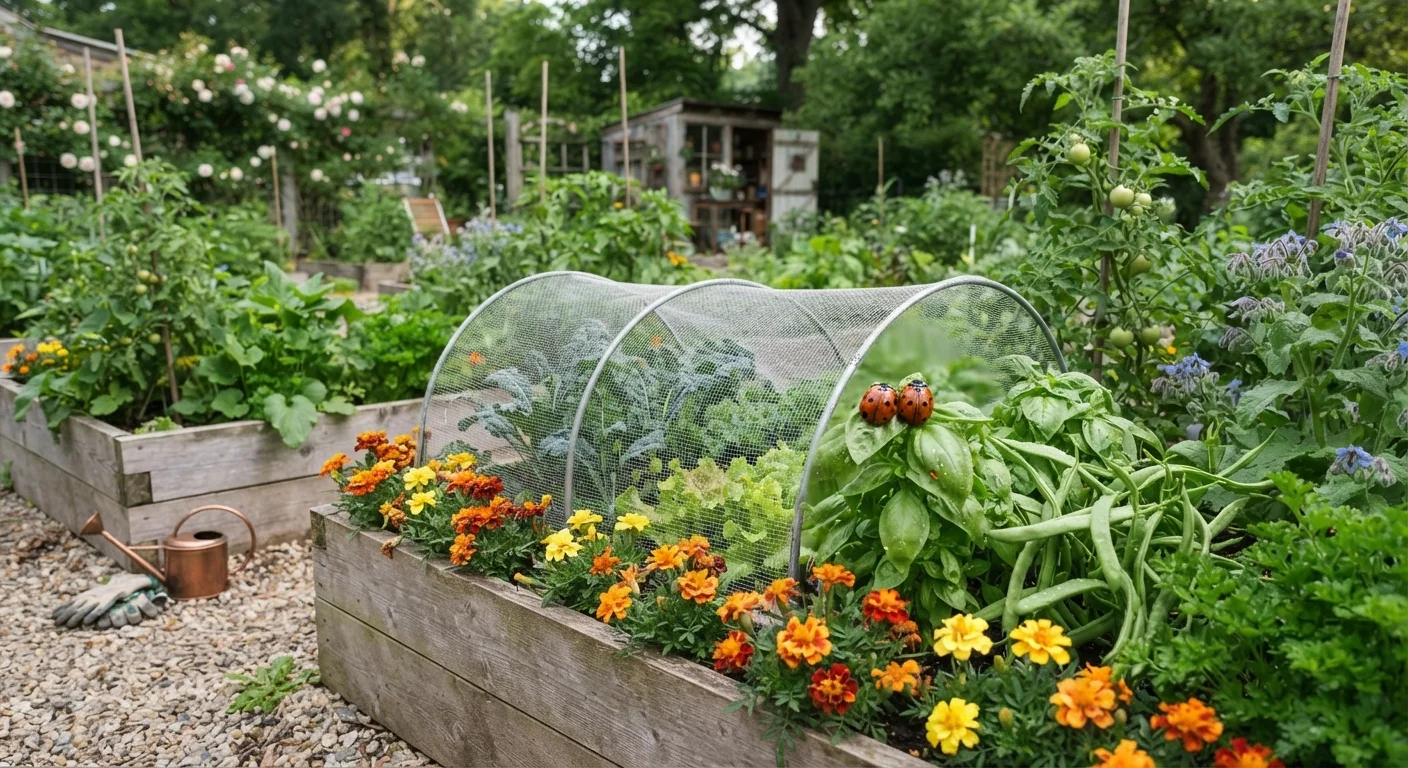
Floating row covers — lightweight, permeable fabric draped over crops — are one of the most reliable defenses against flying insects, caterpillars, and even some burrowing pests. They work by simple exclusion: if a pest can't reach the plant, it can't damage it. Secure edges with soil, rocks, or clamps to prevent gaps.
For slugs and soft-bodied crawlers, copper tape around raised bed edges creates a mild electrical deterrent when pests attempt to cross it. Fine-mesh netting protects brassicas from cabbage moths and aphids with minimal effort. The key is installing barriers before pests arrive, not after damage is visible.
Physical exclusion stops pests before they reach plants — install barriers early in the season.
Encouraging Beneficial Insects
Ladybugs, lacewings, ground beetles, and parasitic wasps are voracious predators of aphids, whiteflies, caterpillar eggs, and other common garden pests. Attracting and retaining these allies is one of the most effective — and lowest-effort — pest management strategies available.
To draw beneficial insects in, plant a variety of small-flowered plants like dill, fennel, yarrow, and sweet alyssum near vegetable beds. Avoid broad-spectrum pesticides that kill predator insects alongside pests. Leaving some leaf litter and undisturbed soil patches also provides overwintering habitat for ground-dwelling predators like carabid beetles.
Planting dill and yarrow near vegetables can attract the beneficial insects that prey on common pests.
Companion Planting as Pest Deterrence
Certain plant pairings disrupt pest behavior through scent, visual confusion, or chemical compounds released into the soil and air. Classic examples include marigolds interplanted with tomatoes to deter nematodes, and basil alongside peppers to repel thrips and aphids. Nasturtiums are often used as trap crops — they attract aphids away from more valuable plants.
This approach works best as a preventive layer rather than a cure. For a deeper look at which combinations are worth trying, our guide on companion planting combinations that actually work offers practical, research-informed pairings.
Marigolds interplanted with tomatoes can help suppress soil nematodes that damage root systems.
Neem Oil and Plant-Based Sprays
Neem oil, derived from the seeds of the neem tree, disrupts the life cycle of many soft-bodied insects — including aphids, spider mites, and whiteflies — by interfering with feeding and reproduction. It's most effective as a preventive spray applied in the early morning or evening to avoid burning foliage and harming active pollinators.
Diluted insecticidal soap spray is another well-established option for direct contact with soft-bodied pests. Neither product leaves persistent residues in the soil the way synthetic insecticides do, though both should still be used judiciously and only where needed. Always follow label directions for dilution rates and application frequency.
Neem oil works best as a preventive measure — apply before pest populations peak, not after.
Healthy Soil as a Pest Prevention Foundation
Plants growing in well-structured, biologically active soil are simply more resilient to pest pressure. Stressed, nutrient-deficient plants emit chemical signals that attract certain insects — particularly aphids, which preferentially target plants with excess nitrogen and low silica. Maintaining balanced soil nutrition reduces that vulnerability.
Compost improves soil drainage, supports beneficial microbial communities, and provides slow-release nutrients that avoid the excessive soft-tissue growth that certain pesticides and over-fertilization can trigger. Understanding how your soil is fed is foundational to pest prevention — a point worth exploring alongside our article on organic vs. synthetic fertilisers for home gardeners.
Balanced, compost-enriched soil produces stronger plants that are naturally more resistant to pest damage.
Hand-Picking and Cultural Controls
For many home gardeners with small to mid-size plots, the most direct intervention is simply walking the garden regularly and removing pests by hand. Inspecting the undersides of leaves for aphid clusters, hornworm eggs, or squash bugs, then dropping them into soapy water, is surprisingly effective when done consistently — especially early in the season.
Cultural controls complement this well: crop rotation, removing spent plant material promptly, and watering at the base of plants (rather than overhead) all reduce conditions that pests and fungal diseases exploit. These practices take minutes per visit but pay dividends across the entire season.
Consistent hand-picking during regular garden walks can prevent small pest problems from escalating.
Building a Long-Term Strategy
The most resilient approach to natural pest control combines several of the methods above into a seasonal routine. Start seeds with healthy, pathogen-free soil, install physical barriers early, and introduce or attract beneficial insects before pest populations peak. Rotate crops each season to prevent soil-dwelling pests from establishing permanent residence in one spot.
Layer Your Methods for Best Results
No single natural pest control technique works in isolation. Pairing physical barriers with companion planting, beneficial insect habitat, and healthy soil management creates overlapping lines of defense. Start with two or three methods that fit your garden's size and layout, then add others as you observe which pests are most active in your space.
Container gardeners face unique pest challenges — isolation from ground soil can help, but pots also concentrate moisture and warmth that certain pests exploit. Our article on container gardening on patios and terraces covers strategies specific to that setting.
Keeping a simple garden journal — noting which pests appeared, when, and what interventions worked — builds a personalized knowledge base far more useful than any generic pest calendar. Natural pest management is ultimately an ongoing practice, not a one-time fix.
Timing Matters with Natural Controls
Natural pest control methods generally require more lead time than synthetic sprays — beneficial insect populations take weeks to establish, row covers need to be in place before pest flight periods, and companion plants must be mature enough to have an effect. Reviewing your local pest calendar and planning accordingly will give natural methods the best chance to work.