

Key Takeaways
The Most Frustrating Moment in Gardening
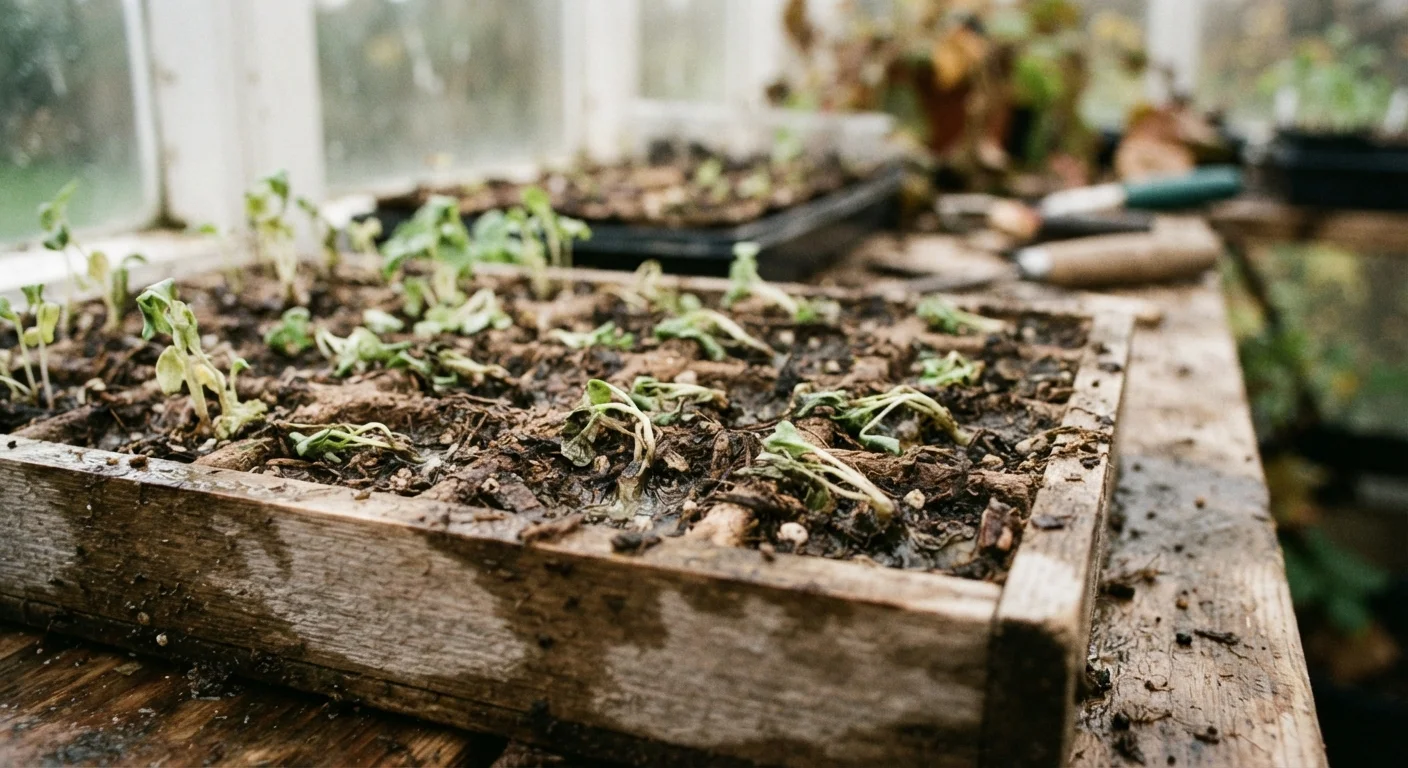
You plant your seeds, watch them sprout with excitement, and then — days later — they flop over, turn yellow, or simply disappear. Losing seedlings after germination is one of the most discouraging experiences for home gardeners, yet it's also one of the most preventable. The causes are almost always rooted in a handful of repeated, fixable mistakes.
Understanding what's going wrong is the first step. For a broader look at why seedlings struggle, see our guide to seedling failure causes. Here, we focus specifically on the mistakes that lead to those losses — and exactly how to avoid them.
Overwatering the seed-starting mix so it stays constantly saturated.
Why it happens: Many gardeners assume seedlings need frequent watering because they're small and delicate. It's a natural instinct, but young roots need oxygen as much as moisture.
Starting seeds in regular garden soil or potting mix instead of a sterile seed-starting medium.
Why it happens: Garden soil and standard potting mix seem like logical choices, but both can harbor fungal pathogens and tend to compact tightly in small cells, restricting root development.
Providing too little light, causing seedlings to become etiolated — tall, thin, and weak-stemmed.
Why it happens: A sunny windowsill feels bright to the human eye but typically delivers far less light intensity than seedlings need, especially in winter or early spring.
Allowing damping off to spread by providing warm, still, humid air around seedlings.
Why it happens: Damping off is caused by a group of soilborne fungi that thrive in the same warm, moist conditions seeds need to germinate. Gardeners often don't realize the disease is present until seedlings are already collapsing.
Sowing seeds too deeply so they exhaust their energy reserves before reaching light.
Why it happens: Seed packet depth guidance is easy to overlook, and gardeners sometimes assume deeper planting means better anchoring.
Starting seeds too early indoors, leaving seedlings to languish in cramped conditions.
Why it happens: Enthusiasm drives early planting, but seedlings grown far ahead of the outdoor transplant window become root-bound and stressed, making them vulnerable when they finally go outside.
Building Better Conditions From the Start
Most seedling failures share a common thread: the growing environment was slightly off in ways that compound over time. A seedling tray sitting in low light while being watered on a fixed schedule, started in garden soil pulled from a bed — each individual choice seems minor, but together they create ideal conditions for failure.
Damping Off Cannot Be Reversed
Once damping off takes hold — visible as seedlings collapsing at the soil line with a pinched, water-soaked stem — affected seedlings cannot be saved. Remove them promptly to prevent the fungal spread from reaching healthy seedlings nearby. Prevention through sterile mix, good airflow, and careful watering is the only reliable strategy.
The good news is that correcting even two or three of these mistakes tends to produce dramatically better germination-to-transplant survival rates. Focus first on your watering habits and your light source — these two variables account for the majority of post-germination losses for most home gardeners. Once those are dialed in, refine your mix, ventilation, and temperature to further stack the odds in your favor.
Seedling success is genuinely learnable. Each season offers a chance to observe more carefully and adjust — and most experienced gardeners will tell you their early losses taught them more than their early wins.