

Key Takeaways
The Gap Between Germination and a Healthy Transplant
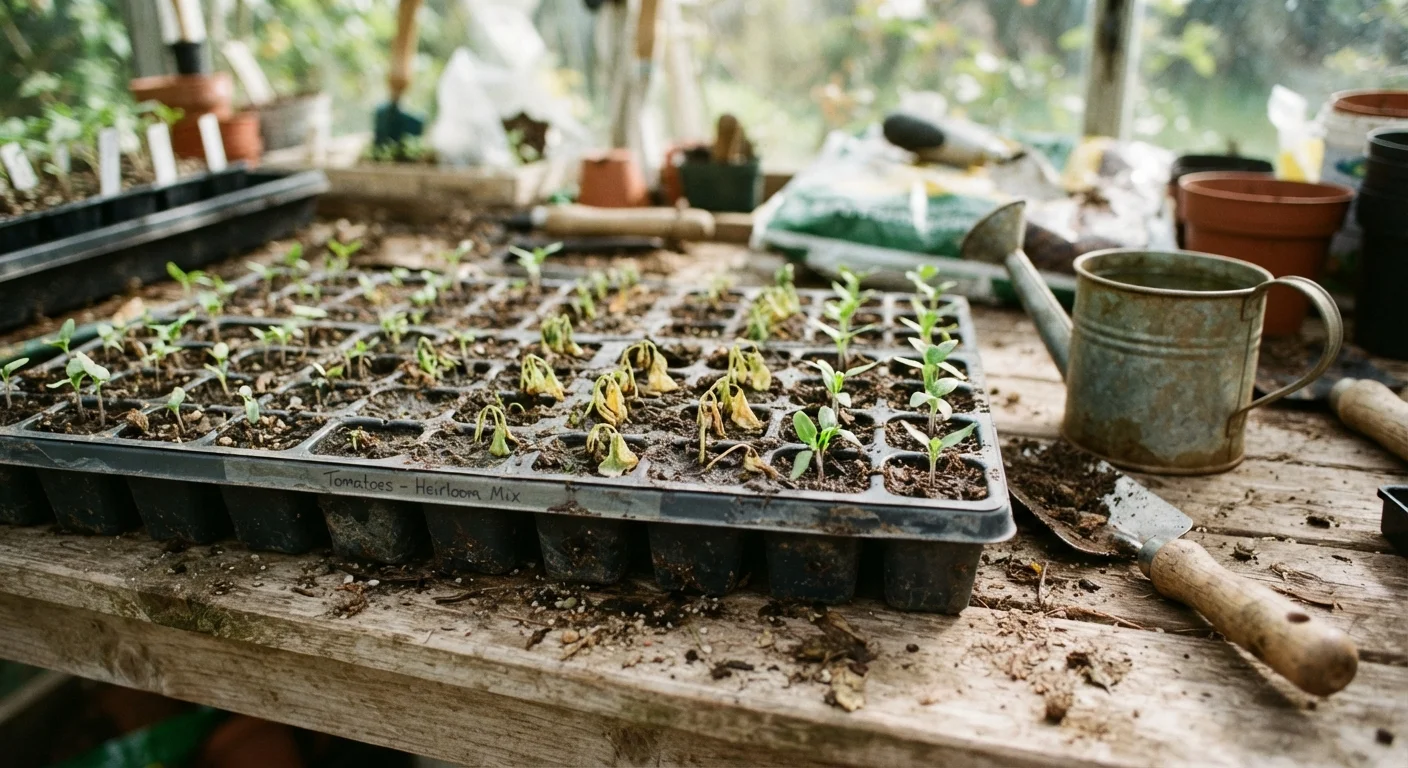
Watching seeds sprout is one of gardening's quiet thrills — but germination is only the beginning. The weeks between that first green loop emerging from the soil and a robust, transplant-ready seedling are where most home gardeners encounter real loss. If your seedlings keep collapsing, yellowing, or simply fading away, the cause is almost always one of a small set of correctable problems.
This guide breaks down the most common mistakes, why they happen, and exactly what to do differently. Whether you're starting a vegetable garden from scratch or refining a process you've tried before, these fixes apply across nearly every seedling type.
Overwatering seedlings to the point that roots sit in saturated soil.
Why it happens: New gardeners often equate attentive care with frequent watering, and it can be hard to tell when moist soil becomes dangerously wet.
Placing seedlings in low or inconsistent light, causing weak, leggy growth.
Why it happens: A sunny windowsill looks bright to the human eye but typically delivers far less intensity than seedlings need, especially in winter or north-facing rooms.
Starting seeds too early indoors, producing overgrown seedlings before outdoor conditions are safe.
Why it happens: Enthusiasm at the start of the season leads many gardeners to sow weeks ahead of schedule, and seed packets are sometimes misread.
Skipping the hardening-off process before transplanting outdoors.
Why it happens: After weeks of tending seedlings, transplanting feels like a finish line, and the gradual outdoor acclimatization step is easy to rush or skip entirely.
Using old or contaminated trays and tools that introduce fungal pathogens.
Why it happens: Reusing last year's trays without cleaning them seems practical, but residual soil and fungal spores remain viable season after season.
Water, Light, and Disease: The Three Core Threats
Most seedling deaths trace back to three overlapping problems: too much water, too little light, and fungal disease — often in combination. Understanding how each one works makes prevention straightforward.
Damping-Off Moves Fast
Damping-off disease can collapse an entire tray of seedlings within 24–48 hours of first appearing. Once stems at the soil line turn brown and pinch thin, affected seedlings cannot be saved. Remove them immediately and improve air circulation, reduce moisture, and avoid reusing contaminated soil or trays without sterilizing them first.
Watering mistakes and light deficiencies are closely connected. Weak seedlings grown in poor light are far more susceptible to damping-off and root rot because they lack the vigor to resist disease pressure. Getting the light environment right is therefore a first-line defense, not just an aesthetic concern. For a deeper look at how water management affects plant health broadly, see our guide to garden watering myths that could be hurting your plants.
Don't Use Garden Soil for Seed Starting
Outdoor garden soil compacts in containers, restricts root development, and often harbors fungal pathogens that devastate seedlings. Always use a dedicated seed-starting mix, which is formulated to stay loose, drain well, and minimize disease pressure. This one swap prevents many of the most common early-stage losses.
If you're growing seedlings in containers rather than open beds, the same principles apply — compact, well-draining mixes and careful watering are equally critical. Our container gardening guide covers soil and watering rhythms in detail.
70%+
Seedling failures linked to watering problems
Horticultural educators consistently identify overwatering and poor drainage as the leading causes of post-germination seedling loss in home gardens.
14–16 hrs
Daily light seedlings typically need
University extension programs generally recommend this light duration for healthy, compact seedling growth when using supplemental indoor grow lighting.