

Key Takeaways
Option A
Zero-Based Budgeting
The meticulous, every-dollar-has-a-job framework.
Best for: People who want total accountability over their income and are comfortable working in spreadsheets or budgeting apps each month.
Option B
Envelope Budgeting
The tangible, cash-in-hand spending system.
Best for: People who overspend on variable categories and need a physical or visual spending limit they can feel in real time.
If you prefer tracking numbers digitally and want full-picture visibility
Zero-Based Budgeting
Zero-based budgeting integrates easily with apps and spreadsheets, giving you a complete monthly financial snapshot across all income and expense categories.
If you consistently overspend on groceries, dining, or entertainment
Envelope Budgeting
Physical cash envelopes create an immediate, tangible spending limit — when the envelope is empty, spending in that category stops automatically.
If you are building your very first budget and want structure without complexity
Envelope Budgeting
The envelope method is simple to start: label, fill, and spend. It requires no financial background and delivers clear feedback on where you stand.
If you have irregular income and need to allocate funds across many categories precisely
Zero-Based Budgeting
Zero-based budgeting lets you rebuild your plan from scratch each month, making it adaptable when your paycheck varies.
If you want a hybrid system with flexibility and physical accountability
Zero-Based Budgeting
Zero-based budgeting frameworks can incorporate envelope-style category caps, letting you blend digital planning with hands-on spending control.
What Each Method Actually Does
Despite their different mechanics, zero-based budgeting and envelope budgeting share the same foundational principle: intentional allocation of every dollar you earn. Neither allows spending to happen passively. Both demand a plan before the month begins.
Zero-based budgeting means assigning your total monthly income to specific categories — rent, groceries, savings, debt payments — until the balance reaches zero. The goal is not to have zero dollars left; it is to have zero unassigned dollars. Every dollar receives a job before it is spent. This is typically done in a spreadsheet or budgeting app and refreshed each month.
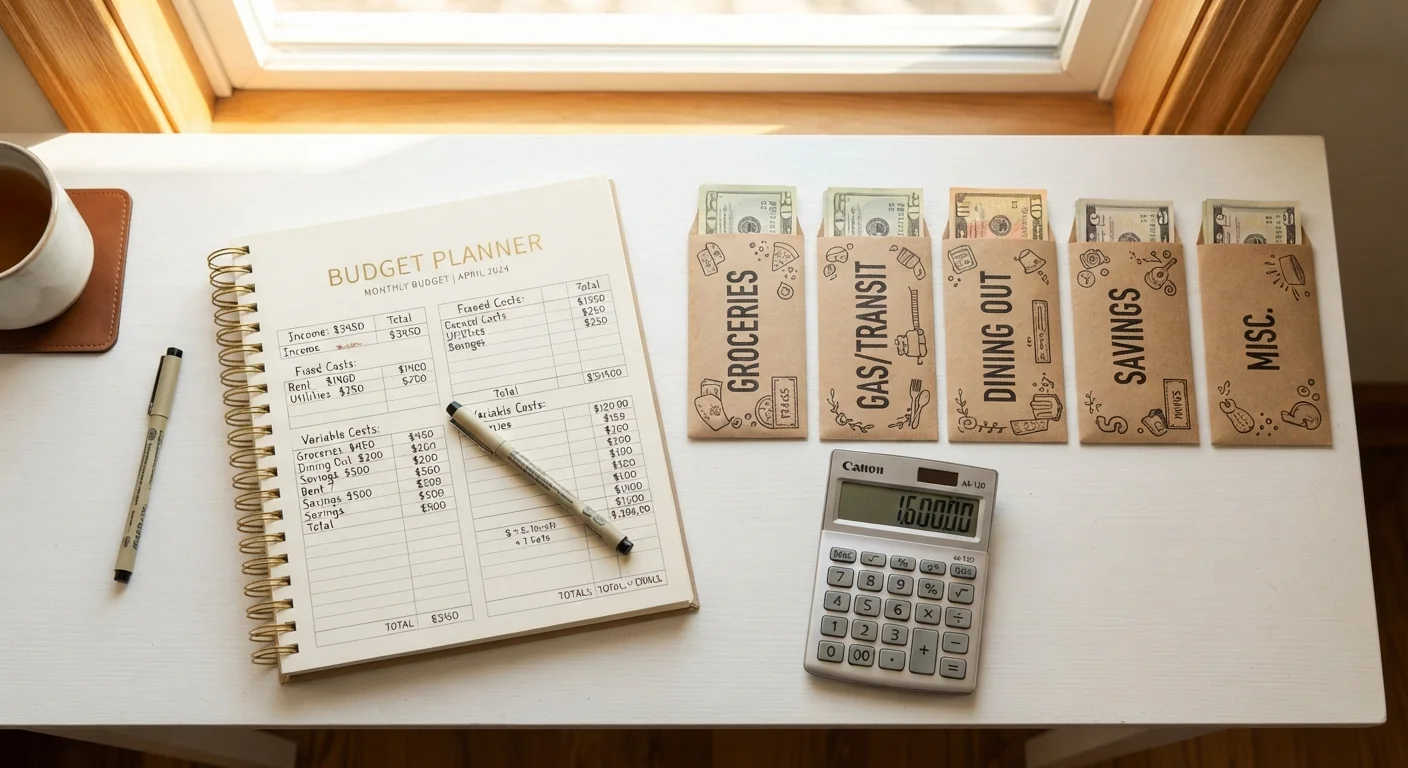
Envelope budgeting takes a more physical approach. You withdraw cash and divide it into labeled envelopes — one per spending category. Once an envelope is empty, spending in that category is done until the next budget cycle. Digital versions mimic this logic using virtual envelopes or sub-accounts. The system is intentionally simple and tactile.
If you are new to structuring a budget at all, the foundational budgeting guide walks through every preliminary step before you choose a method.
How They Differ in Practice
The gap between these two methods becomes clearest when you look at the day-to-day experience of using each one.
| Criterion | Zero-Based Budgeting | Envelope Budgeting |
|---|---|---|
| Core mechanism | Assign every dollar to a category | Divide cash into labeled envelopes |
| Format | Spreadsheet, app, or paper | Physical cash or virtual sub-accounts |
| Monthly effort | Higher — requires ongoing reconciliation | Lower — set and spend until empty |
| Best for variable spending | Yes, via category adjustments | Yes, via hard cash limits |
| Works for digital/online spending | Yes, fully compatible | Partially — cash only for in-person |
| Visibility into full finances | High — all categories tracked | Moderate — cash categories only |
| Learning curve | Moderate | Low |
Zero-based budgeting requires a more active mental relationship with numbers. At the start of each month, you list every anticipated expense, allocate income across each line item, and reconcile the budget throughout the month. It rewards those who enjoy structure and detail. However, it also demands regular upkeep — a skipped reconciliation can let the system drift.
Envelope budgeting is more automatic at the point of spending. Once envelopes are filled, the work largely shifts to the checkout line: you check the envelope, not an app. This simplicity is its strength. The limitation is that cash-based systems are less practical for online purchases, recurring subscriptions, or automatic bill payments — all of which exist outside the envelope entirely.
Your preferred tracking format also matters. The right budgeting tool — whether a spreadsheet, app, or pen and paper — should complement whichever method you choose, not fight against it.
Strengths, Limits, and the Honest Trade-Offs
No budgeting method is perfect, and both of these have real weaknesses worth understanding before you commit.
~70%
Americans without a detailed monthly budget
Gallup polling has consistently found that a majority of U.S. households do not maintain a detailed written budget, highlighting how rare structured budgeting still is.
1 month
Typical time to feel comfortable with a new budgeting method
Financial educators generally suggest giving any new budgeting system at least one full monthly cycle before evaluating whether it fits your habits.
Zero-based budgeting strengths: High visibility across your entire financial picture. Easy to adjust when income or expenses change. Works well alongside savings goals, debt payoff strategies, and retirement contributions. Adaptable to irregular income because you rebuild it each month.
Zero-based budgeting limits: Time-intensive upfront. Requires consistent data entry to stay accurate. Can feel overwhelming for people who are not comfortable with spreadsheets or financial apps.
Envelope budgeting strengths: Immediate, sensory feedback — empty envelope means stop. Very low maintenance once envelopes are filled. Particularly effective at curbing impulse spending in variable categories like dining or entertainment.
Envelope budgeting limits: Cash handling is inconvenient for many modern spending habits. Does not naturally account for digital bills, subscriptions, or credit card spending. Harder to use as a comprehensive financial planning tool.
For a candid look at what rigid budgeting systems cost in terms of flexibility and lifestyle, the honest trade-offs of strict budgeting is worth reading alongside this comparison.
You Can Blend Both Methods
Zero-based budgeting and envelope budgeting are not mutually exclusive. Many people use a zero-based framework to plan their full monthly budget — including bills and savings — while applying envelope-style limits specifically to cash-heavy variable categories like groceries or dining out. This hybrid approach gives you comprehensive financial visibility alongside the tactile spending control that envelopes provide. Experiment to find the combination that fits your real habits.
This article is for general informational and educational purposes only and does not constitute personalized financial advice. Consider consulting a qualified financial professional for guidance tailored to your specific circumstances.