

Key Takeaways
Prey Gifting in Cats
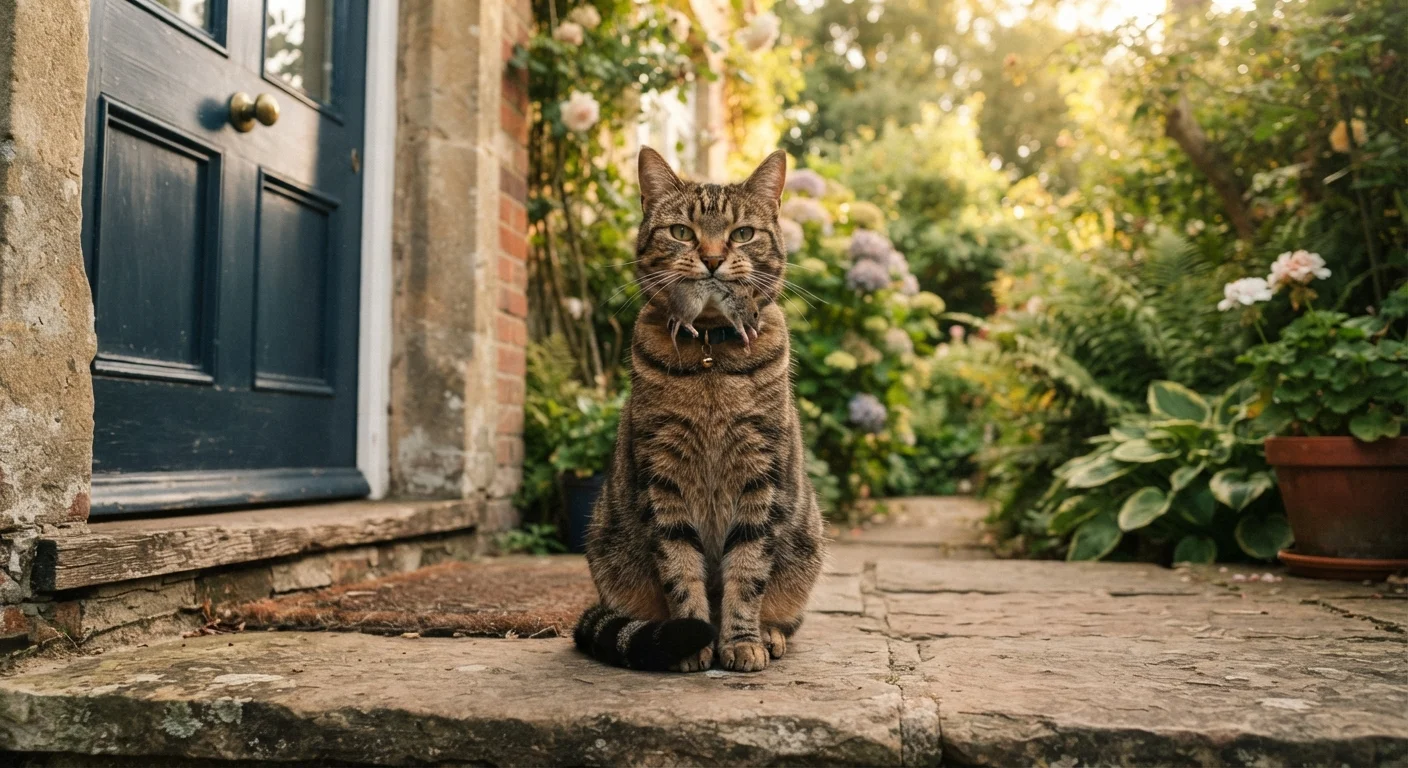
Prey gifting is when a domestic cat brings a caught animal — such as a mouse, bird, or lizard — back to the home and presents it to its owner. This behavior is rooted in natural feline hunting instinct rather than aggression or defiance. Cats are not being cruel; they are acting on deeply embedded drives that evolved over thousands of years.
Ethologists refer to this behavior as 'provisioning,' a pattern also seen in wild felids that bring food to offspring or group members. In domestic cats, the owner often becomes the recipient of this instinct.
The Instinct Behind the 'Gift'
When you discover a half-eaten mouse or a stunned bird deposited near your front door, your first reaction might be alarm or disgust. But understanding what drives this behavior can shift your perspective considerably.
Domestic cats retain the full predatory sequence of their wild ancestors: stalk, pounce, catch, and kill. This sequence is hardwired neurologically and runs independently of hunger. Even cats fed a complete, nutritious diet will hunt when the opportunity arises. The difference between your cat and a wild felid is what happens after the catch — domestic cats often return home, and their owner becomes the social recipient of that prey.
Ethologists who study animal behavior describe this as provisioning instinct. Female cats in particular may engage in it more frequently, as the drive to bring prey back to a home base mirrors the behavior of mothers teaching kittens to handle food. That said, male cats do it too, and the pattern varies widely between individual animals.
“Hunting in cats is a fixed action pattern — once triggered by the right stimulus, it runs to completion regardless of hunger. Understanding this separates the instinct from the animal's intent.”
— John Bradshaw, Anthrozoologist and author of Cat Sense, University of Bristol
To understand more about the broader landscape of feline communication, our guide on frequently misread animal signals offers useful context for decoding your cat's intentions.
Health and Safety Considerations
Beyond behavioral curiosity, prey gifting carries some real-world considerations for both you and your cat.
For your cat: Hunting exposes cats to secondary hazards. Prey animals may carry parasites such as fleas, ticks, or intestinal worms, and consuming certain prey can transfer infections. Rodents in areas where rodenticide is used can also pose a poisoning risk to cats that catch or eat them. Keeping parasite prevention current — as recommended by your veterinarian — is an important layer of protection.
For your household: Handle any prey with disposable gloves or a bag and wash your hands thoroughly afterward. Some prey animals carry zoonotic pathogens, meaning diseases transferable to humans, though the risk from incidental contact is generally low for healthy adults. Children and immunocompromised individuals should avoid handling prey entirely.
Handling Live Prey Safely
If your cat brings home injured-but-living wildlife, avoid handling the animal barehanded. Contact your local wildlife rehabilitation center for guidance on safe next steps. Never attempt to treat or release an injured wild animal without professional advice.
If your cat brings home injured-but-living wildlife, avoid handling the animal barehanded. Contact your local wildlife rehabilitation center for guidance on safe next steps.
How to Reduce Prey Gifting Humanely
Because hunting is instinctive, suppressing it entirely is not realistic — and punishment is counterproductive. The goal is thoughtful management, not elimination.
- Keep cats indoors or use a catio: Restricting outdoor access is the single most effective way to reduce hunting. Enclosed outdoor spaces (catios) let cats experience fresh air and sensory stimulation without access to wildlife.
- Use a breakaway bell collar: Studies have found that bell collars can reduce wildlife captures by alerting prey animals to an approaching cat. Breakaway safety clasps are essential to prevent injury.
- Increase interactive play: Structured daily play sessions with wand toys or feather lures satisfy the predatory drive in a controlled way. Two 10–15 minute sessions per day can meaningfully redirect hunting energy.
- Add environmental enrichment: Puzzle feeders, window perches, and rotating toy selections keep indoor cats mentally and physically engaged.
Up to 55%
Reduction in wildlife captures with bell collars
Research published in animal behavior literature has found that bell collars can reduce bird and small mammal captures by outdoor cats by roughly half, though effectiveness varies by individual cat.
1–34 animals
Annual prey range per outdoor cat
Studies of domestic cat predation patterns show wide variation; some cats rarely hunt successfully while prolific hunters may catch dozens of animals per year depending on habitat and opportunity.
Managing your cat's environment thoughtfully benefits the whole household. Our article on pet-proofing your home covers broader safety strategies for cat owners.
What This Behavior Tells You About Your Cat
Far from being a sign that something is wrong, prey gifting generally reflects a confident, healthy hunter with a secure bond to its home environment. Cats that feel unsafe or unattached rarely engage in provisioning behavior — it requires comfort and social connection to bring a catch back rather than consuming it elsewhere.
That said, individual cats vary enormously. Some frequent hunters may bring home several catches a week; others never do it at all. Breed, early life experience, and opportunity all play a role. Understanding your specific cat's patterns — including its body language cues — helps you respond with confidence rather than alarm.
If the behavior changes suddenly or is accompanied by other shifts in appetite, energy level, or demeanor, a conversation with your veterinarian is always worthwhile.
This article is for general informational purposes only and does not constitute veterinary medical advice. Always consult a licensed veterinarian for concerns about your pet's health or behavior.