

Key Takeaways
Why First Impressions Between Pets Are Permanent (Almost)
Animals form lasting associations quickly. A single bad encounter during an introduction can set a negative social template that takes weeks — sometimes months — to undo. For resident pets especially, the arrival of a newcomer triggers an instinctive territorial response, regardless of how sociable they normally are.
The good news: that response is manageable. Structured introductions work because they keep stress below the threshold where fight-or-flight kicks in, giving both animals time to build neutral — and eventually positive — associations at their own pace. See our guide to the first week with a new pet for broader context on how animals settle into a new environment.
What you will need
What You'll Need Before You Start
Gathering the right setup before introductions begin removes a lot of in-the-moment scrambling. Rushed logistics often lead to rushed meetings.
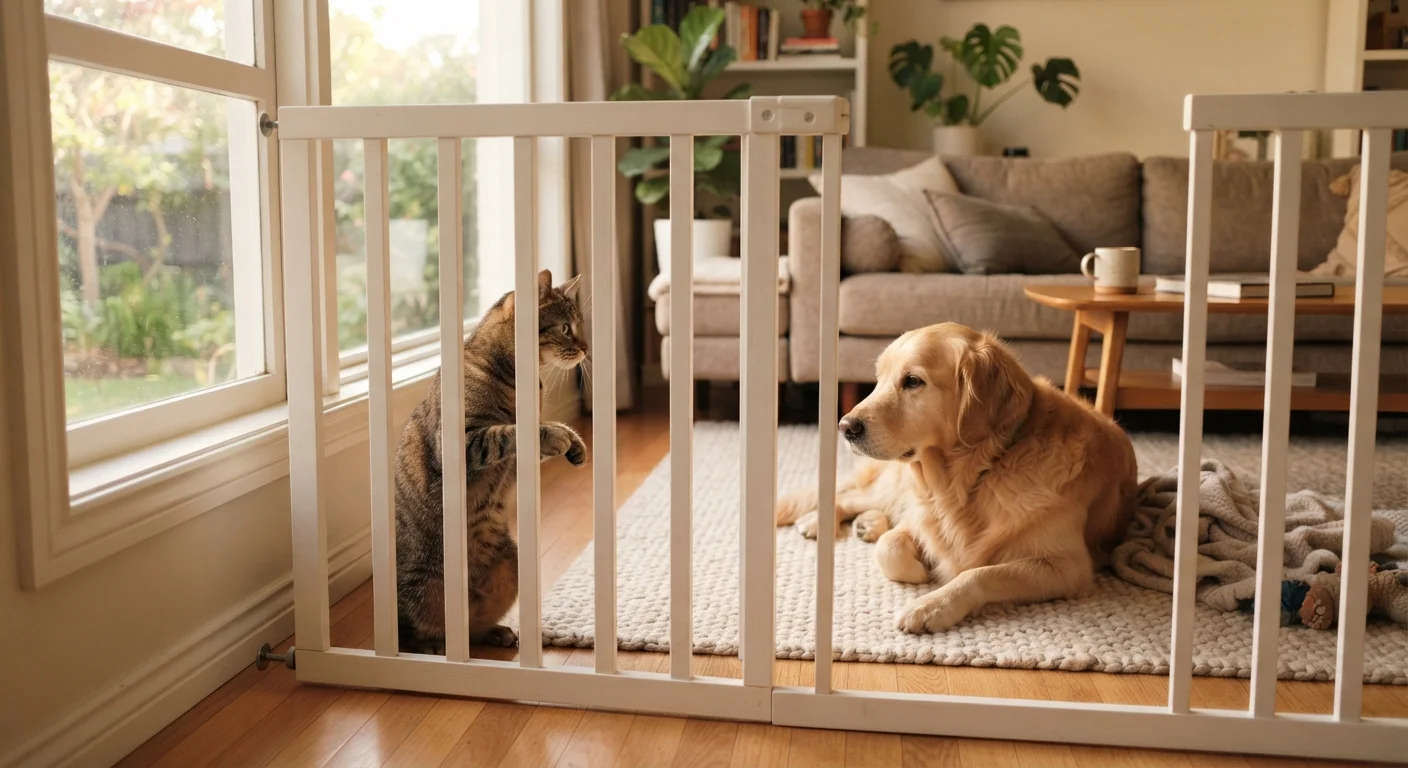
Baby gate or exercise pen
Creates a permeable barrier that allows pets to see and smell each other without direct physical contact.
Separate bedding for each pet
Used for scent swapping — exchanging bedding between animals before face-to-face meetings.
Long leash or drag lead
Gives a handler control over a dog during early shared-space sessions without requiring close physical restraint.
High-value treats
Used to create positive associations during each stage of the introduction process.
Spray bottle with water
A low-intensity interrupter if a cat becomes overly agitated; use sparingly and only as a last resort.
For health-related preparation — including parasite checks and vet registration for the new arrival — consult our health-focused first-month checklist.
The Introduction Process, Step by Step
Follow these steps in sequence. Skipping phases — even when things seem to be going well — undermines the gradual trust-building that makes cohabitation sustainable.
Set Up a Dedicated Space for the New Pet
Before the new animal enters the home, prepare a room it can occupy exclusively for the first few days. This space should include food, water, a litter box or elimination area, sleeping space, and enrichment. Close the door fully — no unsupervised nose-to-nose contact at this stage.
Swap Scents Before Any Visual Contact
On day two or three, exchange bedding between the animals. Place the resident pet's bedding in the new pet's room and vice versa. Allow each animal to investigate at their own pace. Repeat daily until both animals show relaxed, curious responses — not defensive ones — to the other's scent.
Introduce Scent Via Shared Feeding Sessions Through a Closed Door
Feed both animals on opposite sides of the closed door at the same time. The goal is for each animal to associate the other's proximity with something pleasant. Start with food bowls placed several feet from the door, moving them slightly closer over successive meals as comfort improves.
Allow Visual Contact Through a Barrier
Once scent introductions are going well, replace the closed door with a baby gate or cracked door secured with a doorstop. Allow short sessions — three to five minutes — of visual contact with you present. Reward calm behavior in both animals with treats and quiet praise.
Supervised Shared-Space Sessions
Allow the animals into a shared neutral space — ideally not a room the resident animal considers its primary territory — with both animals supervised closely. Keep dogs on a relaxed lead. Ensure the cat or smaller animal always has a clear escape route and elevated space to retreat to. Keep sessions under ten minutes initially and end before any tension escalates.
Gradually Extend Shared Time and Reduce Supervision
Over days and weeks, extend shared sessions as both animals consistently show relaxed behavior. Begin leaving them unsupervised only after multiple calm, uneventful shared sessions — not based on a fixed calendar. Some pairs reach this stage in two weeks; others need two months. Both are normal.
Never Force Physical Contact Between Animals
Holding one animal while placing another near it — even briefly — can create intense fear responses and lasting negative associations. Both animals need full freedom of movement to feel safe enough to assess each other accurately. If you're worried about the pace of progress, consult a certified animal behaviorist rather than accelerating physical introductions.
After introductions, consistent daily routines help both animals feel secure. Our article on building routine and structure for a better-behaved pet explains how predictable schedules reduce anxiety in multi-pet households.
Reading Body Language During Introductions
Noise level is misleading. A hissing cat isn't always about to attack, and a silent dog can be highly aroused and tense. Focus instead on posture, movement, and breathing.
- Relaxed signals: loose body, soft eyes, slow blinking (cats), play bow (dogs), tail carried neutrally
- Caution signals: stiffened posture, fixed stare, tail tucked or raised stiffly, flattened ears, piloerection (raised hackles or fur along spine)
- Intervene immediately if you see: lunging, sustained hard staring, cornering, or vocalizations escalating in pitch and frequency
Learning to distinguish play from conflict is a skill worth developing before problems arise. Our piece on aggression vs. play in multi-pet households breaks down the behavioral cues in detail.
Give Your Resident Pet Extra Attention
During the introduction period, make a point of maintaining your resident pet's normal routine and one-on-one time. Territorial stress is often worsened by a perceived drop in attention from the owner. Keeping feeding times, walks, and play sessions consistent signals that the newcomer hasn't displaced them. Our article on building routine and structure has practical guidance on maintaining predictable schedules.