

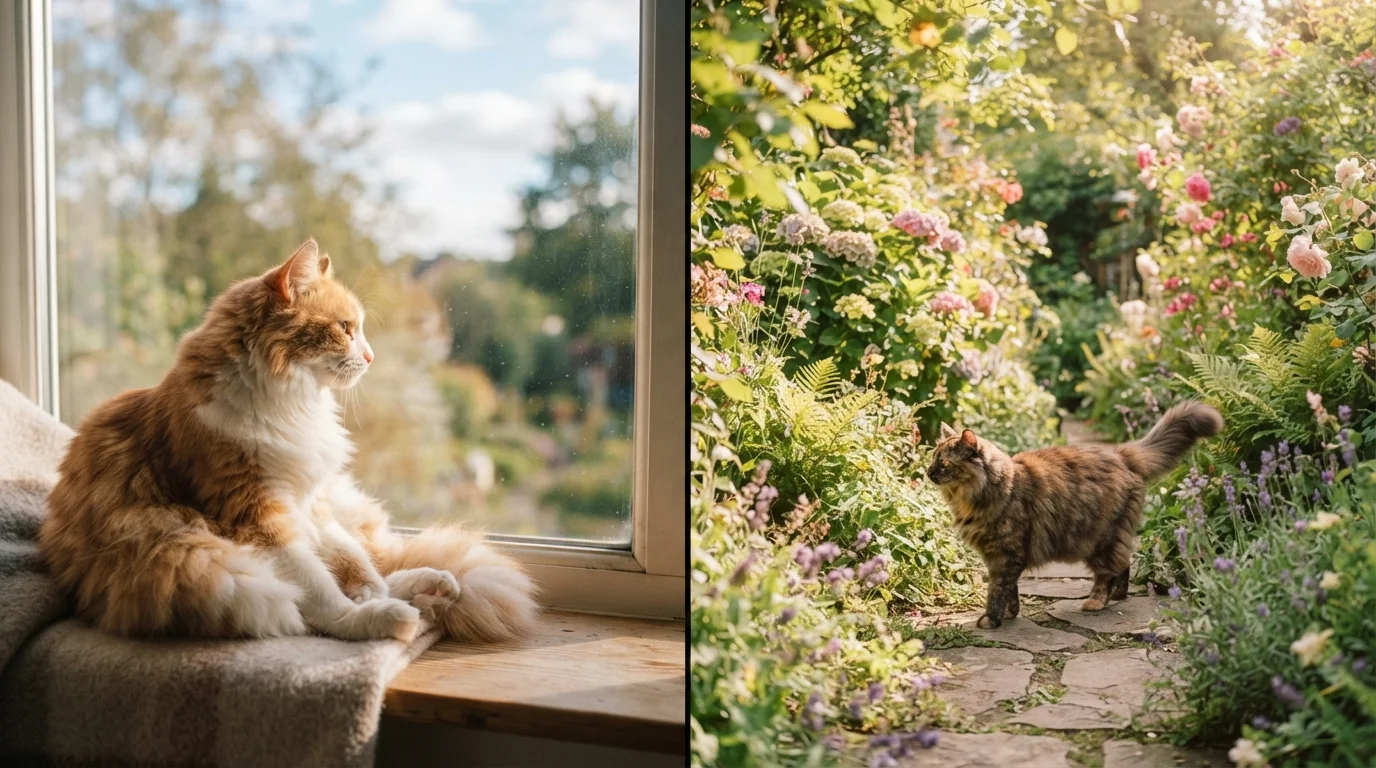
Key Takeaways
Significantly longer average lifespan
Indoor cats live an average of 12–18 years, compared to estimates of 2–5 years for free-roaming outdoor cats — a gap driven primarily by avoidance of traffic, predators, and disease.
Lower risk of infectious disease
Without contact with unknown cats, indoor cats are far less exposed to FeLV, FIV, and upper respiratory viruses, which spread readily through direct contact or shared resources outdoors.
Reduced parasite burden
Indoor cats have markedly lower exposure to fleas, ticks, and intestinal parasites, reducing both health risk and the intensity of preventive treatment required.
Easier health monitoring for owners
Knowing a cat's precise location and routine makes it easier to notice early signs of illness — changes in appetite, thirst, elimination habits, or energy are more apparent in a controlled environment.
No contribution to wildlife predation
Free-roaming cats are documented predators of birds and small mammals; keeping cats indoors eliminates this impact on local ecosystems entirely.
Higher risk of boredom and behavioral problems
Without deliberate enrichment, indoor cats can develop stress-related behaviors including over-grooming, destructive scratching, or withdrawal — all signs of an under-stimulated environment.
Elevated risk of obesity and related illness
Reduced activity combined with easy food access puts indoor cats at greater risk of excess weight gain, which is linked to diabetes, arthritis, and reduced lifespan.
Limited expression of natural predatory instincts
Hunting, stalking, and pouncing are core to feline behavior; without outlets that mimic these activities, cats may redirect these drives in unwanted ways.
Greater owner responsibility for stimulation
Indoor cats rely entirely on their owners for environmental novelty and play — a commitment that requires consistent time and creative effort to maintain adequately.
Our Verdict
Neither lifestyle is universally right or wrong — the best choice depends on your cat's temperament, your local environment, and your capacity to meet your cat's needs. Indoor living generally offers the safer foundation, but it places responsibility on owners to actively provide stimulation. Outdoor or hybrid access can enrich a cat's life when managed thoughtfully and the risks are genuinely understood.
Indoor-only living is best for cats in high-traffic or urban areas, those with health vulnerabilities, or kittens being socialized from scratch; outdoor or hybrid access suits confident, healthy adult cats in low-traffic rural or suburban settings with attentive owners.
Why This Decision Matters More Than Most People Realize
The indoor-versus-outdoor question is one of the most consequential routine decisions a cat owner makes — yet it's often treated as a simple lifestyle preference. In reality, where a cat spends its time shapes its exposure to disease, its behavioral repertoire, its stress levels, and ultimately its lifespan.
There's no single correct answer, but there is a right way to think through it. Understanding the genuine trade-offs — rather than relying on habit or assumption — puts owners in a much stronger position. For a broader look at how environment shapes feline emotional wellbeing, see how cats experience stress day to day.
The Case for Keeping Cats Indoors
Indoor living removes a long list of genuine hazards — and the data on lifespan reflects that clearly.
Significantly longer average lifespan
Indoor cats live an average of 12–18 years, compared to estimates of 2–5 years for free-roaming outdoor cats — a gap driven primarily by avoidance of traffic, predators, and disease.
Lower risk of infectious disease
Without contact with unknown cats, indoor cats are far less exposed to FeLV, FIV, and upper respiratory viruses, which spread readily through direct contact or shared resources outdoors.
Reduced parasite burden
Indoor cats have markedly lower exposure to fleas, ticks, and intestinal parasites, reducing both health risk and the intensity of preventive treatment required.
Easier health monitoring for owners
Knowing a cat's precise location and routine makes it easier to notice early signs of illness — changes in appetite, thirst, elimination habits, or energy are more apparent in a controlled environment.
No contribution to wildlife predation
Free-roaming cats are documented predators of birds and small mammals; keeping cats indoors eliminates this impact on local ecosystems entirely.
12–18 years
Average indoor cat lifespan
Veterinary estimates consistently place indoor cat lifespan well above that of free-roaming cats, citing traffic and disease as the primary drivers of the gap.
2–5 years
Estimated outdoor cat lifespan
Free-roaming cats face substantially higher mortality rates from vehicle strikes, predators, and infectious disease, according to widely cited veterinary literature.
Beyond longevity, indoor cats are far less likely to contract infectious diseases such as feline leukemia virus (FeLV) or feline immunodeficiency virus (FIV), both of which spread through contact with other cats. They also avoid parasites like ticks and fleas that are abundant outdoors, reducing the risk of secondary infections and the need for intensive preventive treatments.
For owners, the predictability of an indoor cat's routine is a practical benefit too — you know where your cat is and can monitor changes in eating, drinking, or litter box habits more easily, which supports earlier detection of health issues. As cats age, this monitoring becomes especially valuable; senior cats have shifting health needs that benefit from close observation.
The Real Costs of an Indoor-Only Life
Keeping a cat exclusively indoors isn't without its own challenges. Cats are behaviorally complex animals with strong predatory instincts, and an unstimulating home environment can lead to frustration, boredom, and stress-related problems ranging from over-grooming to inter-cat aggression.
Higher risk of boredom and behavioral problems
Without deliberate enrichment, indoor cats can develop stress-related behaviors including over-grooming, destructive scratching, or withdrawal — all signs of an under-stimulated environment.
Elevated risk of obesity and related illness
Reduced activity combined with easy food access puts indoor cats at greater risk of excess weight gain, which is linked to diabetes, arthritis, and reduced lifespan.
Limited expression of natural predatory instincts
Hunting, stalking, and pouncing are core to feline behavior; without outlets that mimic these activities, cats may redirect these drives in unwanted ways.
Greater owner responsibility for stimulation
Indoor cats rely entirely on their owners for environmental novelty and play — a commitment that requires consistent time and creative effort to maintain adequately.
Obesity is also a documented concern among indoor cats, largely due to reduced activity combined with ad-libitum feeding. Excess weight contributes to diabetes, joint issues, and shortened lifespan — outcomes that can erode the very health advantages indoor living is supposed to provide. Thoughtful enrichment isn't optional; it's part of the baseline care commitment. Everyday enrichment strategies can make a significant difference without requiring elaborate setups.
Weighing Outdoor Access Honestly
Cats with outdoor access typically display a broader range of natural behaviors — hunting, climbing, territory marking, and social exploration. This can translate to lower boredom-related stress and higher spontaneous activity levels. However, the risks are substantial and worth naming directly.
Traffic is the leading cause of death among outdoor cats in urban and suburban areas. Beyond vehicles, outdoor cats face threats from predators, ingestion of toxic plants or rodenticides, and conflict with other animals. They also act as vectors for diseases that can affect local wildlife populations. If your cat hunts and brings prey home, understanding that behavior and managing it humanely is an important step.
Local Risk Profile Changes Everything
Outdoor risk isn't uniform. A cat in a quiet rural area with few roads faces genuinely different hazards than one in a dense urban neighborhood with heavy traffic and unfamiliar animals nearby. Before deciding on outdoor access, it's worth assessing your specific local environment honestly — including proximity to roads, presence of wildlife, and whether neighbors also have free-roaming cats. Consulting a veterinarian familiar with your area can provide useful, grounded perspective.
Local environment matters enormously here. A cat on a rural property with low traffic, no nearby wildlife reserves, and regular veterinary care faces a very different risk profile than a cat in a dense urban neighborhood.
Middle-Ground Options Worth Considering
The indoor/outdoor binary isn't the only choice. Many owners find workable compromises that expand a cat's world without full exposure to outdoor risks.
- Catios (enclosed outdoor enclosures) give cats fresh air, sights, and sounds without free-roaming exposure. They can be as simple as a window box or as large as a full garden structure.
- Leash and harness walking works well for cats introduced to the practice gradually from kittenhood, though not all cats tolerate it.
- Supervised outdoor sessions in a fenced yard allow exploration with a human present to intervene if needed.
These approaches require more owner involvement but can meaningfully improve quality of life for cats that show strong outdoor motivation. The investment in enrichment — whether indoors or through structured outdoor time — is one of the clearest ways owners can support their cat's overall health and wellbeing.