

Key Takeaways
Our Verdict
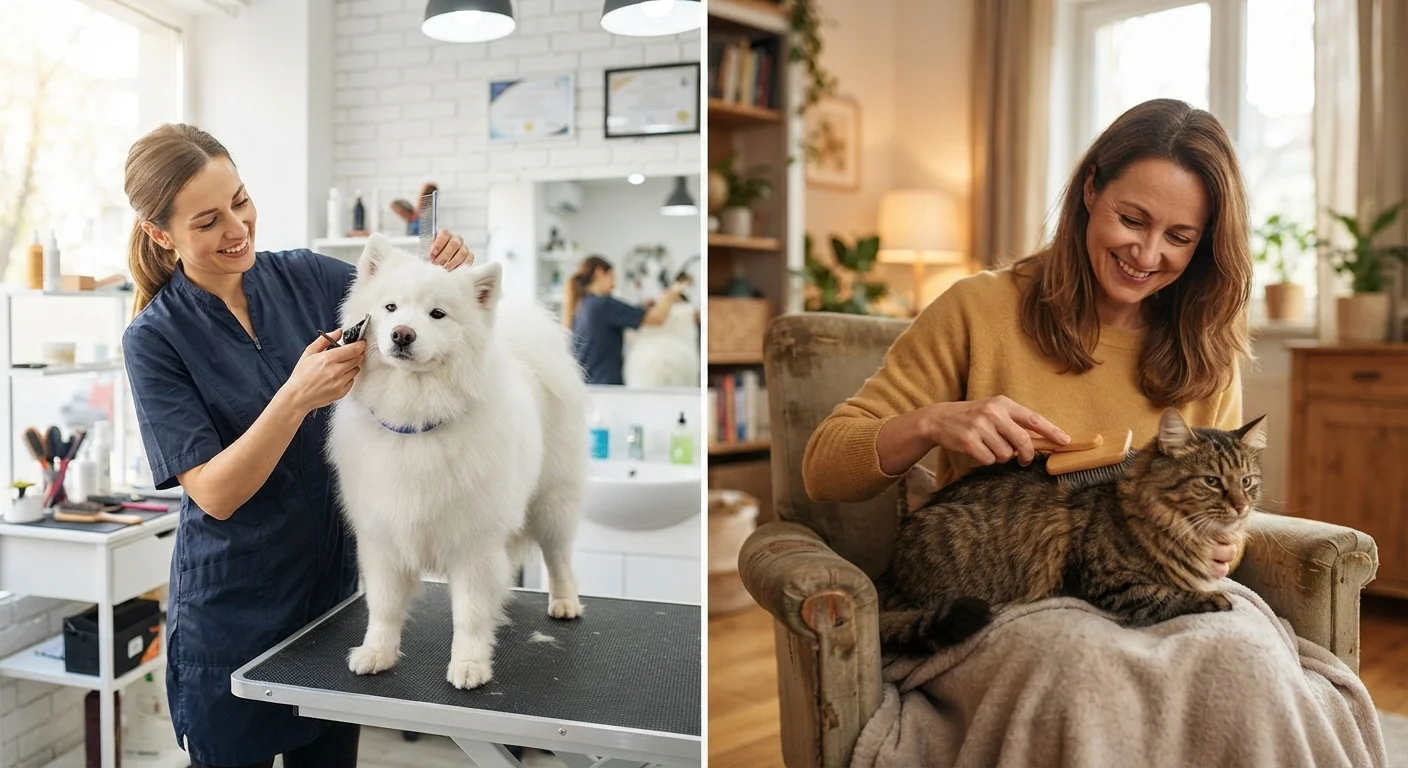
Neither professional grooming nor DIY care is universally superior — the right choice depends on your specific pet's breed, coat complexity, health status, and how they respond to handling. Most pet owners will find a hybrid approach delivers the best outcomes: routine brushing and basic care at home, supplemented by periodic professional sessions.
| Best for | Recommended |
|---|---|
| Pets with complex or continuously growing coats | Professional Grooming |
| Short-haired, low-maintenance pets with calm temperaments | DIY Grooming |
| Anxious, reactive, or difficult-to-handle animals | Professional Grooming |
| Budget-conscious owners with time and willingness to learn | DIY Grooming (with occasional professional sessions) |
Why Grooming Decisions Are Not One-Size-Fits-All
Grooming is more than cosmetic maintenance — it directly supports your pet's skin health, comfort, and overall well-being. But the approach that makes sense for a Labrador Retriever looks very different from what a Standard Poodle or a Persian cat requires. Before settling on a routine, it helps to understand what's actually driving the decision.
Key variables include coat type and length, your pet's tolerance for handling, your own skill level and available time, and whether your pet has any underlying health conditions. What your pet's coat reveals about their health is also worth considering — changes in fur texture or shedding patterns can signal issues that a groomer or vet should evaluate.
Understanding your pet's signals during grooming is equally important. Reading your pet's body language can help you recognize when they are stressed, in pain, or simply uncomfortable — information that shapes both how and where you groom them.
When Professional Grooming Makes the Most Sense
Professional groomers bring specialized training, purpose-built equipment, and experience handling pets that resist grooming at home. For certain animals, professional care isn't just a convenience — it's a welfare consideration.
- Continuously growing coats: Breeds such as Poodles, Bichon Frises, Shih Tzus, and Doodle mixes require regular clipping to prevent painful matting. Attempting to de-mat severely tangled fur at home can cause skin injuries and significant distress.
- Double-coated breeds: Dogs like Huskies and Golden Retrievers need careful deshedding techniques. Improper tools or methods can damage the undercoat structure.
- Anxious or reactive pets: A professional groomer skilled in low-stress handling techniques may manage a difficult animal more safely and calmly than an owner without that training.
- Nail trimming in resistant pets: Cutting the quick — the blood vessel inside the nail — is a common concern. Professionals reduce this risk, particularly for dark-nailed dogs.
- Ear cleaning for prone breeds: Dogs with floppy ears, such as Cocker Spaniels, are prone to infections. Groomers can flag early warning signs that warrant a vet visit.
| Professional Grooming | DIY Grooming | |
|---|---|---|
| Cost per session | Higher (varies by region and coat type) | Lower (initial tool investment, then minimal) |
| Coat complexity handled | Suitable for all coat types | Best for simple, short, or low-maintenance coats |
| Skill required | None from the owner | Moderate; learning curve involved |
| Stress for anxious pets | Variable; depends on groomer's technique | Can be lower in familiar home environment |
| Health observation | Groomer may spot skin or coat issues | Owner can observe regularly with guidance |
| Bonding opportunity | Limited | Strong, especially with calm handling |
| Frequency flexibility | Appointment-dependent | On-demand, any time |
One often-overlooked benefit: experienced groomers may notice lumps, skin lesions, or irritation that an owner might miss during a quick brush. This informal health-check function has real value.
Where DIY Grooming Holds Its Own
For many pets and owners, DIY grooming is entirely practical and carries meaningful advantages — provided it's approached with the right knowledge and tools.
Start Simple and Build Confidence
If you're new to DIY grooming, begin with brief, low-stakes sessions — a few minutes of brushing rather than a full bath. Use treats and calm praise to create positive associations. As both you and your pet grow more comfortable, you can gradually introduce nail trims and ear checks. Patience in the early stages pays off significantly over the long term.
- Short-haired dogs and cats: Animals like Beagles, Boxers, or domestic shorthair cats need only regular brushing, occasional baths, and nail trims — all manageable at home.
- Small animals: Guinea pigs, rabbits, and some reptiles have grooming needs — brushing, nail trimming, spot cleaning — that most owners can handle safely with basic guidance.
- Bonding value: Regular at-home grooming sessions, done gently and positively, can reinforce trust and help pets become more comfortable with handling over time. Building a safe at-home grooming routine offers step-by-step guidance for getting started.
- Cost management: Professional grooming costs vary widely by region, coat type, and service scope. Regular DIY maintenance between professional appointments can extend the interval between bookings.
Building a consistent routine also extends to grooming — pets who are groomed regularly at predictable times tend to become more cooperative over time.
This article provides general information for educational purposes only and is not a substitute for advice from a qualified veterinarian or certified professional groomer regarding your specific pet's needs.