

Key Takeaways
Why Home Grooming Matters Beyond Appearances
Routine grooming is often thought of as purely cosmetic, but it serves a much broader purpose. Regular brushing, bathing, nail care, and ear checks help you catch early signs of skin conditions, parasites, lumps, or infections before they become serious problems. For many pet owners, grooming is one of the most reliable windows into their animal's physical health between annual veterinary wellness visits.
Beyond health monitoring, consistent grooming builds trust. Pets who are handled regularly and associate grooming with calm, positive experiences tend to be less reactive at the vet, easier to examine at home, and generally more comfortable with human touch. This matters especially for dogs and cats adopted as adults, who may not have had positive handling experiences early in life.
That said, home grooming has limits. Pets with heavily matted coats, significant skin conditions, behavioral challenges around handling, or complex breed-specific grooming needs may be better served by a professional at least part of the time. See when a professional groomer makes more sense for a practical comparison. Building a consistent daily routine that includes grooming also supports your pet's broader sense of security.
Make Every Session a Positive Experience
Pair each grooming task with calm praise and small, species-appropriate treats. Ending on a positive note — even if you only completed one task — teaches your pet that grooming predicts good things. Over several weeks, most pets become noticeably more relaxed during the routine.
What You'll Need Before You Start
Gathering everything before you begin prevents mid-session scrambling, which can unsettle a nervous pet. The tools below cover the core tasks — brushing, bathing, nail trimming, and ear cleaning.
What you will need
Slicker brush or breed-appropriate comb
Removes loose fur, detangles coat, and distributes natural oils during brushing sessions.
Pet-safe shampoo
Cleanses skin and coat without disrupting the natural pH balance specific to dogs or cats.
Guillotine or scissor-style nail clippers
Trims nails to a safe length without crushing or splitting the nail.
Styptic powder
Stops minor bleeding quickly if a nail is accidentally cut into the quick.
Vet-approved ear-cleaning solution
Softens and loosens wax and debris in the outer ear canal for safe removal.
Cotton balls or gauze pads
Used to gently wipe the outer ear after applying cleaning solution — never inserted deep into the canal.
Non-slip mat
Provides secure footing during bathing, reducing anxiety and the risk of slipping injuries.
Handheld sprayer or pitcher
Allows controlled rinsing of the coat without directing water into ears or eyes.
If your pet has a known skin allergy, ear condition, or anxiety disorder, speak with your veterinarian before establishing a new grooming routine. Some conditions require medicated shampoos or modified handling techniques. Knowing when to call a vet rather than manage at home is an important part of responsible pet ownership.
Step-by-Step Home Grooming Routine
Follow these steps in order for a complete grooming session. You don't need to do every task in a single sitting — especially early on. Breaking sessions into shorter segments helps pets build positive associations gradually.
Introduce grooming tools before the session
Before any brushing or trimming begins, let your pet sniff and investigate each tool at their own pace. Place the brush or clippers near their favorite resting spot for a day or two. This desensitization step is especially valuable for pets new to home grooming, and it dramatically shortens the adjustment period.
Brush the coat thoroughly before bathing
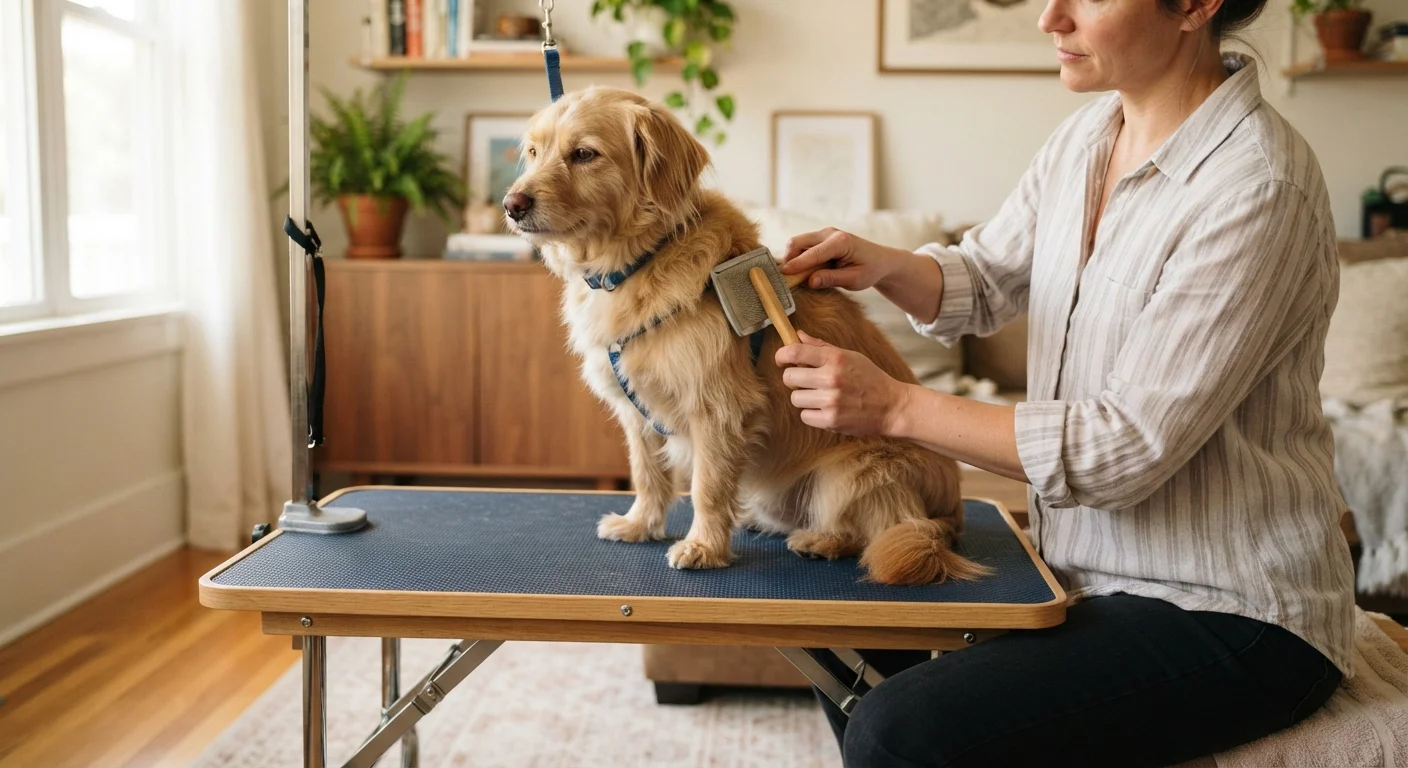
Always brush before bathing, not after. Wet fur tightens mats, making them far harder to remove. Work in sections using a slicker brush or comb appropriate for your pet's coat type — short-haired pets may need only a rubber grooming mitt, while double-coated breeds benefit from an undercoat rake. Brush in the direction of hair growth using gentle, even strokes.
Brushing frequency depends on coat length and type. Long-haired cats and dogs typically need daily or every-other-day brushing, while short-coated pets can often go weekly. Regular brushing also gives you an opportunity to scan for skin changes — a habit worth building. See what changes in your pet's coat might mean for a closer look at coat health signals.
Bathe your pet safely and calmly
Use lukewarm water — not hot — and place a non-slip mat in the tub or sink. Wet the coat thoroughly, avoiding the ears and eyes. Apply a small amount of pet-safe shampoo, lather from neck to tail, and rinse completely. Shampoo residue left in the coat can irritate skin, so rinse longer than you think is necessary.
Most healthy dogs need bathing every four to six weeks, though this varies by breed, activity level, and coat type. Cats rarely need baths unless they are elderly, overweight, or have gotten into something hazardous — consult your vet before bathing a cat who has never been bathed before.
Trim nails carefully
Overgrown nails can alter gait, cause joint stress, and snag on surfaces, making regular trimming important. Use clippers designed for your pet's species and size. Identify the quick — the pink blood vessel visible in light-colored nails — and cut a few millimeters below it. For dark nails, trim small amounts at a time and watch for a gray or pink oval to appear at the center of the cut edge, which signals you're close to the quick.
Have styptic powder on hand before you begin. If you accidentally cut the quick, apply a small amount to the tip of the nail and apply gentle pressure for a minute. Keep sessions short — trimming one or two paws per session is fine when your pet is still building tolerance.
Clean the outer ears
Ear cleaning is appropriate for most dogs, particularly those with floppy ears or a history of ear infections, but many cats maintain healthy ears on their own without intervention. If the ears look clean and odor-free, you may not need to clean them at all — overcleaning can disrupt the natural ear environment.
When cleaning is needed, apply a vet-approved ear-cleaning solution to a cotton ball or gauze pad and wipe only the visible outer portions of the ear canal. Never insert anything — including cotton swabs — into the ear canal itself. If you notice dark discharge, a strong odor, redness, or your pet shaking their head frequently, these are signs that warrant a veterinary visit rather than home cleaning. For broader health context, routine wellness exams cover ear checks as part of standard care.
Stop and Consult a Vet If You Notice This
If you find swelling, open wounds, unusual growths, foul-smelling discharge, or signs of pain during grooming, stop the session and contact your veterinarian. Grooming is not a substitute for veterinary care. Always err on the side of a professional evaluation for anything that looks or smells abnormal.
As your pet ages, grooming needs often shift. Older animals may have thinner skin, reduced mobility, or increased sensitivity — see how health needs change in senior pets for guidance on adapting your approach.
Common Mistakes and How to Avoid Them
Even well-intentioned owners can make grooming harder than it needs to be. A few of the most common pitfalls:
- Pushing through resistance: If your pet is actively struggling, growling, or showing distress, stop the session. Forcing the interaction creates negative associations that are difficult to undo. End calmly and try again in shorter increments.
- Skipping the brushing step before bathing: Wet mats are significantly harder to remove and can harbor moisture against the skin, increasing the risk of skin irritation.
- Irregular nail trimming: The quick grows longer when nails are left untrimmed, making future trims riskier. Short, regular intervals keep the quick receded and trims safer.
- Cleaning ears too frequently: Over-cleaning disrupts the ear's natural defenses. Unless your vet recommends otherwise, limit cleaning to when debris is visible or odor is mild and recent.
Never Use Human Products on Pets
Human shampoos, conditioners, and ear-cleaning solutions are formulated for human skin pH and can cause irritation, allergic reactions, or toxicity in dogs and cats. Always use products specifically labeled as safe for your pet's species. When in doubt, ask your vet for a recommendation.
Grooming also connects naturally to broader health monitoring. Changes in coat texture, excessive shedding, or new odors can all be early signals worth investigating — your pet's coat can reveal a great deal about their internal health. Pairing regular grooming with everyday mental enrichment also contributes to a calmer, more cooperative pet overall.