

Key Takeaways
Africa's Safari Map Is Much Bigger Than You Think
For many travelers, a first encounter with African wildlife happens in Kenya — the Maasai Mara's rolling grasslands, the Great Migration thundering across the Mara River. It's extraordinary, and rightfully iconic. But Kenya represents just one chapter of a continent-wide story that spans dozens of nations, ecosystems ranging from Okavango floodplains to Namibian desert, and wildlife encounters that rival — or surpass — anything East Africa's famous parks can offer.
The travelers who venture further often describe a quiet revelation: watching wild dogs hunt in Zambia's valleys, drifting silently by mokoro canoe through Botswana's delta, or scanning Namibia's pale salt pans for black-maned lions. These experiences are genuinely different in character, not just geography. Fewer vehicles, more solitude, and in some cases, conservation models that put ecological sustainability front and center.
This guide introduces a handful of those destinations — what makes each one distinct, the wildlife and landscapes you can expect, and the practical considerations any traveler should factor into their planning.
Botswana's Okavango Delta
The Okavango is one of the world's largest inland deltas — a vast, shifting mosaic of lagoons, papyrus channels, and seasonal floodplains that fill each year as Angolan rains push water south into the Kalahari basin. What makes it extraordinary for wildlife travelers is the combination of ecosystems compressed into a single landscape: open water, dry woodland, and floodplain grassland supporting enormous concentrations of elephant, buffalo, lion, leopard, and wild dog alongside species rarely seen elsewhere.
Travel within the delta typically relies on light aircraft transfers between remote camps, as road access is limited during high water season. The mokoro — a traditional dugout canoe — offers one of Africa's most distinctive wildlife experiences: silent, low to the water, moving through reed beds where hippos surface nearby and African fish eagles call overhead. Botswana's conservation policy emphasizes low-volume, high-value tourism, meaning visitor numbers remain intentionally limited across many concession areas.
The Okavango's mokoro canoe experience places travelers eye-level with one of Africa's most biodiverse wetlands.
Zambia's South Luangwa National Park
South Luangwa is widely considered the birthplace of the walking safari — a format pioneered here that has since spread across the continent. Walking with a trained guide and armed ranger through genuine wilderness, tracking animals on foot and reading the landscape at ground level, is a fundamentally different experience from a vehicle-based game drive. It demands patience, attentiveness, and produces encounters that feel earned rather than delivered.
The park sits in Zambia's Luangwa Valley, a dramatic rift system where the Luangwa River sustains enormous concentrations of hippos and Nile crocodiles, and the surrounding woodland hosts one of Africa's densest leopard populations. Thornicroft's giraffe, a subspecies found only in this valley, adds a distinct regional character. The dry season — roughly June through October — concentrates wildlife around the river as water sources elsewhere diminish, making sightings particularly reliable.
Walking safaris originated in South Luangwa, offering wildlife tracking on foot through genuine, unmediated wilderness.
Namibia's Etosha National Park
Etosha is structured around one of the continent's great geological curiosities: a vast salt pan, roughly the size of Connecticut, that shimmers white and nearly featureless across much of the park's center. The pan itself supports little life, but the waterholes punctuating its edges operate like magnets, drawing elephant, black and white rhinoceros, lion, cheetah, and enormous herds of oryx and zebra. Nighttime drives to floodlit waterholes — permitted in some areas — can produce some of Africa's most cinematic wildlife viewing.
Namibia's road infrastructure is unusually strong by regional standards, making Etosha accessible via self-drive for experienced travelers willing to plan carefully. The park's northern reaches offer denser vegetation and different species composition than the open southern zones. Black rhinoceros, critically endangered across much of Africa, appear here with relative frequency — a testament to Namibia's community-based conservation programs.
Etosha's floodlit waterholes draw predators and prey alike after dark, creating extraordinary nighttime wildlife viewing.
Tanzania's Ruaha National Park
Most Tanzania itineraries anchor on the Serengeti and Ngorongoro Crater — deservedly celebrated, but heavily visited. Ruaha, by contrast, sits in Tanzania's remote south-central highlands and receives a fraction of northern circuit traffic despite being Tanzania's largest national park. The landscape is striking: ancient baobab trees rising from rocky terrain cut by the seasonal Great Ruaha River, a habitat that blends eastern and southern African wildlife communities in ways seen almost nowhere else on the continent.
Ruaha hosts unusually high concentrations of large predators — lion prides of notable size, leopard, wild dog, and cheetah — alongside elephant populations that can number in the thousands during the dry season. Birding is exceptional, with over 570 recorded species. Access requires a domestic flight connection, typically via Dar es Salaam or Arusha, which filters visitor numbers naturally and preserves the sense of genuine remoteness that makes the experience so distinctive.
Ruaha blends eastern and southern African wildlife communities in a vast, genuinely remote landscape almost untouched by mass tourism.
Zimbabwe's Hwange National Park
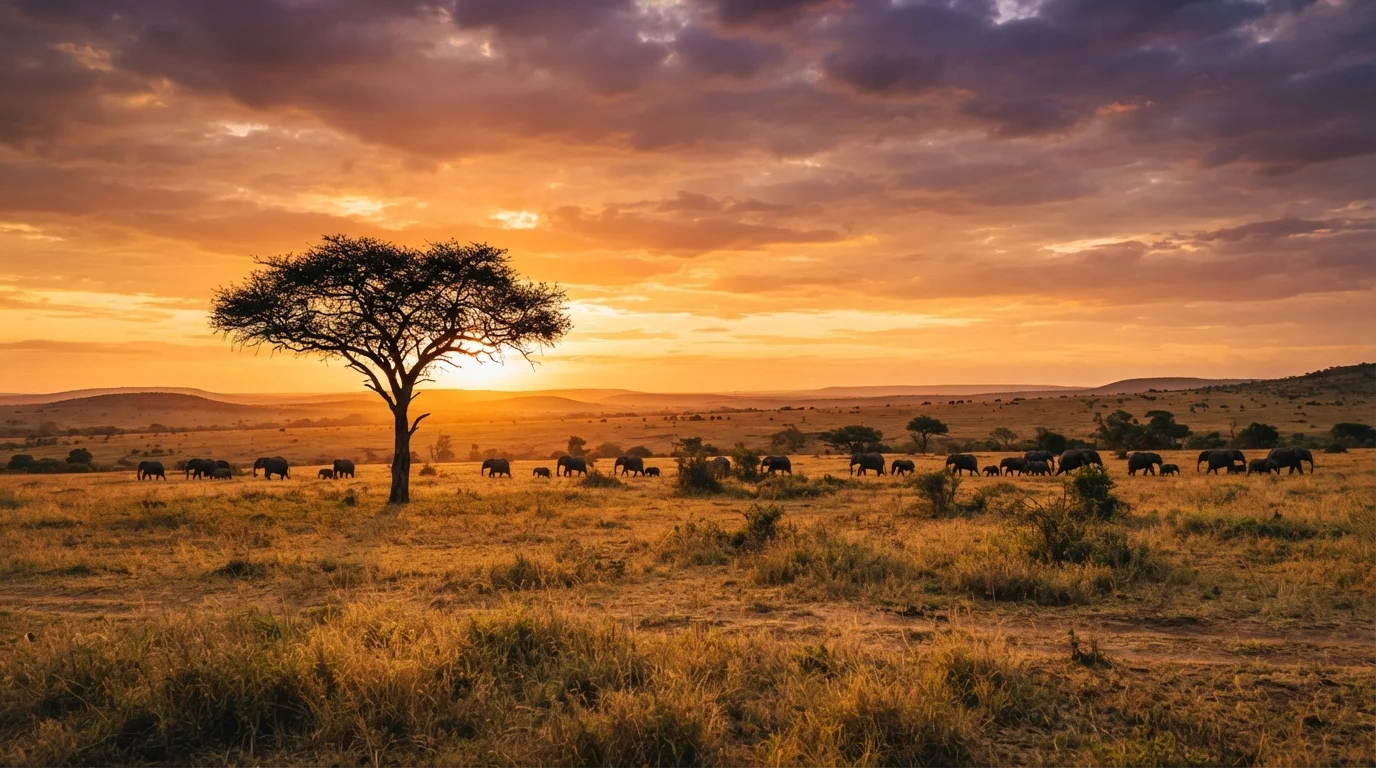
Hwange is Zimbabwe's flagship wildlife reserve and one of Africa's great elephant sanctuaries — home to an estimated population of over 40,000 elephants, one of the continent's largest concentrations. The park covers nearly 5,700 square miles of Kalahari sandveld and teak forest, and its artificial waterholes — many maintained year-round by park authorities — sustain wildlife through the dry season in numbers that can be staggering to witness.
Beyond elephants, Hwange supports all of Africa's large predators alongside massive buffalo herds, sable antelope, and brown hyena. The park's far western reaches, accessible from Victoria Falls, offer spectacular wildlife density combined with easy logistical connections to one of southern Africa's most iconic natural landmarks. Walking safaris and horse-back safaris are available through select operators, adding texture beyond the standard vehicle-based drive.
Hwange's elephant concentrations are among Africa's largest, with artificial waterholes sustaining breathtaking wildlife density year-round.
Planning Your Journey Beyond the Familiar
Traveling to lesser-known safari destinations typically requires more deliberate planning than booking a package to a well-worn circuit. Flight connections, park access roads, yellow fever vaccination requirements, and visa processing timelines all vary meaningfully by country. Always verify current entry requirements and health recommendations through your government's official travel advisory portal and consult a travel medicine specialist well ahead of departure.
Start with Your Passport and Health Timeline
Safari destinations across southern and central Africa often require yellow fever vaccination certificates, malaria prophylaxis, and visas that need advance processing. Build your planning timeline backward from your travel date — some health consultations and visa applications need to begin months ahead. Your government's official travel advisory site and a travel medicine clinic are the right starting points.
For travelers who want to compare destinations within a similar region, our guide to underestimated African safari destinations covers Botswana, Zambia, and Namibia in additional depth. The broader takeaway is consistent: Africa's wildlife map rewards those willing to explore its less-photographed corners.
This article is for general informational and educational purposes. Conditions, entry requirements, health guidance, and wildlife regulations change — always consult official government advisories and qualified professionals before making travel decisions.