

Key Takeaways
Start here
Why Southeast Asia Isn't One Single Experience
Next
The Mainland: Thailand, Vietnam, Cambodia, and Laos
Then explore
The Island Arc: Indonesia, the Philippines, and Malaysia
Before you go
Practical Differences First-Timers Should Know
Make your decision
Choosing Where to Start
Why Southeast Asia Isn't One Single Experience
Ask a dozen travelers what Southeast Asia is like and you'll get a dozen different answers — and they'll all be correct. The region encompasses eleven countries, hundreds of distinct ethnic groups, three dominant world religions, and landscapes that swing from dense Borneo rainforest to volcanic Philippine archipelagos to urban Singapore skyline. Treating it as a monolithic destination is one of the most common misconceptions first-time visitors carry with them.
That diversity is the point. It's also why planning matters. The traveler who spends two weeks in Vietnam has an entirely different cultural and logistical experience from someone exploring Indonesian islands. Understanding the broad differences before you book helps you choose destinations that genuinely match your interests — not just the ones that appear most on social media. For a grounding look at how assumptions often diverge from reality, see navigating expectations vs. reality in Southeast Asia.
Theravada Buddhism
The dominant form of Buddhism practiced in Thailand, Cambodia, Laos, and Myanmar, shaping daily life, temple architecture, and social customs across these countries.
Visa on arrival
A travel authorization that eligible passport holders can obtain at the destination airport or border crossing, rather than applying in advance through an embassy.
Archipelago
A country or region made up of a large group of islands, which significantly affects how travelers move between places — typically requiring ferries or short-haul flights.
Monsoon season
A seasonal weather pattern common across Southeast Asia characterized by heavy, sustained rainfall that affects travel conditions, road accessibility, and ferry safety.
Travel medicine consultation
A pre-travel health appointment with a qualified clinician who assesses destination-specific health risks and recommends appropriate vaccinations or preventive measures for your itinerary.
The Mainland: Thailand, Vietnam, Cambodia, and Laos
The Southeast Asian mainland — often called Indochina — shares some cultural DNA, particularly the influence of Theravada Buddhism across Thailand, Cambodia, and Laos, and the legacy of Confucian tradition woven into Vietnamese culture. But the traveler experience on the ground differs meaningfully.
Thailand has the most developed tourist infrastructure in the region. Cities like Chiang Mai and Bangkok offer extensive transit options, multilingual services, and a wide range of lodging. Dress codes matter at temples — shoulders and knees should be covered — and the monarchy is treated with deep reverence. Criticism of the royal family is a serious legal matter, not merely a social faux pas.
Vietnam rewards travelers willing to move slowly through its geography. The country stretches nearly 1,000 miles from north to south, meaning Hanoi's Old Quarter, Hội An's lantern-lit streets, and Hồ Chí Minh City's kinetic energy each feel like distinct destinations. Domestic flights are affordable and widely used; overnight trains are another popular option for covering distance.
Cambodia centers many visits on Siem Reap and the Angkor temple complex — one of the most significant archaeological sites in the world. Travelers should approach with cultural respect; the sites are active religious spaces, not just tourist attractions. Cambodia also has a sobering modern history that many visitors engage with thoughtfully at sites like Phnom Penh's Tuol Sleng museum.
Laos moves at a slower pace than its neighbors, which is precisely what draws many visitors. The UNESCO-listed city of Luang Prabang, with its morning alms-giving ceremonies and French colonial architecture, offers a quieter counterpoint to more crowded regional hubs.
Learn a Few Words of the Local Language
Even a basic greeting or polite phrase in the local language — Thai, Khmer, Vietnamese — is received warmly across the mainland. It signals genuine respect rather than the assumption that English is owed to you. Most travelers find it also opens doors to more authentic interactions with locals.
The Island Arc: Indonesia, the Philippines, and Malaysia
Shift south and east and the region transforms. Island-nation travel requires more deliberate logistics — ferry schedules, inter-island flights, and seasonal sea conditions all become part of the planning conversation.
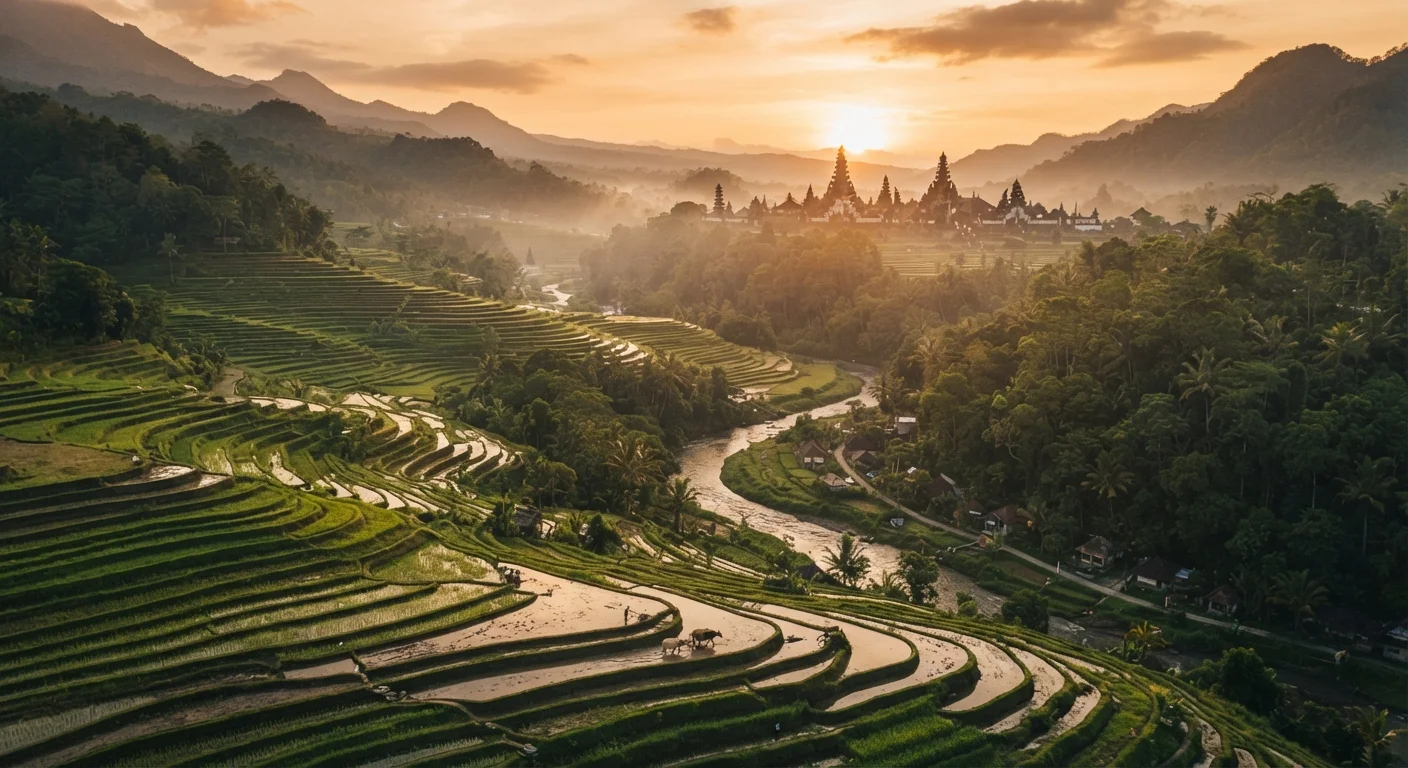
Indonesia is the world's largest archipelago nation, comprising over 17,000 islands. Bali draws the largest share of international visitors and has well-developed tourism infrastructure, but it represents a single Hindu-majority pocket within the world's largest Muslim-majority country. Travelers moving beyond Bali — to Lombok, Java, Flores, or Sulawesi — encounter dramatically different cultures, landscapes, and levels of tourist development.
The Philippines is the region's predominantly Catholic nation, a cultural legacy of Spanish colonial history. English is widely spoken, which eases navigation for US travelers considerably. The country's roughly 7,600 islands mean that island-hopping is genuinely central to the experience, but flight and ferry logistics require patience and flexibility, particularly outside peak season.
Malaysia offers a compelling mix of cultures — Malay, Chinese, and Indian communities coexist within a single country, giving cities like Kuala Lumpur and Penang a layered character unlike anywhere else in the region. Malaysia also encompasses Sarawak and Sabah on the island of Borneo, which offer some of the most biodiverse rainforest experiences on Earth.
Practical Differences First-Timers Should Know
Beyond culture and landscape, the practical realities of travel vary significantly across the region. A few areas deserve particular attention before you finalize plans.
- Entry requirements: Visa rules differ by country and change periodically. Some nations offer visa-on-arrival or e-visa systems; others require advance applications. Always verify directly with the destination country's official immigration authority or embassy. US State Department travel advisories are also worth checking for each destination.
- Health considerations: Recommended vaccinations and health precautions vary. Some areas carry risks for mosquito-borne illness; food and water safety standards also differ between urban and rural settings. A travel medicine consultation before departure is generally advisable — this is not one-size-fits-all territory.
- Transportation: The region's internal transit options span the full spectrum, from efficient city metro systems in Bangkok and Singapore to slow boat journeys along the Mekong to motorbike rentals on rural islands. What works smoothly in one country may not exist in another.
- Currency and payments: Cash remains important across much of Southeast Asia, especially outside major cities. Each country uses its own currency, so plan accordingly and understand local ATM access before arriving in smaller towns.
For a broader look at the logistical pitfalls that catch new international travelers off guard, things first-time international travelers often get wrong covers many of the same patterns.
Religious Sites Have Real Dress Codes
Temples, mosques, and other sacred sites across Southeast Asia enforce dress standards — covered shoulders, covered knees, and sometimes removed shoes are standard requirements. These are not suggestions. Arriving underprepared can mean being turned away from a site or purchasing cover-ups at inflated prices at the entrance. Pack a light scarf or sarong specifically for this purpose.
Choosing Where to Start
The honest answer is that there's no objectively correct starting point — only one that aligns with how you travel and what you're curious about. First-timers often do well anchoring their itinerary around a single country or a logical two-country pairing (Thailand and Cambodia, or Vietnam and Laos, for example) rather than attempting to cover the whole region in one trip.
Think about what draws you: temple complexes and Buddhist culture, marine environments and island life, urban food culture, or remote trekking. Each points toward different destinations. Consider also the practical dimension — a two-week trip has very different possibilities than six weeks, and your available budget shapes both where you go and how you move.
Before you arrive anywhere, it's worth building a baseline understanding of the destination's layout, neighborhoods, and transport logic. Our guide on making sense of an unfamiliar destination before you land offers a practical framework that applies well to Southeast Asian arrivals. And if you're planning to travel alone, solo travel planning for first-timers covers the specific considerations worth thinking through in advance.
Southeast Asia rewards the curious and the patient. Go with genuine interest in the places you visit, and the differences you discover will be the most memorable parts of the journey.
US State Department Travel Advisories
The official source for country-specific travel safety ratings, entry requirements, and alerts for US citizens traveling abroad. Check this for every country on your Southeast Asia itinerary.
CDC Travelers' Health Destination Pages
The US Centers for Disease Control provides destination-specific health information, recommended vaccinations, and current disease alerts to help travelers prepare with their healthcare provider.
Trip Itinerary Planner Template
A structured template for organizing your Southeast Asia itinerary by country, including space for entry requirements, key contacts, accommodation notes, and transport logistics.