

Key Takeaways
What Makes the Highlands Geographically Distinct
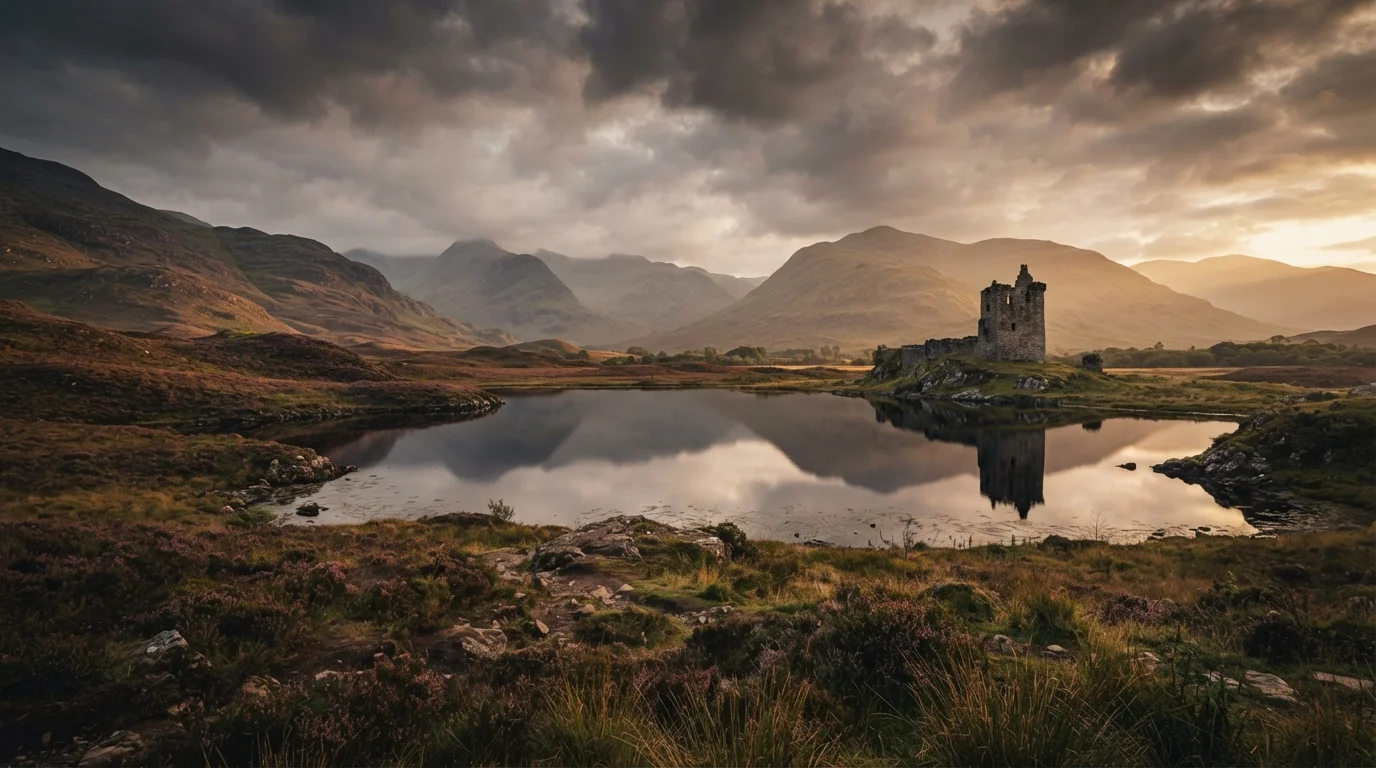
The Scottish Highlands occupy the northern and western portion of Scotland, separated from the more densely populated Lowlands by the Highland Boundary Fault — a geological dividing line that shaped not just the land but the culture that grew from it. What lies north of that fault is a world of ancient Precambrian rock, some of the oldest exposed geology on Earth, sculpted by successive ice ages into the glens, lochs, and sea-carved coastlines visitors see today.
Scale is the first thing that surprises people. The Highlands cover roughly 10,000 square miles, yet the permanent population is sparse — fewer than 250,000 people spread across the entire region. That translates to a landscape that can feel genuinely remote in a way that few places in Western Europe still manage. A drive that looks like an hour on screen can take considerably longer on single-track roads with passing places.
~10,000
Square miles covered by the Scottish Highlands
The Highlands represent one of Western Europe's largest areas of genuinely sparse population and open terrain.
<250,000
Permanent residents across the entire region
Population density in the Highlands is among the lowest of any inhabited region in Europe, contributing to its remote character.
18+
Daylight hours near the summer solstice
The far north of Scotland experiences near-continuous twilight in midsummer, a dramatic shift for visitors from lower latitudes.
For readers who have explored other dramatic wilderness regions — say, those familiar with the geography and seasonal character of the Canadian Rockies — the Highlands will feel both familiar in spirit and distinctly different in texture: older, more intimate in scale, and deeply layered with human history.
The Layer of Legend You Can Actually Walk Through
The Highlands are inseparable from story. Clan conflicts, Jacobite risings, and the catastrophic Highland Clearances of the 18th and 19th centuries — when landlords forcibly displaced farming communities to make way for sheep — left marks on the landscape that are still visible. Ruined townships, abandoned blackhouses, and overgrown field systems tell a quieter, more sobering story than the romanticized tartans-and-castles version many visitors arrive expecting.
Glencoe, perhaps the most visually arresting glen in the Highlands, carries the weight of the 1692 massacre of the MacDonald clan by government troops. Standing in that valley, the geology and the history press down together. Eilean Donan Castle — one of Scotland's most photographed structures — guards the confluence of three sea lochs in Kintail and has been destroyed and rebuilt multiple times over centuries.
“The Highlands are not just a landscape — they are a palimpsest. Every glen has been written on and rewritten, and the oldest layers are still visible if you know what you are looking at.”
— Historic Environment Scotland, Scotland's national body for the historic environment
Gaelic, Scotland's indigenous Celtic language, is still spoken in parts of the western Highlands and the Hebridean islands. Place names across the region are Gaelic in origin: glen (valley), loch (lake), ben (mountain peak), strath (broad river valley). Reading the map with even a basic awareness of these terms transforms navigation into a kind of translation.
What First-Time Visitors Most Commonly Miss
The North Coast 500 — a roughly 500-mile scenic driving route around the northern Highlands — has become enormously popular in recent years, and for good reason. But treating it as a race to complete means bypassing the very things that make it worthwhile: the detours down unmarked single tracks to deserted beaches, the whisky distilleries tucked into coastal villages, the conversations in local pubs that no guidebook can script.
If you are driving the North Coast 500, plan for an absolute minimum of seven days — and ten or more if you want to actually stop and explore rather than simply complete the loop.
The route's roads are scenic but slow, and the most rewarding experiences require detours and spontaneous stops that an aggressive schedule makes impossible.
Download the What3Words app and save key locations before you lose signal — it is increasingly used by Scottish Mountain Rescue teams and can be shared in an emergency when a traditional address is unavailable.
Remote Highland areas often lack addresses, and mobile coverage gaps make real-time navigation unreliable in ways that can become serious in poor weather.
The Cairngorms National Park, Scotland's largest national park, sits in the central Highlands and receives a fraction of the visitor attention that Glencoe or Skye attract. Its ancient Caledonian pine forest — fragments of the vast woodland that once covered much of Scotland — shelters red squirrels, ospreys, and red deer at a density that rewards slower, quieter travel.
The Isle of Skye is genuinely spectacular, but it now draws very large crowds to its most famous spots, particularly the Fairy Pools and the Old Man of Storr. Visitors who arrive early, stay longer, or venture to the less-photographed Trotternish peninsula interior tend to find the version of Skye they were actually looking for. First-time international travelers should also review common missteps new international travelers make before departure — entry requirements and logistics matter here as much as anywhere.
Seasons, Weather, and Honest Expectations
No honest account of the Highlands avoids the subject of weather. The region sits at the intersection of Atlantic weather systems, meaning conditions can shift from brilliant sunshine to horizontal rain within the same afternoon. This is not exaggeration — it is the operating reality that shapes every visit.
Midges Are a Real Planning Factor
Highland midges (Culicoides impunctatus) are at their most intense from late May through September, especially in still, overcast conditions near water. They are not dangerous, but they can make extended time outdoors genuinely unpleasant without protection. Carry repellent containing DEET or picaridin, and consider a head net for dawn and dusk walks.
Summer (June through August) brings the longest daylight hours — over 18 hours near the solstice — and the warmest temperatures, typically in the low-to-mid 60s Fahrenheit. It also brings midges: tiny biting insects that swarm in still, humid conditions, particularly near water and in sheltered glens. Midge repellent and fine-mesh head nets are widely sold locally and are worth taking seriously.
Autumn — September and October — is many experienced visitors' preferred window. Crowds thin, heather moorland glows purple-brown, and the light takes on the low-angle quality that photographers prize. Winter travel is possible and the scenery can be extraordinary under snow, but road conditions, reduced daylight, and limited accommodation require more careful planning. Those who have weighed similar seasonal trade-offs elsewhere — as explored in the context of Iceland trip planning decisions — will find the same logic applies in the Highlands.
Practical Orientation for US Travelers
Inverness is the effective capital of the Highlands and has an international airport with connections through London and Dublin. Many visitors fly into Edinburgh or Glasgow and drive north — a journey that takes roughly two to three hours to reach the southern Highlands, longer for the far north. Driving is on the left; US license holders can drive in the UK on their valid American license for visits up to 12 months, though verifying current entry and driving requirements with official sources before travel is always advisable.
Accommodation ranges from basic bunkhouses and bothies (simple mountain shelters) to restored castle hotels. Self-catering cottages are popular and practical for groups or those wanting a base from which to explore a single area in depth. Mobile signal is unreliable across much of the region — downloading offline maps before leaving a town is genuinely useful, not optional.
Currency is pound sterling (GBP). Scotland uses the same currency as the rest of the UK, though Scottish banks issue their own banknotes — legal tender throughout the UK, though occasionally unfamiliar to vendors in England. Tipping customs broadly follow UK norms: modest and appreciated but not mandatory in the way it is in the US.
The Highlands are worth approaching with patience and curiosity rather than a checklist mentality. The landscapes that stay with visitors longest are rarely the ones on every postcard — they are the ones discovered by pausing somewhere unexpected and simply looking.