

Key Takeaways
Why Pharmacy Know-How Belongs in Every Travel Plan
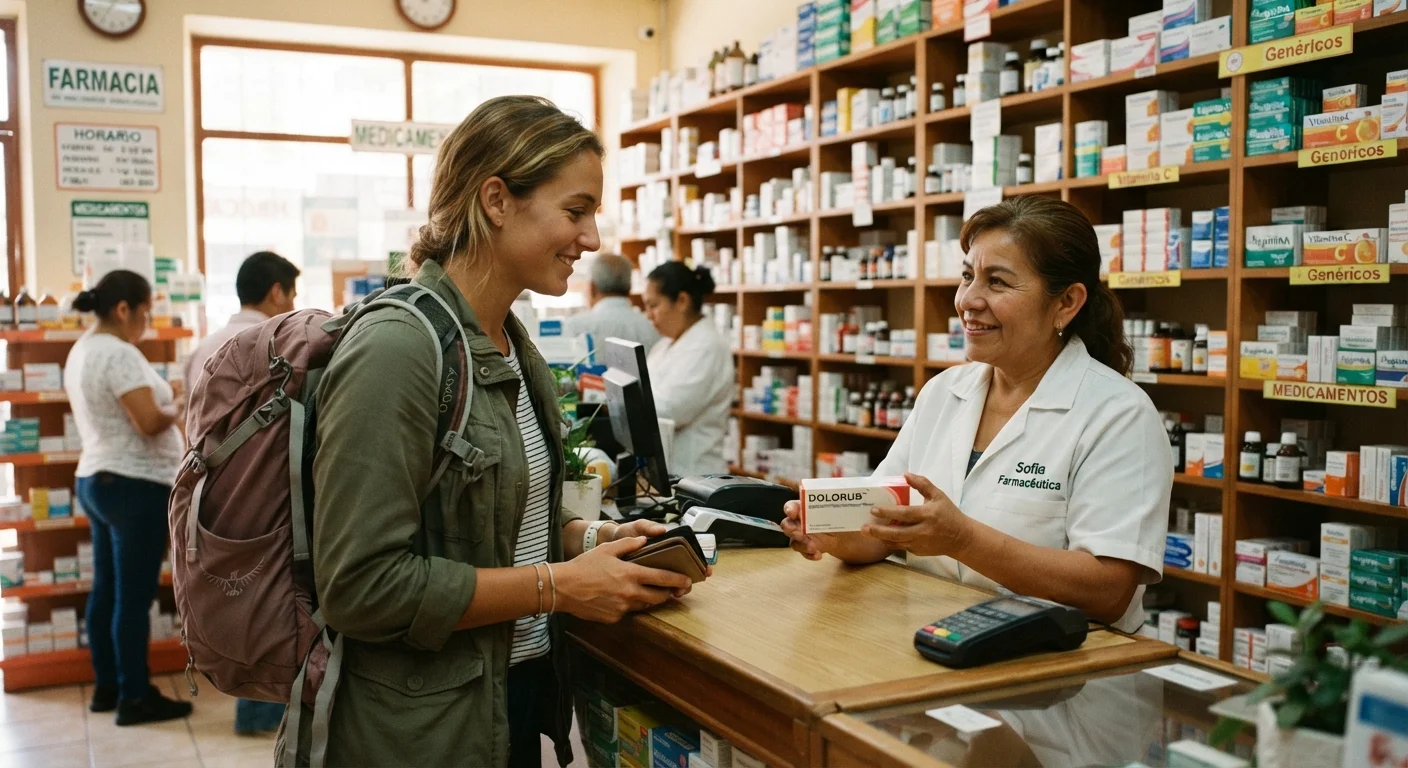
It happens to even the most seasoned traveler: a stomach upset in Lisbon, a sinus flare-up in Bangkok, a blister that won't quit somewhere between train stations. Minor ailments abroad feel disproportionately disorienting when you don't know where to go or how to ask for help. A foreign pharmacy — often marked by a green cross sign across much of Europe and Latin America — is frequently your fastest and most accessible first stop. But walking in without any preparation can leave you frustrated, or worse, leaving with the wrong product.
This guide equips you with practical knowledge so that if a minor medical need arises, you can handle it calmly and intelligently. For anything serious, always seek a licensed medical professional. If you haven't yet reviewed what medications to pack before departure, the pre-travel health checklist is a logical starting point.
What you will need
What to Do When You Walk Through the Door
Foreign pharmacies range from quiet neighborhood shops to busy chain outlets, but the process of getting help follows a similar pattern nearly everywhere. Understanding that pattern removes most of the anxiety.
Identify the pharmacy and confirm it's licensed
Look for official signage — a green cross is the standard symbol across Europe, and similar regulated signage exists in most countries. In some destinations, unlicensed shops sell health products without trained staff. A licensed pharmacy will typically display credentials, have a pharmacist on premises during open hours, and have organized, labeled shelving rather than a general goods setup.
Use the generic (INN) name of any medication you need
Brand names are local. The medication you know as Tylenol is sold under dozens of different names globally, but its generic name — paracetamol (or acetaminophen in the US) — is internationally understood. The International Nonproprietary Name (INN) system means pharmacists worldwide recognize the same generic terms. Before your trip, write down the INN for every medication you regularly take or might need abroad.
Communicate clearly, even across a language barrier
Don't rely solely on speaking slowly and loudly in English. Before your trip, use a translation app or phrasebook to write down your symptom or need on paper or your phone screen. Pointing to a body part, using a translation app's camera feature to read labels, or showing a photo of your home medication's packaging can all help the pharmacist understand your need quickly and accurately.
Describe symptoms rather than requesting a specific drug
Pharmacists are trained to match symptoms to appropriate treatments. Describing what you're experiencing — an upset stomach, a skin rash, a runny nose — often leads to a better outcome than demanding a specific product you've used at home, which may not be available or may be unnecessary. Let the pharmacist guide the recommendation for minor issues.
Know when to stop and see a doctor instead
A pharmacy is appropriate for minor, self-limiting conditions: mild diarrhea, a cold, a small wound, mild allergic reactions, or basic pain relief. It is not the right stop for high fever, chest pain, difficulty breathing, severe allergic reactions, symptoms in young children, or anything that has been worsening over 48 hours. In those situations, go directly to a clinic, urgent care facility, or hospital emergency department.
Key Realities Every Traveler Should Understand
Beyond the step-by-step process, a few broader realities shape what you'll encounter at a foreign pharmacy.
Prescription Rules Differ Dramatically
A medication you buy freely at a US drugstore may be prescription-only in Germany, Japan, or Australia — and vice versa. Antibiotics are a clear example: in the United States they require a prescription, yet in some countries they are sold over the counter. Going the other direction, certain sleep aids and codeine-containing products that are OTC in the US are strictly controlled elsewhere. Never assume the same rules apply. If you're traveling with prescription medication, read the guidance on carrying medication across borders before you go.
Pharmacist Training Varies, but Is Often Substantial
In France, Brazil, and much of southern Europe, pharmacists hold advanced clinical degrees and are a recognized first point of contact for minor health issues. In other regions, pharmacy staff may have less formal training. When in doubt, ask whether a licensed pharmacist (farmacéutico, Apotheker, pharmacien) is available to speak with you directly.
Payment and Insurance
Many pharmacies abroad accept major credit cards, but smaller independent shops in rural areas may be cash-only. Keep local currency on hand for exactly this reason — a habit that aligns with broader financial safety practices covered in our guide to managing money securely while traveling. Check whether your travel insurance reimburses out-of-pocket pharmacy purchases; most policies require you to keep itemized receipts.
Never Self-Treat Serious or Worsening Symptoms
A pharmacy visit is appropriate for minor, self-limiting conditions only. High fever, chest pain, difficulty breathing, symptoms in infants or young children, or anything deteriorating over 48 hours requires prompt medical evaluation — not an over-the-counter remedy. When in doubt, seek a licensed physician or emergency facility rather than managing it yourself.
This article provides general travel information and education. It is not medical advice. Always consult a qualified healthcare professional for personal medical concerns, symptoms, or emergencies. Verify medication regulations with official government and health sources before traveling.